


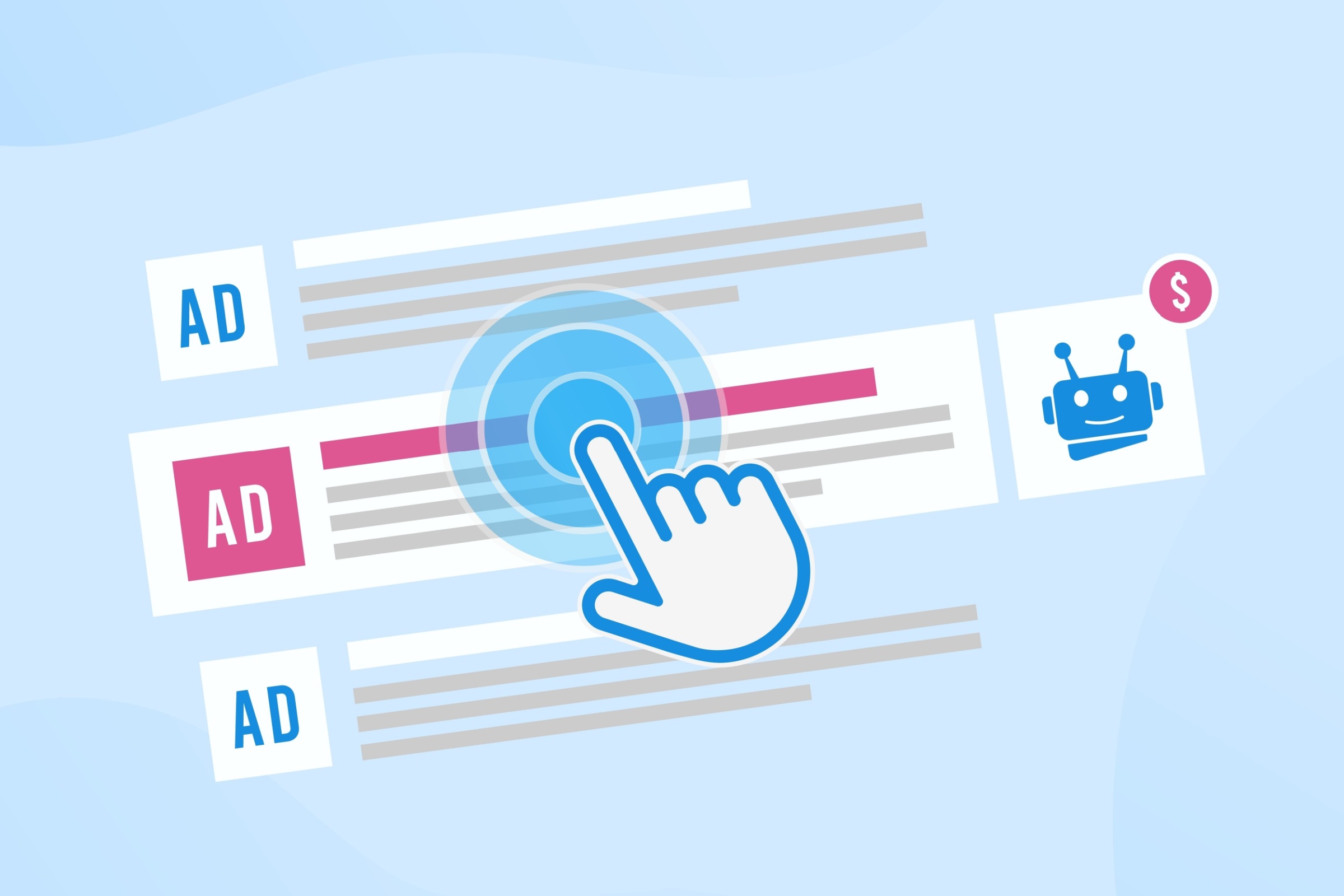
How AI Works in PPC & Is It the Future of Advertising?
You’ve probably noticed that more and more businesses are using AI-generated content in their Pay-Per-Click (PPC) advertising campaigns, especially when it comes to visuals.
Maybe you saw a video that looked too good to be real, or read an ad that used em dashes (—) excessively. While videos with very good lighting and dashes are not exclusive to AI, it is true that the public is increasingly associating them with the technology, for better or worse.
However, this is by far not the only use of AI in PPC advertising, let alone in digital marketing. In a good PPC marketing strategy, AI can be implemented across everything from campaign building to bidding optimization and even interpreting useful insights from raw campaign data.
With all of this being said, you may be wondering how AI works in PPC advertising, if your business can benefit from AI-powered advertising, or how you can hop onto this trend if AI ends up being the future of digital advertising.
Here at MRKT360, an expert PPC management agency, it is our job to understand trends in digital advertising, including the role of AI. So, keep on reading to learn more about the impact of AI on Google Ads performance and more.
How AI Works in PPC Campaigns
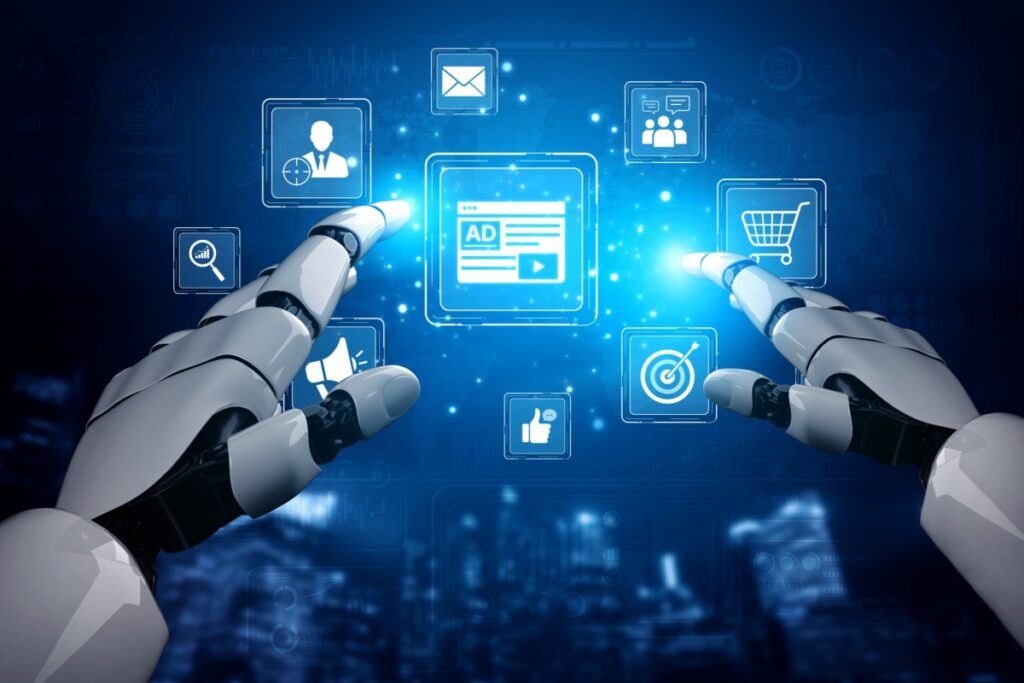
As you may know, PPC advertising is one of the most widely used models for charging advertisers in the digital landscape. When you advertise on Google, Bing, or Meta, you are using PPC ads.
However, setting up a digital ad is not as simple as designing a photo in Canva and throwing money at Google or Facebook.
Just to name a few steps, you have to define an objective, identify your audience, choose the keywords you want to bid on, tell the platform how much you want to spend, and carefully assemble the copy and creative elements that will connect most effectively with your target market.
Each of these steps is complex in its own right. And this is exactly how AI can work on PPC campaigns. When used correctly, AI tools can help businesses and agencies streamline their PPC management. Some of the main AI optimizations in PPC ads include:
- Smart Bidding: AI Algorithms analyze millions of signals (intent, location, device) in real time to adjust campaign bids for maximum conversion or ROI.
- Audience Targeting: Tools like Meta’s Lookalike Audiences and Google’s Custom Audiences use AI to find potential customers similar to existing ones and reach a wider audience.
- Creative Generation: Platforms like TikTok’s Symphony use AI to generate ad copy, images, and videos, allowing for rapid testing and personalization.
- Automated Campaigns: Solutions like Performance Max and Meta Advantage+ help automate budget allocation and placement decisions, making AI-based PPC management more accessible from start to finish.
Google and Facebook’s Push for AI Comes With a Catch
As you can see, AI is changing PPC advertising. More and more platforms are making it easier to advertise by integrating AI tools directly into their systems. In some cases, manual options are buried, reduced, or even turned off by default.
And well, as we will see, it is true that your business’s PPC marketing can benefit from these AI implementations, we must not forget that advertising is one of the main sources of revenue for Google or Meta. Thus, it is in their best interest to make you spend more, which impacts how their AI algorithms work.
Our expert tip: We are not telling you not to use AI in your digital marketing strategy. We are saying you should use it carefully and, ideally, with expert help from a trusted ppc management agency.
How AI improves PPC management
We have explained some of the main forms of AI-driven ad optimization, but what is the real impact of AI on Google Ads performance or Meta Ads performance? When applied correctly and with proper oversight, AI tools for PPC campaigns can deliver real advantages.
Increased Productivity in Campaign Building
AI can help you set up campaigns much more quickly than without them. You cut time when refining copy, conducting market research, and even generating visuals. For example, you can use an LLM like ChatGPT to brainstorm new content directions for your ads or ask it to analyze how your competition is doing. The time you save can then be used on other parts of ppc management that still require human judgment.
AI-driven Optimizations Maximize your Budget
AI tools for PPC campaigns can help you identify weaknesses in your campaigns that you may have overlooked and suggest solutions to improve them. While it is important not to blindly accept the optimizations AI suggests, the fact that it brings up important campaign aspects can help you save money in the long run.
Data Metrics Are Easier to Understand
Understanding what a 5% CTR or an 80% bounce rate actually means for your campaign is not always easy. However, AI tools combined with expert guidance can help you interpret the data more clearly. They can help explain what your metrics reveal about campaign health, what may have led to those results, and what adjustments may improve performance.
Risks of AI Implementation in PPC Management
We have identified a sentiment that has plagued the industry among AI-first users, and that is that AI is an all-powerful machine that can do everything a human expert can and more. And well, that is absolutely not true.
While AI can automate PPC campaigns, it’s not magic. Created and trained by humans, AI is inherently imperfect. For instance, its benefits are maximized when combined with human expertise. Human knowledge can correct AI’s biases and provide context for generating useful responses.
Despite its advantages, AI is not a silver bullet. Some of the most common risks businesses face when relying too heavily on AI-powered advertising include:
Hallucinations & Misinterpretation of Facts
Modern AI technologies excel at generating coherent and confident text, even if it’s not entirely accurate. This is why you’ve likely heard of chatbots suggesting unusual pie recipes or claiming the Olympics didn’t happen.
Even when trying to compensate for this, AI might cite unreliable sources in its responses, such as fake news sites or even Reddit. Similarly, PPC campaign suggestions can include inappropriate copy or false information about your target market. That’s why always double-check before accepting a response as fact.
Lack Of Explanations Impacts Decision Making
While using AI for clarification is common, it can oversimplify or provide incomplete answers, which can be risky for PPC decisions. AI might omit vital market context or campaign steps, leading to misleading responses.
If an AI response seems incorrect or doesn’t match your data, always ask it to explain or check for missing information. Doing this can save you time and headaches by preventing your budget from going down the drain due to unnecessary AI automation.
Negative Sentiments Against AI
As mass-produced AI content continues to flood human digital spaces, a growing number of consumers have begun labeling AI-generated content as low-quality, misleading, and even malevolent. This sentiment has even led people to switch brands and take their business elsewhere.
However, this effect does not apply to all content generated or optimized with AI, but rather to the one that relies entirely or most heavily on AI tools, especially those related to image and video generation.
The Bottom Line: Human Decision-making + AI Tools
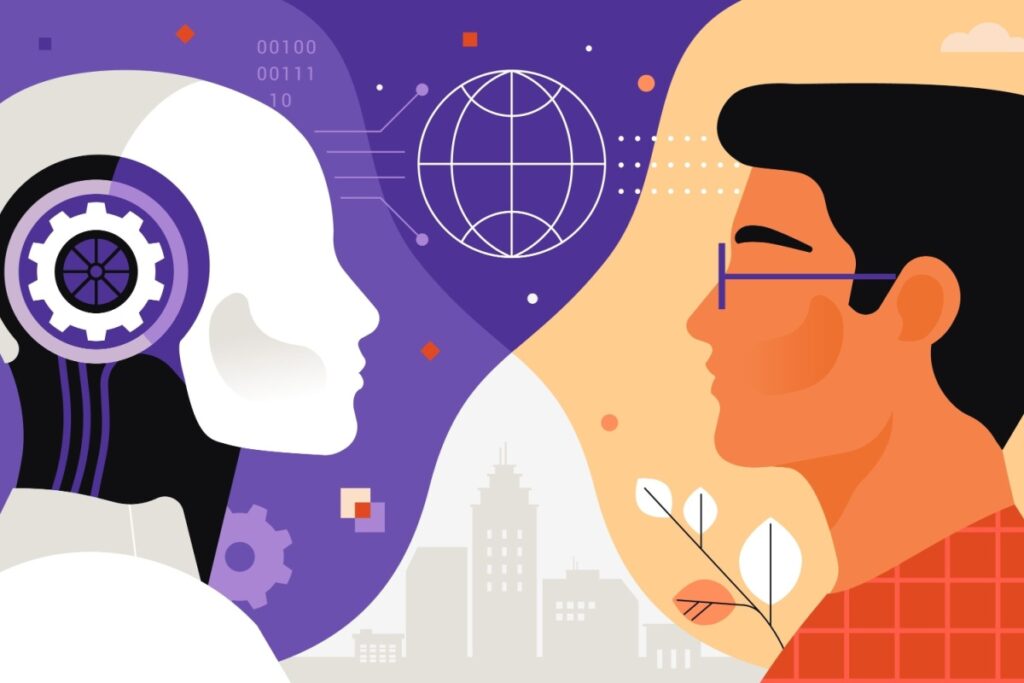
Going back to the question in this article’s title, is AI the future of digital advertising? In our expert opinion, yes, but with a major asterisk.
Yes, because AI is the most important trend impacting the future of PPC marketing. Leading players are increasingly implementing AI tools directly within their platforms, and the ready availability of tools like ChatGPT or Neo Banana Pro has enabled anyone to use AI in their digital advertising strategies.
However, as we have also discussed today, AI tools are far from perfect, might be misleading, and even cause negative sentiments towards a brand if its audience thinks it is using them too much. So we can say that within the industry, there is a push for AI automation, but the consumer side might not be responding as intended.
The good news is that there is a practical middle ground. Businesses do not have to choose between fully manual work and fully automated campaigns. The best approach is often to combine human-led decision-making with the best available AI tools.
For example, working with a PPC management agency helps you get better results because experts know how to use AI strategically while still relying on human judgment to refine the final copy and visuals so they fit your brand.
Do You Want the Best of Both Worlds for Your Brand?
Then look no further. MRKT360 is a Toronto-based digital marketing expert with more than a decade of experience. Our PPC management services combine our team’s human expertise with the latest AI technologies to craft successful digital advertising campaigns for businesses like yours.
If you want to stay ahead of your competition while authentically connecting with your target audience, contact us and schedule a free consultation today.
FAQs
- How does AI work in PPC campaigns?
AI analyzes large amounts of data in real time to automate bidding, targeting, and ad optimization. It helps improve performance by identifying patterns and making faster, data-driven adjustments.
- What is the difference between AI-driven PPC and traditional PPC?
AI-driven PPC uses automation and machine learning to dynamically optimize campaigns, while traditional PPC relies more on manual setup and adjustments. The key difference is speed, scale, and data processing capability.
- What are the benefits of AI-powered PPC management?
AI-powered PPC management improves efficiency, enhances targeting accuracy, and helps maximize ad spend through smarter bidding and optimization. It also saves time by automating repetitive tasks.
- Is AI better than manual PPC optimization?
AI can outperform manual optimization in speed and data analysis, but it still requires human oversight for strategy and decision-making. The best results usually come from combining both.
- Can small businesses benefit from AI in PPC?
Yes, AI can help small businesses run more efficient campaigns with limited resources by automating key processes. It makes advanced optimization more accessible without requiring large teams.
- Will AI replace PPC specialists in the future?
No, AI is more likely to support rather than replace PPC specialists. Human expertise is still essential for strategy, creativity, and interpreting results.