
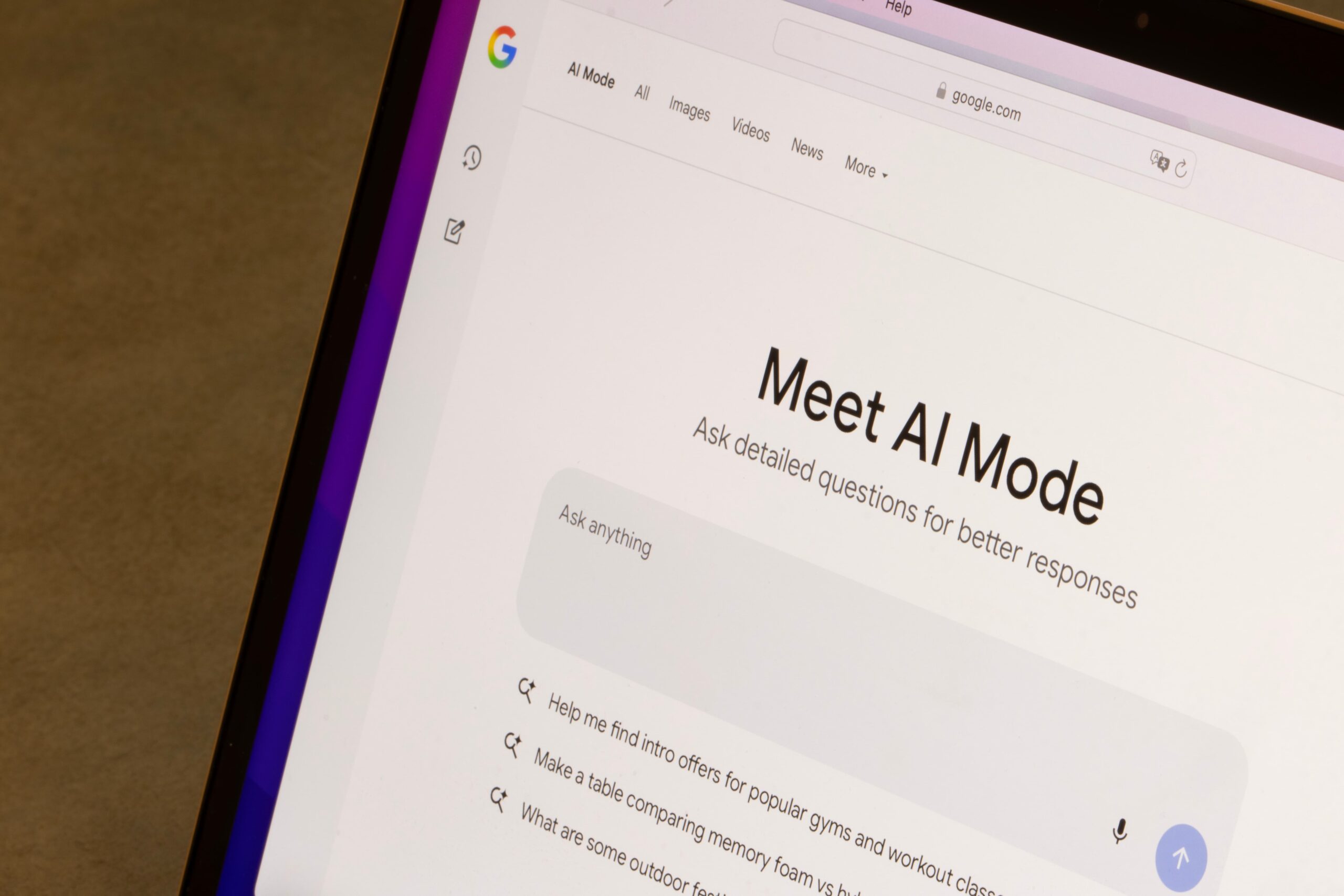
AI Search Mode
How Conversational Search Is Changing Digital Discovery
AI Search Mode represents a new generation of search experiences designed around conversation, context, and natural language. Instead of requiring users to repeatedly refine keywords or start new searches, AI-powered search interfaces allow people to ask follow-up questions, explore related topics, and maintain context throughout their search journey.
This shift marks an important evolution in how information is discovered online. Search is moving beyond static lists of links toward dynamic experiences capable of understanding intent, synthesizing information, and adapting to increasingly complex questions.
Today, AI Search Mode can be seen across multiple platforms, including Google’s AI experiences, ChatGPT, Perplexity, Gemini, and Microsoft’s Copilot. While each platform approaches conversational search differently, they share a common objective: helping users find and understand information more efficiently.
For businesses, marketers, and publishers, AI Search Mode introduces important considerations regarding visibility, authority, and digital discovery. Understanding these changes is becoming increasingly important as conversational search continues reshaping how users interact with information online.
What Is AI Search Mode?
AI Search Mode refers to conversational search experiences that allow users to interact with search engines and AI assistants using natural language rather than relying exclusively on traditional keyword searches.
Unlike conventional search interfaces, AI Search Mode supports:
- Multi-step questions.
- Follow-up conversations.
- Context retention.
- Information synthesis.
- Multimodal interactions.
- Personalized discovery experiences.
For example, rather than performing several separate searches, users can ask:
“What’s the difference between SEO and PPC for a small business?”
and then immediately follow up with:
“Which option typically provides results faster?”
without having to restart their search.
This conversational approach creates a more fluid experience that more closely resembles interacting with another person than using a traditional search engine.
Importantly, AI Search Mode is not limited to a single product or company. It represents a broader industry trend toward intelligent search experiences powered by large language models and advanced AI systems.
How do I turn on Google AI Mode?
Access to Google’s AI Mode depends on availability within your region and account settings. Users who have access can typically launch AI Mode through Google’s search interfaces while signed into a personal Google account. Availability may continue expanding as Google rolls out additional AI capabilities.
Can I search in AI Mode?
Yes. AI Search Mode is specifically designed to support conversational searches, allowing users to ask complex questions, provide follow-up prompts, and explore topics without losing context between interactions.
Is Google AI Mode free?
Many of Google’s AI-powered search experiences are currently available at no additional cost. However, Google also offers premium AI products and subscription services that provide access to expanded features and capabilities.
How do I activate AI search?
Activating AI search depends on the platform being used. Services such as ChatGPT, Gemini, Perplexity, and Google’s AI experiences each have their own interfaces and availability requirements. In most cases, users simply need access to the appropriate product and an eligible account.
Why Search Is Becoming More Conversational
User expectations have changed significantly over the past decade. People increasingly expect technology to understand context, anticipate intent, and provide immediate answers.
Several factors are contributing to this transition:
- The rise of generative AI.
- Greater use of voice interfaces.
- Increasingly complex search behavior.
- Demand for faster information discovery.
- Improvements in natural language processing.
Traditional search engines were designed around keywords and individual queries. However, modern users often think in conversations rather than isolated phrases.
For example, a user researching business software may naturally progress through questions such as:
- “What is CRM software?”
- “Which CRM platforms are best for small businesses?”
- “How much does Salesforce cost?”
- “How does HubSpot compare to Salesforce?”
AI Search Mode allows these interactions to occur within a single conversational thread, reducing friction and improving continuity throughout the discovery process.
This transition is also influencing how businesses think about content creation. Organizations increasingly need to consider not only individual keywords but also the broader conversations users may have around a topic.
How AI Search Mode Works
Although AI Search Mode varies across platforms, most conversational search experiences rely on similar underlying principles.
At a high level, AI Search Mode typically involves:
- Understanding the user’s intent.
- Maintaining conversational context.
- Retrieving relevant information.
- Synthesizing responses.
- Supporting follow-up interactions.
Many systems also incorporate concepts such as query fan-out, where multiple related searches are performed simultaneously to provide more comprehensive answers.
As these technologies continue advancing, AI Search Mode is becoming increasingly capable of handling:
- Complex comparisons.
- Multi-step research tasks.
- Long-form questions.
- Contextual follow-ups.
- Personalized recommendations.
This creates search experiences that feel significantly more interactive than traditional search engines while helping users navigate increasingly sophisticated information needs.
AI Search Mode and the Rise of Multimodal Search
Another defining characteristic of AI Search Mode is its ability to support multimodal interactions.
Modern AI search experiences increasingly combine:
- Text.
- Voice.
- Images.
- Screenshots.
- Documents.
- Video inputs.
Users can now upload photos, ask questions about visual content, and continue conversations across multiple formats without interrupting the search experience.
For example, a user might upload a picture of a plant and ask:
“What species is this, and how should I care for it?”
Or they might upload a screenshot of a software interface and ask:
“What platform is this, and are there alternatives?”
These capabilities represent an important step toward more intuitive search experiences. Rather than adapting their behavior to fit search engines, users can increasingly interact with AI systems in ways that feel more natural.
As multimodal capabilities continue improving, AI Search Mode is likely to become an increasingly important part of how people discover and engage with information across digital platforms.
How AI Search Mode Is Changing User Behavior
AI Search Mode is influencing not only how people search but also how they make decisions online. Users are becoming more comfortable asking detailed questions, refining their requests, and exploring topics through a series of connected interactions rather than isolated searches.
This shift is contributing to several emerging behaviors:
- Longer and more conversational queries.
- Increased use of follow-up questions.
- Greater reliance on AI-generated summaries.
- More exploratory and research-oriented search sessions.
- Reduced dependence on traditional navigation patterns.
For businesses, this means customer journeys are becoming less linear. A potential customer may begin researching a topic through an AI assistant, continue the conversation across multiple sessions, and only later visit a company’s website.
As a result, visibility is no longer determined solely by ranking positions. Organizations increasingly need to consider how their content contributes to broader discovery experiences across multiple AI-powered platforms.
What AI Search Mode Means for Businesses
AI Search Mode presents both challenges and opportunities for businesses seeking to maintain visibility online.
Historically, digital strategies focused heavily on achieving high rankings for specific keywords. While rankings remain important, conversational search is shifting attention toward broader concepts such as:
- Authority.
- Trustworthiness.
- Topical relevance.
- Content quality.
- Brand recognition.
Businesses that consistently publish valuable content may benefit from increased visibility across multiple search experiences, even when users never perform traditional keyword searches.
Conversely, organizations that rely heavily on short-term SEO tactics may find it increasingly difficult to compete in environments that prioritize comprehensive and trustworthy information.
This evolution is also encouraging businesses to think beyond search engines alone. Visibility now extends across AI assistants, conversational interfaces, and emerging discovery platforms, creating a more interconnected digital ecosystem.
Organizations interested in strengthening these signals may also benefit from exploring Google E-E-A-T, E-E-A-T Optimization, and Semantic SEO, all of which support broader visibility initiatives across modern search environments.
AI Search Mode Is Part of a Larger Search Evolution
AI Search Mode is not replacing traditional search—it is expanding it.
Search has evolved through several major phases over the past two decades:
- Keyword-based search.
- Semantic search.
- Mobile search.
- Voice search.
- AI-powered search.
Each phase has introduced new ways for users to interact with information, and AI Search Mode represents the latest step in that progression. Rather than asking users to adapt to search engines, modern search experiences are increasingly adapting to the way people naturally communicate, ask questions, and explore information.
Today’s search landscape includes:
- Google AI Overviews.
- ChatGPT Search.
- Gemini.
- Perplexity.
- Microsoft Copilot.
Although these platforms differ in their implementation, they all share a common objective: making search more conversational, contextual, and efficient. Some prioritize real-time web results, while others focus on synthesized responses or multimodal interactions, but collectively they are reshaping expectations around how information should be delivered.
This evolution is also changing the role of websites within the customer journey. Businesses are no longer competing solely for a position on the first page of Google—they are competing for visibility across an expanding ecosystem of AI assistants and search experiences.
As a result, organizations must begin thinking beyond rankings and consider broader questions related to authority, trust, and discoverability. Businesses that understand where AI Search Mode fits within the larger evolution of search are often better positioned to adapt their strategies as technology and user behavior continue changing.
The Future of AI Search Experiences
AI Search Mode is still in its early stages, but several trends are already shaping its future.
Search experiences are expected to become increasingly:
- Personalized.
- Multimodal.
- Context-aware.
- Conversational.
- Agent-driven.
Future AI systems may maintain context across devices and sessions, helping users complete increasingly sophisticated tasks without repeatedly providing the same information.
Businesses should also expect AI search experiences to become more integrated with ecommerce, productivity tools, and customer support platforms. The distinction between “searching” and “doing” may continue to blur as AI assistants become more capable.
Although it is difficult to predict exactly how these technologies will evolve, one thing appears increasingly certain: conversational search is likely to become a permanent component of the digital landscape.
Why MRKT360 for AI Search Strategy
At MRKT360, we help businesses prepare for the future of search by developing strategies designed for both traditional and AI-powered discovery environments.
Our approach combines SEO, content strategy, authority building, and AI search expertise to help organizations strengthen their visibility across platforms such as Google, ChatGPT, Gemini, and Perplexity.
By integrating Google AI Overviews, Google E-E-A-T, E-E-A-T Optimization, and Semantic SEO, we help businesses build the trust, authority, and content ecosystems needed to remain discoverable as search continues evolving.
Key Takeaway
AI Search Mode represents a significant shift in how people discover and interact with information online. By introducing conversational, context-aware, and increasingly multimodal experiences, AI-powered search is changing expectations around speed, convenience, and digital discovery.
As these technologies continue evolving, businesses will need to think beyond traditional rankings and consider how trust, authority, and content quality influence visibility across a growing ecosystem of AI-driven platforms. Organizations that adapt to these changes early will be better positioned to remain discoverable in the next generation of search.
Strategy That Works
Why Businesses Trust Us

Partnership Mentality
We treat your business like our own, aligning strategy with your long-term vision and growth goals.

Accountability First
We stand behind our work. Clear reporting, clear expectations, and a commitment to continuous improvement.

Transparent Communication
You always know what we’re doing, why we’re doing it, and how it’s performing. No confusion. No hidden tactics. Just clarity.
GET STARTED