
If you’ve been following digital marketing over the past couple of years, you’ve probably come across headlines claiming that AI is replacing SEO.
And honestly, it’s easy to see why.
Search looks very different than it did just a few years ago. Google now generates AI-powered answers, people are asking longer and more conversational questions, and platforms like ChatGPT, Gemini, and Perplexity are becoming part of how users discover information online.
It can feel like the rules have completely changed.
The reality, however, is much more balanced.
Search engine optimization is not disappearing. It is evolving alongside the way people search, and businesses that recognize that shift will be much better prepared for what comes next.
The good news is that the principles behind traditional search engine optimization are still incredibly valuable. Technical SEO, helpful content, authority, and user experience remain some of the strongest signals search engines rely on. In fact, as AI becomes better at identifying trustworthy sources, many of those fundamentals are becoming even more important than they were before.
That surprises a lot of businesses.
The conversation around AI often makes it sound as though companies need to throw away everything they know about SEO and start from scratch. But that is not what Google—or AI-powered search—is asking you to do.
Instead, the biggest opportunity is learning how traditional SEO and AI search optimization complement each other.
Because understanding AI SEO vs Traditional SEO is no longer about deciding which one is better.
It is about knowing how to succeed in both.
Traditional SEO Built the Foundation We Still Use Today
If your business has been investing in SEO for years, here’s some good news: you don’t need to start over.
Traditional search engine optimization still provides the foundation that modern search engines depend on. Before AI became part of everyday search experiences, SEO focused on helping search engines crawl, understand, and rank web pages. Businesses invested in technical optimization, keyword research, backlinks, internal linking, website speed, and high-quality content because those elements helped improve visibility.
That foundation has not disappeared.
Search engines still need to crawl your website. They still evaluate technical performance, page experience, content quality, authority, and trust before deciding whether your pages deserve visibility.
Think about it this way.
If your website loads slowly, contains outdated information, or provides a poor user experience, AI cannot magically transform it into a trustworthy source. The technology has become smarter, but it still relies on reliable information and well-built websites.
That is why experienced SEO services continue prioritizing strong technical foundations before chasing every new AI trend.
The difference today is that traditional SEO is no longer the complete strategy.
Instead, it has become the starting point for everything that comes next..
AI Is Changing Search—Just Not in the Way Most People Think

One of the biggest misconceptions surrounding AI is that it completely changes how search works.
It doesn’t.
What AI is really changing is how search engines understand information.
Instead of focusing primarily on keyword matching, modern search engines are becoming much better at interpreting context, relationships between topics, search intent, and the meaning behind each query.
You have probably noticed this yourself.
People are no longer typing two or three disconnected keywords into Google. They ask complete questions, use natural language, and expect search engines to understand exactly what they mean.
Search has become much more conversational.
That shift is changing the way businesses should think about content creation.
Rather than producing dozens of pages targeting slight keyword variations, successful SEO strategies now focus on answering questions comprehensively, connecting related topics, and demonstrating expertise across an entire subject area.
This is one of the clearest examples of how AI is changing SEO.
Businesses can no longer rely exclusively on keyword placement. They also need to build topical authority, create semantically related content, and organize information in ways that make it easier for both users and AI systems to understand.
The goal has not changed.
Helping people find the best possible answer is still at the center of search.
AI is simply becoming much better at recognizing which content actually deserves to be that answer.
AI SEO vs Traditional SEO: What Has Actually Changed?
Much of the conversation around AI SEO vs Traditional SEO suggests that businesses eventually need to choose between one approach or the other.
That is not really what is happening.
Traditional SEO continues providing the technical and strategic foundation that search engines rely on. AI is expanding how those signals are interpreted by adding more context, semantic understanding, and conversational search capabilities.
The biggest changes can be summarized like this:
| Traditional SEO | AI SEO |
| Focuses heavily on keywords | Prioritizes context, topics, and user intent |
| Optimizes individual pages | Builds interconnected content ecosystems |
| Measures rankings on search results pages | Also considers visibility within AI-generated answers |
| Relies on keyword matching | Uses semantic understanding and entity relationships |
| Focuses primarily on Google search results | Expands toward AI Overviews, conversational search, and generative search experiences |
Notice something interesting.
The goal has never changed.
Search engines still want to connect users with the most relevant, trustworthy information available.
What has changed is their ability to understand which content truly provides the best answer.
Why Search Intent Matters More Than Ever

For many years, keyword research was often the starting point of every SEO strategy.
Keywords still matter.
But they no longer tell the entire story.
Today, search engines invest much more effort into understanding why someone is searching rather than simply what they typed. AI models analyze context, previous interactions, relationships between topics, and user intent to provide answers that feel much more relevant.
That changes how businesses should approach content.
Instead of asking, “Which keyword should we target?” a better question becomes, “What problem is the user trying to solve?”
You can see this shift in everyday searches.
Someone searching for “best CRM software” and someone searching for “how to choose CRM software” may use different wording, but they are often looking for similar information. AI is becoming increasingly effective at recognizing those relationships.
The result is that comprehensive, well-structured content often performs better than content created around one exact keyword.
And honestly, this is good news.
Instead of creating dozens of nearly identical articles targeting slight keyword variations, businesses can build richer resources that genuinely educate users while strengthening their topical authority at the same time.
That approach supports both traditional rankings and modern AI search experiences.
AI Overviews, GEO & AI Search Are Reshaping Visibility
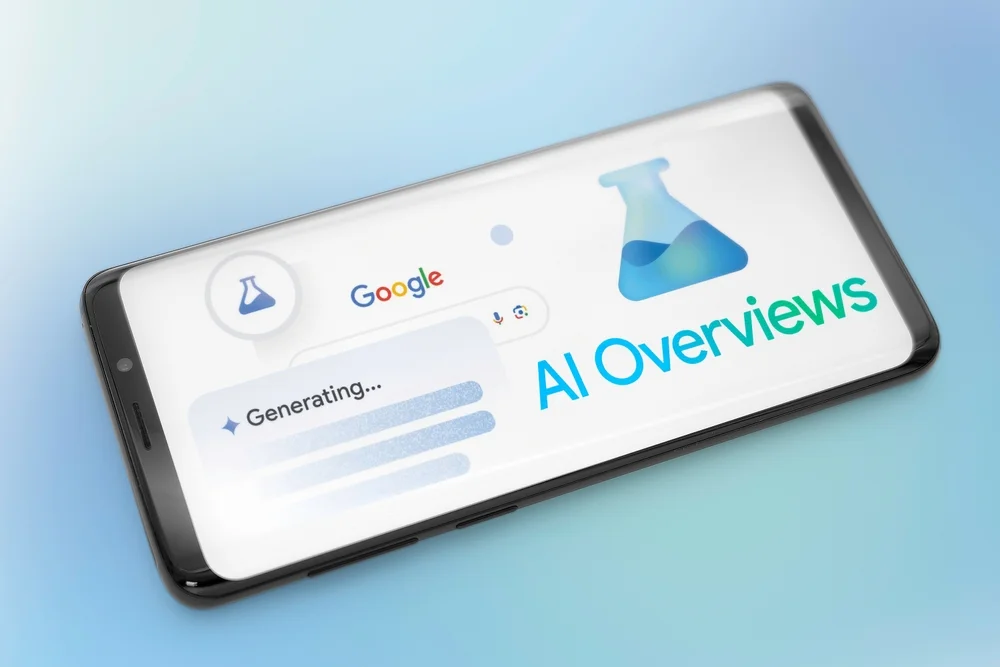
Perhaps the biggest visible change in search today is not happening in rankings.
It is happening in how answers are delivered.
Features like Google AI Overviews now generate summaries directly within search results, allowing users to receive immediate answers without visiting multiple websites. At the same time, conversational platforms like ChatGPT, Gemini, and Perplexity are becoming part of how people research products, compare services, and learn about new topics.
That has introduced an entirely new conversation around Generative Engine Optimization (GEO).
Unlike traditional SEO, which focuses primarily on ranking web pages, GEO focuses on helping businesses become visible inside AI-generated responses.
That does not mean businesses need two completely different strategies.
Quite the opposite.
The same qualities that have always supported strong search engine optimization—expertise, topical authority, trustworthy content, semantic relationships, and a positive user experience—are also becoming some of the strongest signals for AI-generated search experiences.
In other words, businesses preparing for the future of SEO with AI should not think about replacing traditional SEO.
They should think about expanding it.
Because the future of search is no longer limited to a single page of search results. It is becoming an ecosystem where traditional rankings, AI Overviews, and conversational search experiences all work together.
E-E-A-T Matters Even More in the AI Era

If there is one concept that has become even more important as AI continues reshaping search, it is E-E-A-T.
Google introduced Experience, Expertise, Authoritativeness, and Trustworthiness to help evaluate content quality, but those principles are becoming increasingly relevant for AI-powered search experiences as well.
Think about it this way.
AI systems are designed to generate answers by pulling information from sources they consider reliable. If a website lacks credibility, provides thin content, or fails to demonstrate expertise, it becomes much harder for search engines—and AI systems—to trust that information.
That means businesses should focus on much more than publishing content consistently.
They should also demonstrate real-world experience, support their claims with reliable information, build topical authority over time, and create content that genuinely helps users solve problems.
And honestly, this is one area where traditional SEO and AI SEO align almost perfectly.
Both reward websites that consistently produce trustworthy, high-quality content.
Can AI Write SEO Optimized Content?

One of the most common questions businesses ask today is whether AI can replace human writers.
The short answer is no.
AI can certainly help speed up research, generate ideas, organize information, and even create first drafts. Used correctly, it has become an incredibly valuable tool for improving productivity.
But publishing AI-generated content without human expertise rarely produces the best results.
Search engines are becoming increasingly effective at evaluating content quality, originality, and usefulness—not simply whether it was written by AI or a person.
That means businesses should think of artificial intelligence as a collaborative tool rather than a replacement for strategy or expertise.
The strongest content usually combines the efficiency of AI with the judgment, creativity, and industry knowledge that only people can provide.
And honestly, that balance will likely become even more important as generative AI SEO impact continues influencing search.
How to Win in Both Traditional SEO and AI Search

So what does a successful SEO strategy look like today?
The answer is not choosing between traditional SEO and AI optimization.
It is combining the strengths of both.
Businesses preparing for the future of search should focus on:
- building technically healthy websites,
- creating comprehensive, people-first content,
- strengthening topical authority across related subjects,
- optimizing for search intent instead of keywords alone,
- demonstrating E-E-A-T through credible, trustworthy content,
- and structuring information so both users and AI systems can understand it easily.
The good news is that many of these practices have always been part of good search engine optimization.
What has changed is the importance of connecting them into one cohesive strategy.
Instead of optimizing individual pages in isolation, businesses should think about building complete content ecosystems that demonstrate expertise across an entire subject area.
That approach supports traditional rankings while also improving the likelihood of appearing in AI-generated search experiences.
The Future of SEO Is Not AI or Traditional SEO—It Is Both

The conversation around AI SEO vs Traditional SEO often suggests that one approach will eventually replace the other.
But the reality looks very different.
Traditional SEO built the foundation that search engines still rely on today.
AI is simply changing how those foundations are interpreted and applied.
Businesses that continue focusing on technical excellence, helpful content, strong user experiences, and topical authority will remain well positioned as search continues evolving.
The difference is that they also need to think about how AI systems discover, interpret, and surface information.
That means optimizing not only for rankings but also for visibility inside AI-generated answers.
And honestly, that is where the future of SEO with AI becomes most exciting.
Instead of replacing traditional optimization, artificial intelligence is encouraging businesses to create better content, answer questions more thoroughly, and build stronger digital experiences.
Ultimately, that benefits everyone—including users.
Ready to Build an SEO Strategy for the AI Era?

At MRKT360, we help businesses combine proven SEO fundamentals with modern AI search optimization strategies.
From technical SEO and content strategy to semantic optimization and AI-ready content ecosystems, our team develops scalable strategies designed for today’s search landscape—and tomorrow’s.
Whether you’re looking to improve traditional rankings, increase visibility in AI-generated search experiences, or prepare for the future of SEO with AI, we’re here to help.
Contact MRKT360 today to build an SEO strategy that performs across both traditional search and the next generation of AI-powered discovery.
About MRKT360
MRKT360 is a results-driven digital marketing and solutions agency offering end-to-end services in performance marketing, AI strategy, SEO, GEO, paid media, and IT optimization.
With clients around the world, MRKT360 specializes in future-proofing brands through innovative solutions that align marketing and infrastructure.
FAQs
Is traditional SEO still relevant in the age of AI?
Absolutely. Traditional SEO remains the foundation of online visibility. Technical optimization, high-quality content, user experience, and authority continue to play a critical role in how search engines evaluate websites.
How is AI changing search engine optimization?
AI is improving how search engines understand context, user intent, semantic relationships, and content quality. Rather than focusing only on keywords, modern SEO increasingly emphasizes topical authority and helpful content.
Will AI replace traditional SEO completely?
No. AI is transforming SEO, not replacing it. Businesses still need strong technical foundations, trustworthy content, and effective optimization strategies to perform well in search.
How does Google use AI in search rankings?
Google uses AI to better understand search intent, evaluate content relevance, interpret natural language queries, and generate features such as AI Overviews that provide direct answers to users.
What are AI Overviews in Google search results?
AI Overviews are AI-generated summaries that appear at the top of certain Google search results. They combine information from multiple trusted sources to answer user questions more directly.
How do you rank in AI-generated search results?
While there is no guaranteed formula, businesses improve their chances by publishing trustworthy, well-organized, semantically rich content that demonstrates expertise and provides meaningful value to users.
How important is E-E-A-T in AI SEO?
E-E-A-T is becoming increasingly important because both search engines and AI systems rely on trustworthy, authoritative sources when selecting information to surface in search results.
Can AI-generated content rank on Google?
Yes, but only if it is genuinely helpful, accurate, and valuable. Google evaluates content quality rather than simply whether AI was involved in its creation.
What is the future of SEO with AI integration?
The future of SEO combines traditional optimization with AI-driven search experiences. Businesses that invest in technical excellence, semantic SEO, topical authority, and user-focused content will be better positioned for long-term success.