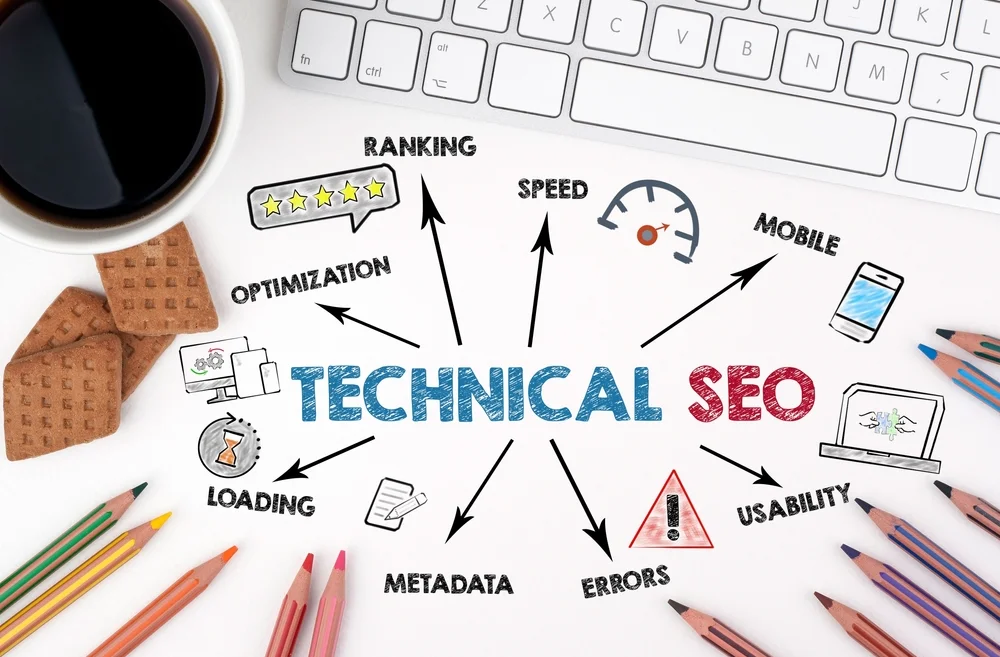

Search is no longer limited to a list of blue links.
Google AI Overviews and other AI-powered search experiences can now interpret questions, synthesize information from multiple sources, and provide answers directly within the search journey. For businesses, that creates a new challenge: your content needs to rank, but it also needs to be clear, authoritative, and useful enough to be understood within generative search experiences.
That’s where GEO, or Generative Engine Optimization, becomes important.
GEO doesn’t replace traditional search engine optimization. Instead, it expands the way businesses think about search visibility by considering how content may be discovered, interpreted, and surfaced by AI-powered systems.
Effective GEO Strategies therefore start with many of the same fundamentals that support strong SEO Rankings—relevance, authority, technical accessibility, and useful content—while adding new considerations around context, structure, evidence, and AI readability.
The objective isn’t to optimize for an algorithm at the expense of your audience.
It’s to create information that works well for both.
What Is Generative Engine Optimization and Why Does It Matter?

Generative Engine Optimization is the practice of improving digital content so that it can perform effectively across AI-powered search experiences as well as traditional search results.
Traditional SEO focuses heavily on helping search engines discover, understand, index, and rank webpages. GEO builds on that foundation by considering how generative systems interpret information and select sources when constructing responses.
That distinction is becoming increasingly relevant as search behavior evolves.
Someone researching a product, service, or business may no longer visit several websites individually before forming an opinion. An AI-powered search experience can summarize information, compare options, answer follow-up questions, and surface supporting sources within the same journey.
For businesses, this means visibility can happen in more places than a traditional organic result.
Strong AI Search Optimization focuses on making content easy to understand and substantiate. Clear explanations, credible evidence, identifiable expertise, well-organized information, and comprehensive topic coverage can all strengthen the signals surrounding your content.
GEO isn’t about finding a trick that guarantees an AI citation.
It’s about making your website a stronger source of information.
GEO and SEO Work Better Together

One of the biggest mistakes businesses can make is treating GEO and SEO as competing strategies.
They solve different parts of the same visibility challenge.
Traditional SEO establishes the technical and content foundation that allows search engines to discover and evaluate your website. Crawlability, indexation, internal linking, keyword relevance, backlinks, page experience, and content quality remain essential.
GEO builds on that foundation.
It considers whether AI-powered systems can easily identify the central ideas within your content, understand how those ideas relate to one another, evaluate the credibility behind your claims, and extract useful information when responding to more complex or conversational queries.
In practice, the relationship looks something like this: SEO helps make your content discoverable and competitive in search, while GEO helps make that information easier to interpret and potentially surface within generative experiences.
That’s why businesses asking how GEO and SEO work together shouldn’t think in terms of replacing one strategy with another. A strong GEO program still needs technically sound pages, quality content, and authority signals.
The strongest approach combines GEO Best Practices with proven SEO fundamentals.
Because if search engines struggle to crawl, index, or understand your website in the first place, optimizing that same content for generative search won’t solve the underlying problem.
Start GEO with Search Intent, Not AI
It can be tempting to begin a GEO strategy by asking, “What does AI want?”
That’s the wrong starting point.
The better question is: What does the person searching actually need?
Generative search is particularly useful for complex, conversational, and exploratory queries. Users may ask for explanations, comparisons, recommendations, step-by-step guidance, or follow-up information rather than entering one short keyword.
Your SEO content strategy should account for those different needs.
For example, someone searching “CRM software” may still be exploring the category, while someone asking “Which CRM is better for a small B2B sales team?” has a much more specific decision to make. Those searches require different levels of context, supporting information, and content depth.
Understanding that intent helps you determine what information should appear on the page, which questions deserve direct answers, and where additional context is necessary.
It also prevents one of the biggest problems with poorly implemented GEO Strategies: creating content that sounds optimized for machines but isn’t particularly useful to people.
If you want to know how to optimize content for AI search, start by answering the user’s actual question thoroughly and accurately.
The AI layer comes after that.
Create Content That AI Systems Can Easily Interpret

Useful information becomes more valuable when it is easy to understand.
This is where content structure becomes an important part of Generative Engine Optimization.
Long pages without clear organization can make it difficult for readers to locate specific answers and harder for search systems to understand how different sections relate to the main topic. Strong GEO content should establish clear relationships between questions, answers, supporting evidence, and related concepts.
Descriptive headings are a good starting point. Each section should address a recognizable subtopic rather than relying on vague or creative headings that provide little context. Important questions should receive direct answers, followed by enough explanation to make those answers genuinely useful.
Formatting can also support comprehension. Tables work well for comparisons, numbered steps can clarify processes, and concise lists can organize information that would otherwise become buried inside dense paragraphs. These elements should serve the content rather than being added simply because they appear “AI-friendly.”
Clarity matters at the sentence level too.
If a key definition requires five paragraphs before the reader understands what something means, the content probably needs refinement. Explain important concepts directly, establish context, and then add the detail required to demonstrate expertise.
These practices support both AI Search Optimization and traditional SEO because they make content easier for people and search systems to interpret.
Strengthen Claims with Evidence and Original Value

Generative search creates an interesting challenge for content marketers.
If dozens of websites publish essentially the same answer, why should any particular source stand out?
That’s where original value becomes increasingly important.
A strong GEO strategy should move beyond rewriting information that already exists elsewhere. Whenever possible, businesses should strengthen content with firsthand experience, proprietary data, expert commentary, original research, case studies, practical examples, or credible third-party sources.
Evidence also helps readers understand which statements are factual and where those claims come from. Statistics should have identifiable sources. Technical claims should be supported where appropriate. Recommendations should explain the reasoning behind them rather than simply presenting an unsupported conclusion.
This doesn’t mean every article needs proprietary research.
It means every article should have a reason to exist.
For businesses implementing GEO services or trying to Improve SEO Rankings, that distinction is particularly important. Publishing more generic content may increase the size of your website without meaningfully increasing its authority.
Creating content with identifiable expertise and supporting evidence gives both users and search systems stronger reasons to trust what you’re saying.
And trust becomes increasingly valuable when AI systems are deciding which information is reliable enough to incorporate into an answer.
E-E-A-T Supports Stronger GEO Strategies

As generative search systems synthesize information from multiple sources, credibility becomes increasingly important.
This is where E-E-A-T—Experience, Expertise, Authoritativeness, and Trustworthiness—supports both traditional search engine optimization and Generative Engine Optimization. These principles help establish whether the information on your website comes from a source users can reasonably trust.
Businesses can strengthen these signals by clearly identifying authors, demonstrating relevant expertise, citing reputable sources, showing firsthand experience where appropriate, and maintaining accurate information about the organization behind the website. Original examples, case studies, research, and expert commentary can provide additional evidence that the content reflects genuine knowledge rather than a summary of information found elsewhere.
Trust should also extend beyond individual articles. Clear company information, transparent policies, consistent subject-matter expertise, and a strong reputation across the web can reinforce the credibility of your website as a whole.
E-E-A-T is not a shortcut to appearing in generative results, nor is it a single ranking factor you can optimize independently. It is better understood as part of the broader quality and trust signals that strong GEO Strategies should reinforce.
Structured Data Helps Search Engines Understand Context

Structured data gives search engines explicit information about the meaning and relationships behind content on a page.
Using appropriate schema markup can help identify products, organizations, articles, authors, breadcrumbs, events, reviews, and other entities. That additional context can make it easier for search engines to interpret what a page represents and how it relates to other information across your website.
For businesses implementing GEO Best Practices, structured data should complement clear, well-organized content rather than compensate for weak information.
The markup also needs to accurately represent what users can see on the page. Adding unnecessary schema or marking up information that isn’t actually present does not make content more authoritative.
Most importantly, structured data should not be treated as a guaranteed method for earning visibility in AI-generated answers. Google does not provide a special schema type that guarantees inclusion in Google AI Overviews.
The value is more fundamental: helping machines understand your website with greater clarity.
That supports AI Search Optimization while strengthening the technical foundation of your broader SEO strategy.
Build Topic Depth Across Your Website

One strong article can perform well in search, but sustainable authority usually requires more than one page.
If your business wants to be recognized as a reliable source around a particular subject, your website should demonstrate meaningful depth across that topic. This means identifying the questions, subtopics, comparisons, problems, and decisions your audience encounters and developing content that addresses them strategically.
A strong SEO content strategy can connect those resources through relevant internal links, making relationships between pages clearer for both users and search engines.
For example, a company offering digital marketing services might build supporting resources around Generative Engine Optimization, Google AI Overviews, AI search, structured data, content optimization, and traditional SEO. Each page can address a distinct intent while contributing to a broader area of expertise.
The objective isn’t to publish dozens of articles simply to make a topic cluster larger. Every page should have a clear purpose and add something useful to the overall subject.
This approach strengthens traditional organic visibility while supporting GEO by giving generative systems more context about what your business knows and where its expertise lies.
Optimize for Google AI Overviews Without Ignoring the Wider AI Search Landscape
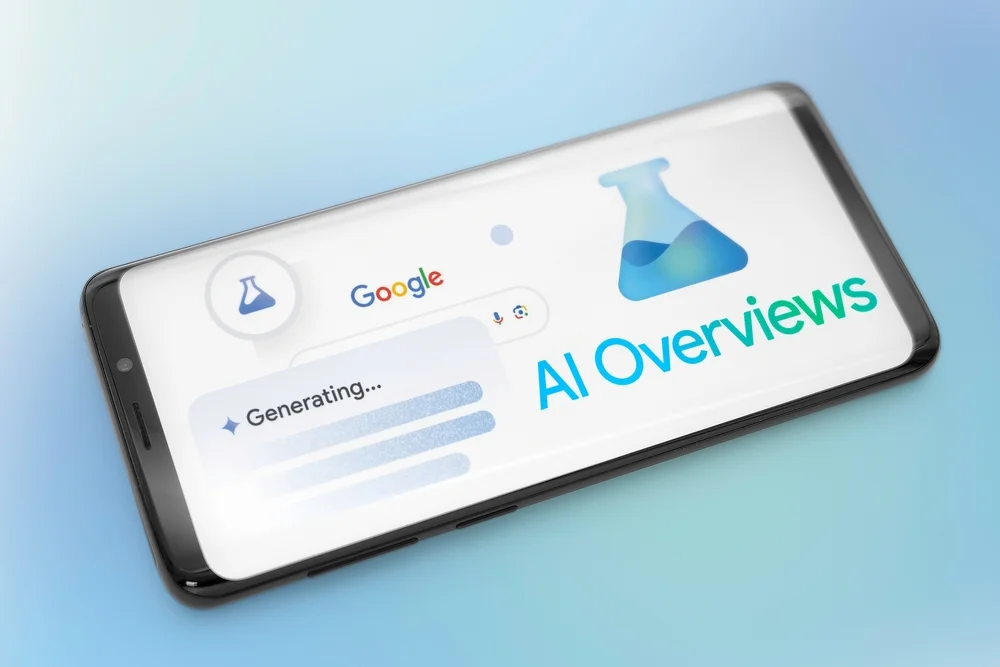
Google AI Overviews are one of the most visible examples of generative AI entering mainstream search, so they naturally receive significant attention in GEO conversations.
But a strong strategy shouldn’t be designed around one feature alone.
Generative search experiences are evolving across multiple platforms, and the way those systems select, summarize, and reference information can differ. Trying to reverse-engineer one interface can quickly lead to a strategy that becomes outdated as products and algorithms change.
Instead, focus on principles that remain useful across search environments: clear answers, reliable sourcing, original information, strong technical accessibility, relevant context, and demonstrable expertise.
Traditional SEO remains part of that equation. A technically inaccessible page or poorly organized website will not suddenly become competitive simply because its content has been rewritten for AI.
The goal of AI Search Optimization is therefore broader than getting mentioned in one AI Overview. It is to create content that remains discoverable and useful as the ways people search continue to expand.
Measure GEO Beyond Traditional SEO Rankings

Rankings, clicks, and organic traffic remain valuable metrics, but they don’t tell the entire story of GEO performance.
Generative search can expose a brand or its content within an answer even when the user’s journey doesn’t follow the traditional search-result-to-website path. That makes measurement more complex and means businesses need to evaluate several signals together.
Depending on the tools and platforms available, a GEO measurement framework may consider traditional SEO Rankings, organic impressions and clicks, branded search activity, referral traffic, conversions, and mentions or citations within priority AI search experiences where those signals can be measured reliably.
The key is establishing a baseline.
Identify the queries and topics that matter to your business, document your current organic and AI search visibility, implement improvements, and evaluate changes over time. This provides much more useful information than checking individual prompts occasionally and assuming one AI response represents overall performance.
GEO measurement is still developing, so businesses should be careful with anyone promising a single definitive “GEO score.”
The objective is to understand whether your visibility is improving across the search experiences that matter to your audience.
Common GEO Mistakes That Limit Search Visibility

As interest in GEO grows, so does the temptation to look for shortcuts.
Many of the practices that weaken traditional SEO can also limit the effectiveness of Generative Engine Optimization, while new mistakes emerge when businesses focus too heavily on AI itself.
Common problems include:
- writing primarily for AI systems instead of the people asking the questions;
- publishing large volumes of generic AI-generated content without original value;
- making claims without evidence or credible sourcing;
- ignoring technical SEO because GEO is treated as a separate discipline;
- creating disconnected articles without a broader content strategy;
- forcing keywords and AI-related terminology into content unnaturally;
- assuming structured data guarantees inclusion in generative results; and
- measuring GEO success only through traditional rankings.
Effective GEO Best Practices don’t depend on manipulating generative systems. They strengthen the quality, clarity, authority, and accessibility of the information those systems may encounter.
That’s also why GEO should be implemented alongside established SEO practices rather than in isolation.
GEO Is Becoming Part of Modern Search Optimization

Generative search is changing what visibility can look like, but it isn’t eliminating the foundations that made websites successful in traditional search.
Search engines still need to discover content, understand its meaning, evaluate its relevance, and determine whether the source is trustworthy. What is changing is how that information can be presented and how users interact with it after discovery.
That makes GEO an extension of modern search strategy rather than a replacement for SEO.
Businesses looking to Improve SEO Rankings should continue investing in technical performance, relevant content, authority, and search intent while expanding those efforts through Generative Engine Optimization. Clearer answers, stronger evidence, structured information, and deeper expertise can help content compete across both traditional and AI-powered search experiences.
The latest GEO Strategies will continue evolving as generative search develops. Building around durable principles rather than short-term tactics gives businesses a stronger foundation for adapting to those changes.
Strengthen Your Search Strategy with GEO and SEO

Search visibility now extends beyond traditional rankings, and your optimization strategy should reflect that change.
At MRKT360, our SEO services and GEO services combine proven search engine optimization practices with modern AI Search Optimization strategies. We help businesses strengthen technical foundations, develop authoritative content, improve search visibility, and prepare their websites for the growing role of generative search.
Whether you’re beginning to explore GEO or looking to integrate it into an existing SEO program, our team can develop a strategy based on your audience, content, and business objectives.
Contact MRKT360 today to build a search strategy designed for both today’s results and the evolving AI search landscape.
About MRKT360
MRKT360 is a results-driven digital marketing and solutions agency offering end-to-end services in performance marketing, AI strategy, SEO, GEO, paid media, and IT optimization.
With clients around the world, MRKT360 specializes in future-proofing brands through innovative solutions that align marketing and infrastructure.
FAQs
Why is GEO important for modern search optimization?
GEO is becoming important because search increasingly includes AI-generated answers alongside traditional results. Generative Engine Optimization helps businesses prepare content to be clearly understood, evaluated, and potentially surfaced within these generative experiences while supporting existing SEO efforts.
How do GEO strategies improve SEO rankings?
GEO strategies often reinforce practices that can also support organic search performance, including stronger content quality, clear structure, relevant internal linking, credible sourcing, and alignment with search intent. However, implementing GEO does not guarantee higher rankings.
What is Generative Engine Optimization (GEO)?
Generative Engine Optimization is the practice of improving content so it can perform effectively across generative AI search experiences. It focuses on factors such as clarity, authority, evidence, context, and content structure while building on traditional SEO foundations.
What are the best practices for implementing GEO strategies?
Strong GEO Best Practices include understanding search intent, providing clear and comprehensive answers, demonstrating E-E-A-T, supporting claims with evidence, using appropriate structured data, building topic depth, maintaining technical SEO, and updating important content as information changes.
How can I optimize my website for AI-powered search?
Start with a technically accessible website and high-quality content. Organize information clearly, answer relevant questions directly, demonstrate expertise, cite trustworthy evidence, strengthen internal linking, and make sure important pages remain crawlable and indexable.
What type of content performs best in AI-generated search results?
There is no single content format guaranteed to appear in generative results. However, accurate, original, well-structured, evidence-supported content that directly satisfies user intent provides a stronger foundation for both traditional and AI-powered search visibility.
How does search intent influence GEO strategies?
Search intent determines what users actually need from a query. Understanding whether someone wants an explanation, comparison, recommendation, or solution helps businesses create content that answers the right question rather than simply targeting a keyword.
How important is E-E-A-T for Generative Engine Optimization?
E-E-A-T helps businesses demonstrate experience, expertise, authority, and trust. These qualities support the creation of reliable content and should be incorporated throughout a GEO strategy rather than treated as an isolated optimization tactic.
What are the future trends in Generative Engine Optimization (GEO)?
GEO will likely continue evolving alongside AI-powered search experiences. Businesses should expect greater emphasis on authoritative information, original expertise, structured content, multimodal search, and measurement methods that account for visibility beyond traditional organic rankings.