


Google Ads Campaign Types Explained: When to Use Each in 2026
Understanding the different Types of Google Ads is essential for businesses that want consistent results from their Google Ads investment. Not every campaign serves the same purpose, and choosing the wrong format can lead to wasted budget and missed opportunities.
Whether you are planning your first Google Ads campaign, comparing Google Ads campaigns, or refining your Google Ads funnel strategy, knowing how each option supports specific Google Ads campaign goals makes a real difference. With the right structure, setup, and expert guidance, businesses in Toronto can turn Google Ads into a reliable growth channel and a smarter Paid search marketing strategy.
1. Search Ads
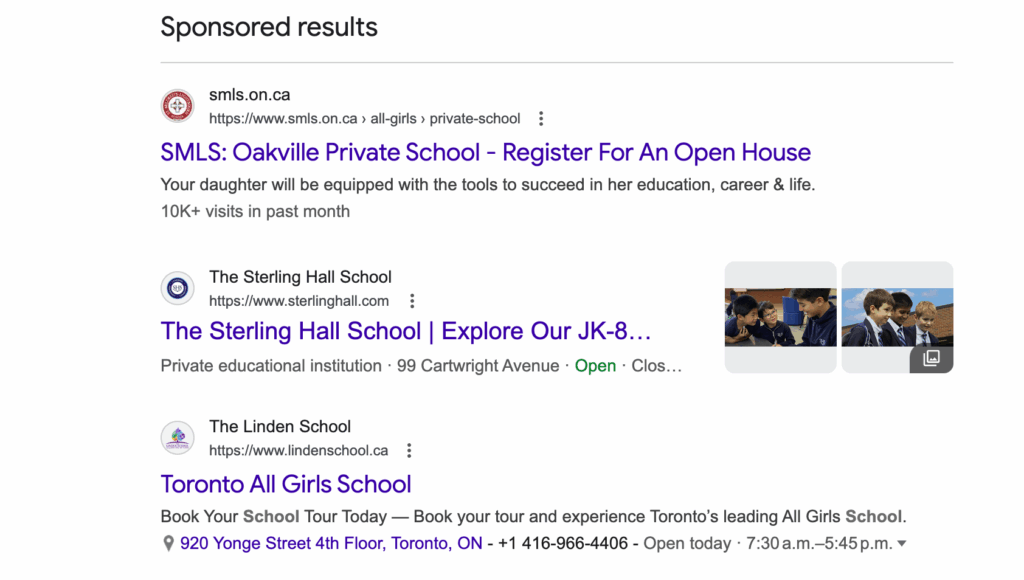
Search Ads are the most common type of Google Ads campaign. They appear above and below organic search results when a user searches on Google, helping businesses show up when intent is already high. They still play a major role, even as AI Overviews and other AI-driven features take up more space on the results page.
Most Search campaigns use Responsive Search Ads, where Google tests different combinations of your assets to find the strongest version for each search. You can provide up to 15 headlines and 4 descriptions. A strong Search campaign in Google Ads still depends on clear messaging, a smart structure, and the right targeting options.
As Google continues to expand AI-powered search experiences, Search Ads are becoming more than a click-capture tool. They are also a way to stay visible earlier in the buying journey, especially when campaigns are well-structured and well-written.
Best for: Reaching people actively searching for your products or services.
2. Display Ads

Display Ads run across Google’s Display Network, which includes more than 2 million websites, videos, and apps, and reaches over 90% of internet users worldwide. These are the visual Google Ads you see across blogs, news sites, apps, and other online platforms.
Unlike Search Ads, Display Ads aren’t about capturing immediate searches. They build awareness, maintain visibility, and reach users as they browse, making them good for a broad reach in a wider Google Ads Marketing strategy. A strong Google Ads Display campaign also aids remarketing and brand recall.
Because they are visual, Display Ads can be especially effective for brand exposure, remarketing, and keeping your business in front of potential customers before they are ready to act. For many brands, they play an important role in a full Google Ads funnel strategy.
Best for: Brand awareness, remarketing, and reaching users before they actively search.
3. Shopping Ads
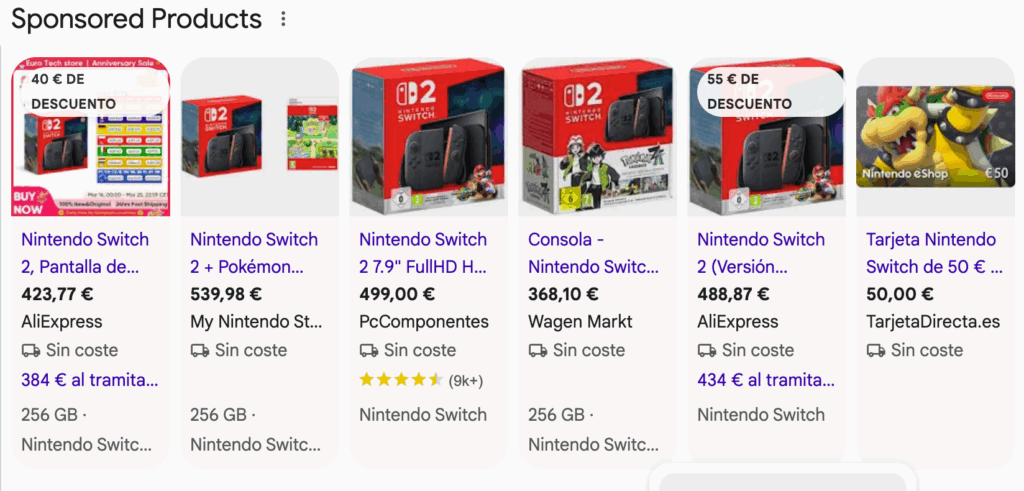
Shopping Ads are available to businesses that set up a Google Merchant Center account and submit a product feed. These ads combine key product details like the image, price, and store name, making them one of the most direct types of Google ads for e-commerce brands. Google uses the data in your Merchant Center feed to match products to relevant searches.
They can appear in and around Google Search results, in the Shopping tab, and on Google Maps, depending on the query and setup. That makes them especially useful when users are searching for a specific item, such as “Nintendo Switch 2,” and want to quickly compare options.
A strong Shopping ads campaign depends heavily on feed quality, pricing accuracy, and clean product data, all of which are part of effective Google Ads Management.
Best for: E-commerce businesses that want to promote specific products and capture high-intent shoppers.
4. Video Ads

Video Ads are most commonly shown on YouTube, but they can also appear across other sites and apps within the Google Display Network. These Google Ads formats include skippable in-stream ads, non-skippable ads, bumper ads, and masthead placements, each designed to reach users while they watch or browse video content.
As the name suggests, Video Ads rely heavily on strong visual storytelling. That means the creative matters just as much as the targeting. Many formats are skippable after a few seconds, so getting to the point quickly and using a strong hook is critical to holding attention and driving engagement. For businesses investing in Google Ads Marketing, a smart Video campaign Google Ads setup can build recognition before users are ready to search.
Because video allows you to explain, demonstrate, and build trust visually, it often plays an important role in broader campaign planning.
Best for: Brand awareness, product demonstrations, and engaging visual content for reaching audiences.
5. App Promotion Ads
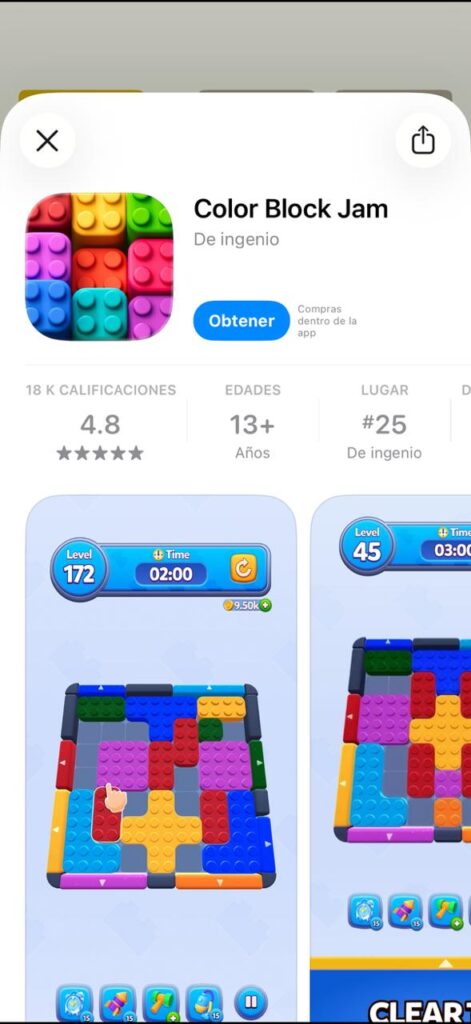
App Promotion Ads are designed to drive installs and engagement for mobile applications. These Google Ads campaigns appear mainly on mobile devices across Google Search, YouTube, Google Play, and the Google Display Network. If you have ever played a free mobile game that runs ads between levels, you have likely seen this type of campaign in action.
Their goal is simple: get users to download the app or return to it.
When clicked, the ad takes users to the right app store, usually Google Play or the Apple App Store. For brands comparing different Google Ads advertising types, this campaign makes the most sense when the app is a core product or an important part of the customer journey.
Best for: Businesses launching an app or using an app as a key revenue or customer retention channel.
6. Local Ads
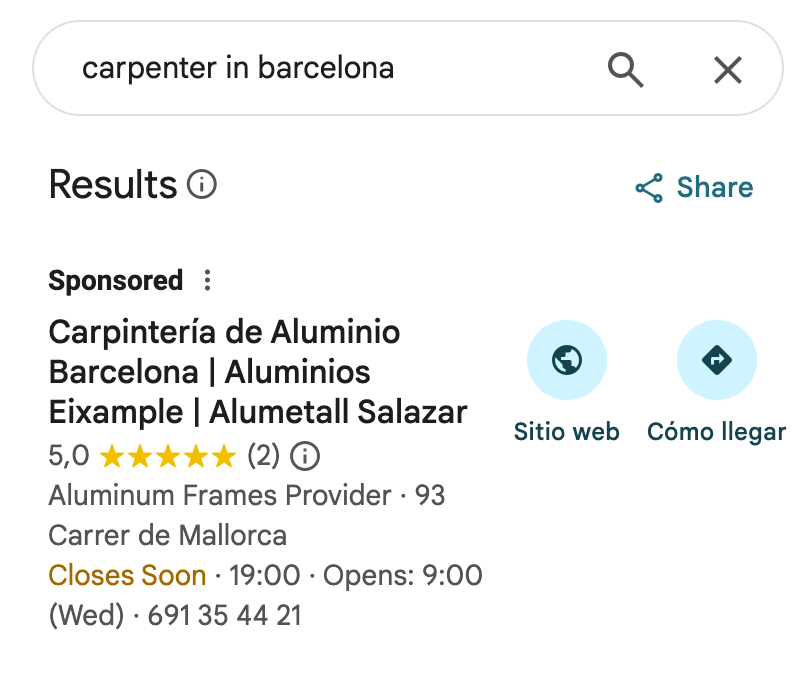
Local Services Ads are designed for service providers and location-based businesses that want to reach nearby customers. They can appear prominently in Google Search and are especially useful when someone searches for terms like “carpenter near me” or “bakery near me.” Depending on the setup, local ad formats can also show in Google Maps.
Unlike standard Google Ads campaigns, which usually run on a pay-per-click model, Local Services Ads work on a pay-per-lead basis. That means businesses pay for valid leads, such as calls or message requests, rather than just clicks or impressions.
For businesses comparing Google Ads advertising types, this option is especially valuable when the goal is to generate real local inquiries from people ready to book or visit.
Best for: Brick-and-mortar businesses and local service providers looking to generate more nearby leads, calls, and foot traffic.
7. Discovery Ads

Discovery Ads appear across some of Google’s highest-engagement placements, including YouTube’s home and “Watch Next” feeds, Gmail’s Promotions and Social tabs, and the Discovery feed in the Google app. These Google Ads placements are designed to reach users while they browse content, rather than when they are actively searching.
They rely heavily on strong visuals and clear messaging to attract attention. Unlike Search campaigns in Google Ads, which are driven by search intent, Discovery campaigns depend on creative quality to stand out in content-heavy environments. That makes them a strong addition to a broader Google Ads funnel strategy, especially when the goal is to introduce your brand to new audiences.
Best for: Building brand awareness and reaching potential customers who are open to discovering new products or services.
Smart Campaigns and Performance Max
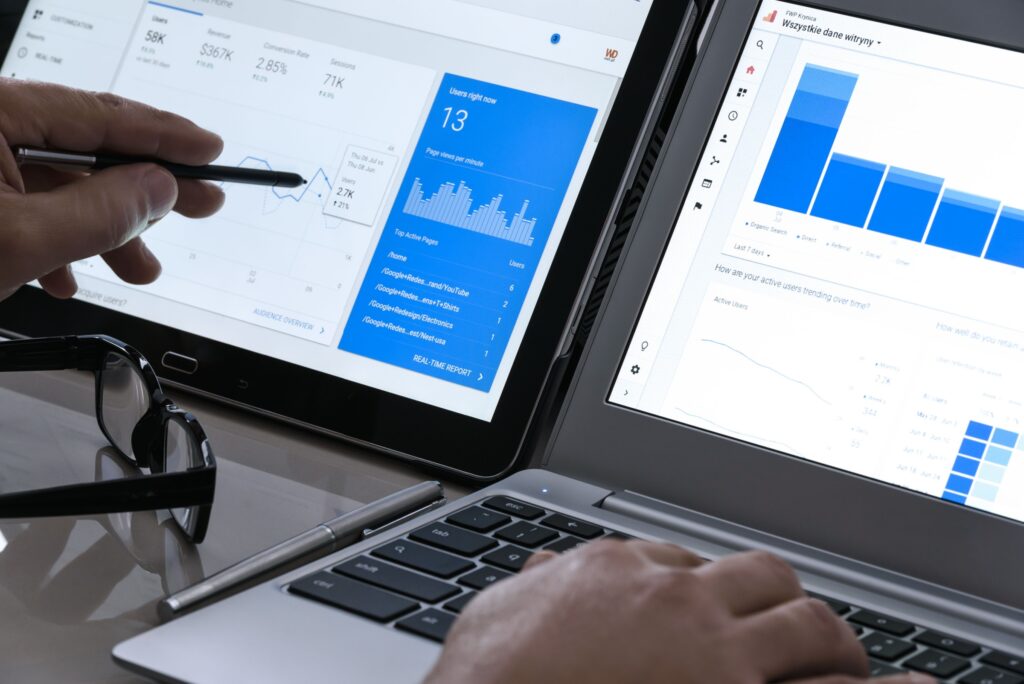
Smart Campaigns and Performance Max use Google’s automation, machine learning, and AI for ad delivery, taking over manual control. While this simplifies launching, it reduces visibility and control, making expert oversight essential.
Smart Campaigns
Smart Campaigns are a simplified Google Ads option available in Smart Mode. They are designed for ease of use, with automated bidding and minimal setup requirements, making them appealing to smaller businesses or advertisers with limited time. Instead of full keyword control, they rely on broader keyword themes and Google’s automated matching to show ads to relevant searches.
They are easy to manage, but that simplicity comes with tradeoffs. Since targeting and optimization are largely automated, advertisers have less control over how traffic is filtered and where spend goes. Because they limit manual refinement, a proper Google Ads campaign settings guide becomes very important.
This is also where many businesses that still refer to the platform as Google AdWords or run into trouble, because the platform is far more automated than it was in the past.
Best for: Small businesses that want a simple, low-maintenance way to start advertising on Google.
Performance Max Campaigns
Performance Max is Google’s more advanced AI-powered campaign type. It gives advertisers access to all of Google’s inventory from a single campaign, including Search, YouTube, Display, Discover, Gmail, and Maps. Rather than relying on manual channel selection, it uses your goals, audience signals, creative assets, and conversion data to find opportunities across Google’s platforms.
The main advantage of the Performance Max campaign setup is scale and automation. It can help businesses expand their reach and improve efficiency without manually managing everything.
At the same time, it works best when supported by clear inputs, strong conversion tracking, and ongoing Google Ads campaign optimization. Good automation still needs direction, which is why Google Ads Management matters.
Best for: Businesses that want to use automation to reach customers across all Google channels while still working toward clear conversion goals.
Automation can be powerful, but it should never be left on autopilot. Google’s systems are built to spend budget efficiently, not cautiously, which is why working with an experienced Google Ads Agency and a trusted Google Ads Services partner makes a difference.
Choosing the Right Google Ads Type Is Key
Selecting the right Google Ads campaign depends on goals, budget, audience, and desired control. Campaigns serve different purposes: capturing intent, building awareness, promoting products, or automating delivery. The key is using the right campaigns strategically, not using every option. That is where expert planning, sharper execution, and practical Google Ads campaign optimization tips make the difference.
- Search Ads capture high-intent users who are already looking for a solution.
- Display, Video, and Discovery Ads help build awareness before users are ready to convert.
- Shopping Ads are ideal for e-commerce brands selling specific products.
- Local Services Ads work well for nearby leads, calls, and in-person business.
- Smart and Performance Max campaigns offer automation, but they still need expert oversight.
Ready to get more out of Google Ads for your business?
As a Google Partner agency, MRKT360 gives you access to experienced account managers, copywriters, and designers who know how to build, manage, and improve campaigns that perform. We take the day-to-day work off your shoulders so you can focus on running your business while we drive stronger results.
Book your FREE consultation today and see how the right strategy can move your business forward.
- What are the different types of Google Ads campaigns?
Search, Display, Shopping, Video, App Promotion, Local Services, Discovery, Smart Campaigns, and Performance Max.
- How do I choose the right Google Ads campaign type for my business?
Choose based on your goals, whether you want to capture demand, build awareness, promote products, or automate delivery across multiple channels.
- What is the difference between Search ads and Display ads?
Search ads target users actively searching for something, while Display ads reach users as they browse websites and apps.
- Which Google Ads campaign type is best for e-commerce businesses?
Shopping Ads are typically the best choice for e-commerce because they showcase product images, prices, and details directly in search results.
- What are the benefits of using Performance Max campaigns?
Performance Max campaigns use automation and machine learning to show ads across all Google channels from a single campaign.
- What are common mistakes when choosing a Google Ads campaign type?
Common mistakes include choosing campaigns without clear goals, relying too heavily on automation, or using the wrong campaign type for the customer journey stage.