Google Ads vs Facebook Ads
Which Advertising Platform Is Right for Your Business?
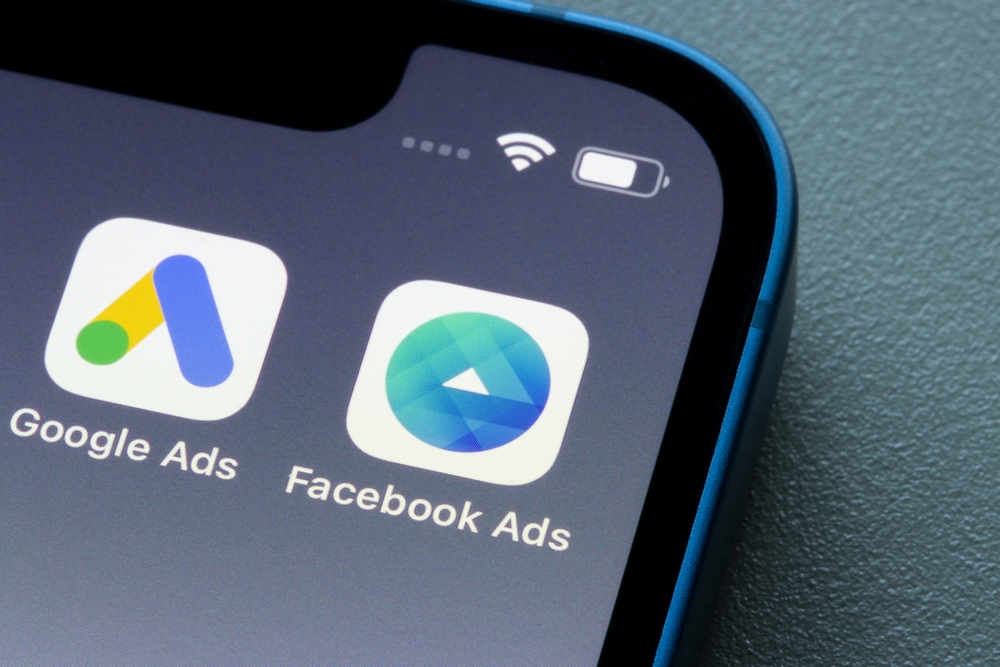
Google Ads and Facebook Ads are two of the most effective digital advertising platforms, but they reach customers in very different ways. Google Ads captures users who are actively searching for products or services, while Facebook Ads introduces businesses to audiences based on their interests, behaviors, and demographics.
Rather than competing, these platforms often complement one another. Choosing the right platform depends on your business goals, target audience, budget, and where potential customers are in the buying journey. Understanding the strengths of each platform allows businesses to build more effective advertising strategies and maximize their return on investment.
Understanding the Platforms
Although both platforms are part of a paid media strategy, they operate differently because they are designed around different types of user behavior.
Google Ads is built around search intent. Users actively search for information, products, or services, making it highly effective for capturing demand.
Facebook Ads, part of the Meta advertising ecosystem, focuses on audience discovery. Rather than waiting for users to search, businesses introduce products and services to audiences while they browse Facebook, Instagram, Messenger, and other Meta properties.
Because each platform serves a different purpose, they often perform best when used together rather than viewed as direct competitors.
What Are Google Ads?
Google Ads is Google’s advertising platform that displays ads across Search, YouTube, Display Network websites, Google Maps, Gmail, and other Google properties.
Businesses commonly use Google Ads to:
- Generate qualified leads
- Increase website traffic
- Drive online sales
- Promote local services
- Capture high-intent searches
One of Google Ads’ greatest strengths is its ability to reach users who are already looking for solutions. This often results in higher purchase intent and stronger conversion potential.
Organizations interested in learning more about the platform may also benefit from exploring How Google Ads Works, which explains the auction system, campaign types, and bidding process in greater detail.
What Are Facebook Ads?
Facebook Ads are managed through Meta Ads Manager and allow businesses to advertise across Facebook, Instagram, Messenger, Audience Network, and other Meta platforms.
Businesses frequently use Facebook Ads to:
- Build brand awareness
- Reach new audiences
- Generate leads
- Promote products visually
- Increase customer engagement
Unlike Google Ads, Facebook Ads rely heavily on audience targeting rather than search behavior. Advertisers define audiences using demographics, interests, online activity, purchasing behaviors, and lookalike audiences.
This makes Meta particularly effective for introducing products and building demand before customers begin actively searching.
How Do Google Ads Compare to Facebook Ads?
The biggest difference between the platforms lies in user intent.
Google Ads reaches people who already know what they are looking for.
Facebook Ads reaches people who may not yet realize they need your product or service.
Some of the main differences include:
| Google Ads | Facebook Ads |
| Intent-based advertising | Discovery-based advertising |
| Keyword targeting | Audience targeting |
| Captures existing demand | Creates demand |
| Strong for lead generation | Strong for brand awareness |
| Search-focused | Visual and social-focused |
Neither platform is inherently better. Their effectiveness depends on the objectives of each campaign and the customer journey they support.
Ad Format Differences: Search Ads, Video Ads, and Visual Ads
Another major distinction is the type of advertising experiences each platform emphasizes.
Google Ads supports formats such as:
- Search ads
- Shopping ads
- Display ads
- YouTube video ads
- Performance Max campaigns
Facebook Ads offers formats including:
- Image ads
- Video ads
- Carousel ads
- Collection ads
- Stories
- Reels ads
Because Facebook and Instagram are highly visual environments, creative quality often plays a larger role in campaign performance. Google Search, meanwhile, focuses more heavily on matching user intent through keywords and relevance.
Businesses running ecommerce campaigns may benefit from understanding both Google Ads for Ecommerce and Facebook Ads for Ecommerce, which explore platform-specific strategies in greater detail.
Google Ads vs Facebook Ads for ROI
Return on investment depends on much more than the advertising platform itself. Audience quality, campaign strategy, landing pages, and creative execution all influence performance.
Google Ads often produces strong ROI when businesses want to:
- Capture purchase intent
- Generate qualified leads
- Drive immediate conversions
- Promote local services
Facebook Ads frequently delivers strong ROI when businesses want to:
- Build awareness
- Introduce new products
- Grow communities
- Generate demand over time
Rather than comparing ROI in isolation, businesses should evaluate how each platform contributes to overall marketing objectives.
Companies interested in measuring campaign profitability may also benefit from exploring Paid Media ROI, which examines the metrics used to evaluate advertising success.
Understanding ROI within a broader business context leads to better investment decisions.
Which Platform Is Better for Different Business Goals?
The right platform depends largely on what a business is trying to accomplish.
Google Ads is often better suited for:
- High-intent lead generation
- Professional services
- Local businesses
- Emergency services
- B2B search demand
Facebook Ads often performs well for:
- Consumer products
- Lifestyle brands
- Product launches
- Brand awareness
- Visual storytelling
Many organizations benefit from using both platforms because they support different stages of the customer journey.
Businesses should evaluate customer behavior rather than assuming one platform fits every objective.
Why Many Businesses Use Google Ads and Facebook Ads Together
The strongest paid media strategies often combine both platforms instead of choosing only one.
An integrated approach allows businesses to:
- Build awareness through Facebook and Instagram.
- Capture purchase intent through Google Search.
- Reinforce messaging through remarketing.
- Increase visibility across multiple touchpoints.
- Improve customer acquisition.
This cross-channel strategy recognizes that customers rarely convert after a single interaction. Instead, they engage with brands across multiple platforms before making a purchasing decision.
Organizations looking to build integrated advertising strategies may also benefit from understanding Paid Media Marketing Strategy, which explores how different paid channels work together.
Combining platforms often creates stronger long-term performance than relying on a single advertising channel.
Common Mistakes When Comparing Google Ads and Facebook Ads
Many businesses approach this comparison with unrealistic expectations or oversimplified assumptions.
Common mistakes include:
- Expecting identical performance from both platforms.
- Comparing only cost per click.
- Ignoring customer intent.
- Evaluating campaigns too quickly.
- Focusing on one metric instead of business outcomes.
Each platform serves different purposes, and success depends on matching advertising strategies to customer behavior and business goals.
Businesses that understand these differences are often better positioned to allocate budgets more effectively and improve campaign performance over time.
Why MRKT360 for Cross-Platform Paid Media Strategy
At MRKT360, we help businesses build integrated paid media strategies that leverage the strengths of multiple advertising platforms. Rather than treating Google Ads and Facebook Ads as competing channels, we develop campaigns that work together to support awareness, lead generation, customer acquisition, and long-term growth.
By combining strategic planning, audience insights, creative development, and performance analysis, we help organizations maximize advertising investments across the entire customer journey.
This holistic approach creates stronger marketing ecosystems capable of adapting to changing customer behavior and evolving digital platforms.
Are Facebook ads better than Google Ads?
Neither platform is universally better because they serve different purposes. Google Ads excels at reaching users with high purchase intent, while Facebook Ads is highly effective for audience discovery, brand awareness, and visual engagement.
The best choice depends on business objectives, target audiences, and where potential customers are within the buying journey. Many businesses achieve stronger results by using both platforms together.
How much do Facebook ads cost per 1000 views?
Facebook advertising costs per 1,000 impressions (CPM) vary depending on factors such as audience competition, industry, campaign objective, geographic location, and seasonality.
Rather than focusing solely on CPM, businesses should evaluate broader performance metrics such as conversions, customer acquisition costs, and return on investment. Lower impression costs do not always translate into better business outcomes.
What is the cheapest platform to run ads?
There is no single platform that is consistently the cheapest for every business. Advertising costs vary based on competition, targeting, industry, audience size, and campaign objectives.
Instead of choosing a platform based only on cost, businesses should consider overall efficiency, lead quality, and long-term return on investment. A platform with higher advertising costs may ultimately generate stronger business results if it delivers higher-quality customers.
Key Takeaway
Google Ads and Facebook Ads are designed for different stages of the customer journey. Google Ads captures existing demand by reaching users actively searching for solutions, while Facebook Ads builds awareness and introduces brands to new audiences through highly targeted social advertising.
Rather than viewing them as competing platforms, businesses should evaluate how each contributes to broader marketing objectives. Combining both platforms strategically often creates stronger customer journeys, better advertising performance, and more sustainable business growth.
Strategy That Works
Why Businesses Trust Us
Partnership Mentality
We treat your business like our own, aligning strategy with your long-term vision and growth goals.

Accountability First
We stand behind our work. Clear reporting, clear expectations, and a commitment to continuous improvement.
Transparent Communication
You always know what we’re doing, why we’re doing it, and how it’s performing. No confusion. No hidden tactics. Just clarity.
GET STARTED