
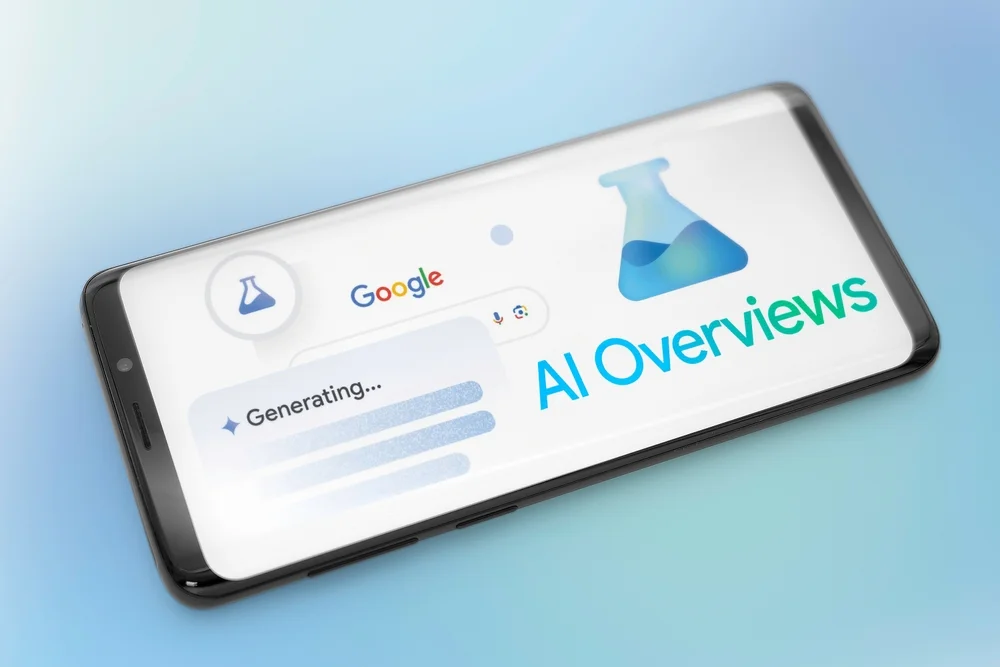
Google AI Overviews
What They Are and Why They Matter
Google AI Overviews are transforming how people interact with search by introducing AI-generated summaries directly within search results. Instead of requiring users to visit multiple websites to gather information, Google can now provide synthesized answers that combine insights from several sources into a single, easy-to-read response.
This represents one of the most significant changes to Google Search in years. Search is evolving from a list of links into a more conversational and context-aware experience, allowing users to ask increasingly complex questions while receiving more comprehensive answers.
For businesses, publishers, and marketers, Google AI Overviews introduce both opportunities and challenges. While they have the potential to improve information discovery and user experience, they are also changing how visibility, traffic, and authority are earned within search ecosystems.
Understanding how AI Overviews work—and why they matter—is becoming increasingly important as Google continues integrating artificial intelligence into the future of search.
What Are Google AI Overviews?
Google AI Overviews are AI-generated summaries that appear at the top of search results for selected queries. Powered by Google’s generative AI technologies, they are designed to provide concise, structured answers that help users understand a topic more quickly without having to open multiple pages.
These summaries often include:
- Key information synthesized from multiple sources.
- Links to supporting websites.
- Follow-up suggestions.
- Additional context related to the original query.
Unlike featured snippets, which typically extract content from a single source, AI Overviews combine information from several pages to generate a broader response. This allows Google to address more complex, multi-part, or comparative questions in a single interface.
Examples of searches that may trigger AI Overviews include:
- “What’s the difference between SEO and PPC?”
- “Best CRM software for small businesses.”
- “How do heat pumps work?”
- “Compare hybrid and electric vehicles.”
By providing immediate answers, Google aims to reduce friction during the search process while helping users explore topics more efficiently.
Why Google Introduced AI Overviews
Google introduced AI Overviews as part of its broader effort to evolve search beyond traditional keyword matching and link retrieval. User behavior has changed significantly over the past decade, with people increasingly expecting search engines to provide direct, contextual, and conversational answers.
AI Overviews address several emerging trends:
- Longer and more complex search queries.
- Increased use of natural language.
- Growing expectations for immediate answers.
- Rising competition from AI-native platforms.
- Greater demand for personalized search experiences.
At the same time, Google faces competition from platforms such as ChatGPT, Gemini, and Perplexity, all of which have influenced how users think about finding information online. AI Overviews allow Google to maintain its position as the primary destination for search while incorporating many of the conversational elements users now expect.
Importantly, AI Overviews are not intended to replace traditional search results entirely. Instead, they represent an additional layer within Google’s broader search ecosystem, combining generative AI capabilities with the company’s existing ranking systems.
How Google AI Overviews Work
Although Google has not disclosed every technical detail behind AI Overviews, it has explained that these responses are generated using advanced AI models that analyze multiple sources simultaneously.
At a high level, the process involves:
- Understanding the user’s query.
- Determining whether an AI Overview would be helpful.
- Gathering information from multiple relevant sources.
- Synthesizing the information into a coherent response.
- Displaying supporting links alongside the generated summary.
Google has also discussed a concept known as query fan-out, where the system effectively performs multiple searches behind the scenes to better understand complex topics. This allows AI Overviews to provide more comprehensive answers than traditional search results alone.
In some cases, users can continue exploring topics through Google’s AI Mode, creating a more conversational experience that maintains the context of previous questions.
This shift reflects Google’s broader vision for search: moving from helping users find information to helping them understand it.
How AI Is Reshaping the Way People Search Online
AI Overviews are influencing how users interact with search results in several important ways. Rather than clicking through multiple websites immediately, users can often gather foundational information directly from Google’s interface.
This change is contributing to trends such as:
- Longer search queries.
- More conversational searches.
- Increased topic exploration.
- Reduced reliance on traditional blue links.
- Greater expectations for immediate answers.
For users, this often creates a faster and more convenient search experience. However, for businesses and publishers, it raises important questions about visibility and traffic acquisition.
Organizations may find that success in search increasingly depends on being recognized as a reliable source of information rather than simply achieving a high ranking position. This shift reinforces the growing importance of authority, trust, and content quality within modern search environments.
Businesses interested in strengthening these signals may also benefit from exploring Google E-E-A-T and E-E-A-T and SEO, both of which examine the relationship between trust, authority, and search visibility.
How Does Google Choose What Appears in an AI Overview?
Google has not published a definitive list of ranking factors for AI Overviews, but it has indicated that these experiences rely on many of the same systems that support traditional search.
Several characteristics appear to influence whether content is surfaced within AI-generated responses, including:
- Relevance to the query.
- Content quality.
- Topical authority.
- Trustworthiness.
- Demonstrated expertise.
- Strong user experience.
Importantly, there is no separate “AI Overview algorithm” that businesses can optimize for independently. Instead, organizations should continue focusing on creating helpful, reliable, and well-structured content that aligns with user intent.
As Google’s AI experiences continue evolving, one principle remains consistent: content that provides genuine value is more likely to remain visible across both traditional and AI-powered search environments.
What Types of Searches Trigger AI Overviews?
Google AI Overviews do not appear for every search. Instead, Google selectively displays them when its systems determine that an AI-generated summary would be particularly useful for helping users understand a topic.
AI Overviews are more likely to appear for searches involving:
- Comparisons between products or services.
- Multi-step questions.
- Educational or informational topics.
- Broad research queries.
- Complex decision-making processes.
- Questions that require synthesizing multiple perspectives.
For example, searches such as “SEO vs PPC for small businesses” or “How do solar panels compare to traditional energy sources?” are more likely to generate AI Overviews than highly navigational queries like “Facebook login” or “Netflix.”
This reflects Google’s intention to use AI where it can provide meaningful context rather than simply replacing existing search experiences.
As users become more comfortable with conversational search, the types of queries that trigger AI Overviews are likely to continue expanding.
Can You Turn Off Google AI Overviews?
One of the most common questions surrounding AI Overviews is whether users can disable them entirely.
At present, Google does not offer a permanent setting that allows users to turn off AI Overviews across all searches. However, users can often bypass them by using the “Web” filter, which prioritizes traditional search results, or by adjusting how they perform searches.
It’s also important to note that AI Overviews are not available for every query or in every region. Availability may vary depending on:
- Geographic location.
- Google account settings.
- Language support.
- Query type.
- Product rollout timelines.
As Google continues expanding its AI capabilities, user controls and customization options may evolve alongside the broader search experience.
Google AI Overviews vs Traditional Search Results
Google AI Overviews are changing search, but they are not replacing traditional search results entirely.
Traditional search remains highly valuable for:
- Navigational queries.
- Local searches.
- Breaking news.
- Transactional searches.
- Website discovery.
AI Overviews, by contrast, are particularly effective for helping users understand topics quickly and explore more complex questions.
Rather than viewing these experiences as competitors, it is more accurate to see them as complementary components of Google’s evolving search ecosystem. In many cases, AI Overviews appear above the traditional list of links while still providing users with opportunities to visit supporting sources.
This hybrid model reflects Google’s broader strategy: combining generative AI capabilities with the ranking systems that have defined search for decades.
For businesses, this means visibility is becoming more nuanced. Ranking well remains important, but so does creating content that can support discovery across multiple search experiences.
Search Is Changing: Where AI Overviews Fit Into the Future
Google AI Overviews are not an isolated product—they are part of a much larger transformation taking place across the search industry.
Platforms such as ChatGPT, Gemini, Perplexity, and Microsoft’s Copilot are reshaping user expectations by introducing conversational interfaces and AI-generated responses. Users increasingly expect search experiences to provide answers, context, and recommendations rather than simply directing them to websites.
This shift has several implications for businesses:
- Authority matters more than ever.
- Trust and credibility continue to grow in importance.
- Content quality remains a competitive advantage.
- Visibility now extends beyond traditional rankings.
As AI becomes more integrated into how people discover information, organizations will need to think more broadly about digital visibility. Search is no longer confined to Google’s ten blue links—it is becoming an interconnected ecosystem of AI assistants, conversational interfaces, and intelligent discovery experiences.
Businesses interested in preparing for this transition may also benefit from exploring E-E-A-T Optimization and Semantic SEO, both of which support long-term visibility across emerging search environments.
How to get AI Overviews on Google?
AI Overviews are automatically displayed when Google’s systems determine they would be helpful for a particular query. Availability depends on factors such as location, language, and product rollout status, so users do not typically need to enable them manually.
Why is the AI Overview not showing?
AI Overviews may not appear because they are not supported for a specific query, language, or geographic region. Google also selectively displays AI Overviews only when its systems determine they are likely to improve the search experience.
Is Google’s AI free?
Many of Google’s AI-powered search experiences, including AI Overviews, are currently available at no additional cost to users. However, Google also offers premium AI products and subscription services that provide access to additional capabilities.
Is Google’s new AI better than ChatGPT?
Google AI Overviews and ChatGPT serve different purposes. AI Overviews are designed to enhance search by providing quick, contextual answers within Google Search, while ChatGPT functions as a conversational AI assistant capable of supporting a broader range of tasks. The better option ultimately depends on the user’s goals and preferred experience.
Why MRKT360 for AI Search Strategy
At MRKT360, we help businesses adapt to changing search environments by developing strategies designed for both traditional and AI-powered discovery.
Our approach combines SEO, content strategy, authority building, and AI search optimization to help organizations strengthen their visibility across platforms such as Google, ChatGPT, Gemini, and Perplexity.
By integrating expertise from Google E-E-A-T, Semantic SEO, and emerging AI search practices, we help businesses prepare for a future where visibility depends not only on rankings but also on trust, authority, and content quality.
As search continues evolving, our goal is to help organizations remain discoverable across every stage of the customer journey.
Key Takeaway
Google AI Overviews represent one of the most significant changes to search in recent years. By combining generative AI with Google’s existing search infrastructure, they are helping users access information more quickly while reshaping how businesses think about visibility and content discovery.
Although AI Overviews are still evolving, they signal a broader shift toward conversational, context-aware search experiences. Organizations that invest in authority, trust, and high-quality content will be better positioned to remain visible as Google’s AI-powered search ecosystem continues to expand.
Get Your Business AI-Ready with MRKT360

Ready to Improve your SEO?
Get a free SEO audit and digital marketing strategy session today!