
If you’ve ever wondered why some ecommerce stores seem to convert visitors into customers effortlessly while others struggle to generate consistent sales, you’re not alone.
Many businesses assume the difference comes down to having better products, lower prices, or bigger advertising budgets.
Sometimes that’s true.
But more often, the biggest difference is the experience customers have once they arrive on the website.
Think about the last time you shopped online.
You probably didn’t stop because the product wasn’t interesting. Instead, maybe the website loaded too slowly, the product page didn’t answer your questions, or checkout simply felt like too much work. It only takes one or two moments of frustration for someone to leave and continue shopping somewhere else.
That’s exactly why ecommerce website optimization has become such an important part of growing an online business.
Instead of focusing exclusively on attracting more visitors, successful brands also focus on making it easier for those visitors to become customers. Every improvement—whether it’s website speed, navigation, product pages, mobile usability, or checkout—helps remove friction that may be standing between interest and purchase.
The good news is that meaningful growth doesn’t always require rebuilding your entire website.
Sometimes, the biggest increases in revenue come from improving dozens of small experiences that customers notice without even realizing it.
Your Website Should Make Buying Feel Effortless

Many businesses assume customers abandon their website because they simply are not interested in buying.
Sometimes that happens.
But surprisingly often, customers leave because the buying experience feels more difficult than they expected.
You have probably experienced this yourself. Maybe you found exactly what you wanted, but the shipping costs were impossible to find. Maybe the product description left you with more questions than answers. Or perhaps checkout required creating an account when all you wanted was to complete your purchase.
None of those problems seem particularly significant on their own.
Together, however, they create friction.
And friction is one of the biggest reasons visitors leave without converting.
That is why successful ecommerce optimization services rarely focus on design alone. They focus on making every step of the customer journey feel intuitive, predictable, and easy to complete.
When customers never have to stop and think about what to do next, they are much more likely to keep moving toward a purchase.
More Traffic Doesn’t Always Mean More Sales
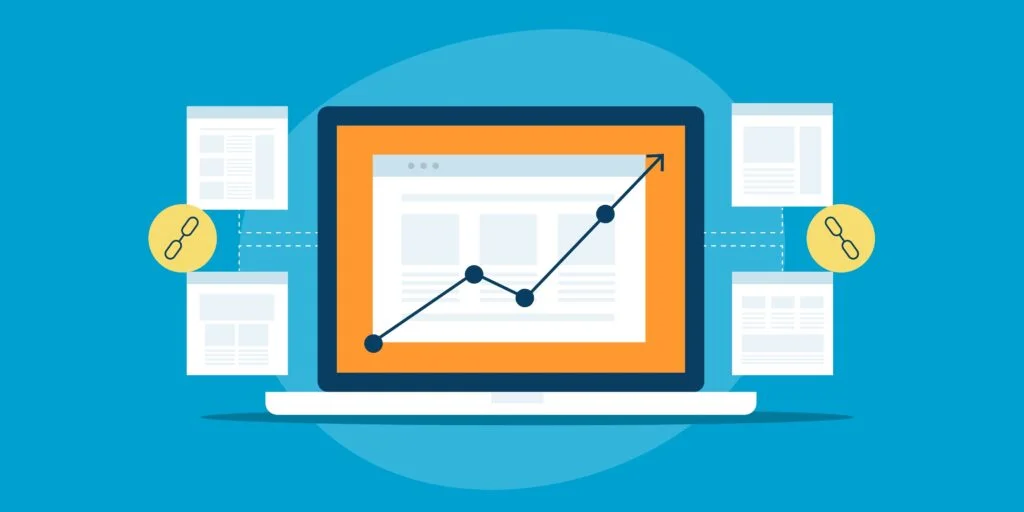
One of the biggest misconceptions in digital marketing is that more website traffic automatically leads to more revenue.
It sounds logical.
If twice as many people visit your online store, sales should increase too.
But that only happens if your website is already converting visitors effectively.
Imagine inviting hundreds of new customers into a physical store where products are difficult to find, employees cannot answer questions, and checkout takes twenty minutes. Bringing in more visitors would only expose more people to the same frustrating experience.
The same thing happens online.
Before investing more money into paid advertising or expanding your SEO efforts, it is worth asking yourself a simple question:
If more people visited your website tomorrow, would your current experience convince them to buy?
That question sits at the center of effective ecommerce optimization management.
Because sustainable growth rarely comes from traffic alone.
It comes from helping more of the people who already visit your website complete the journey they came to begin.
In many cases, improving your conversion rate by a small percentage can generate more revenue than increasing traffic by thousands of additional visitors.
Ecommerce Optimization Is About Much More Than Design

When people first hear the term ecommerce website optimization, they often picture a visual redesign.
Better colors.
Better images.
A cleaner homepage.
Those improvements certainly matter, but they only represent one piece of a much larger strategy.
Effective optimization looks at how your entire online store performs—from the moment someone lands on your website until the moment they complete a purchase. Every interaction becomes an opportunity to remove friction, build confidence, and make buying feel easier.
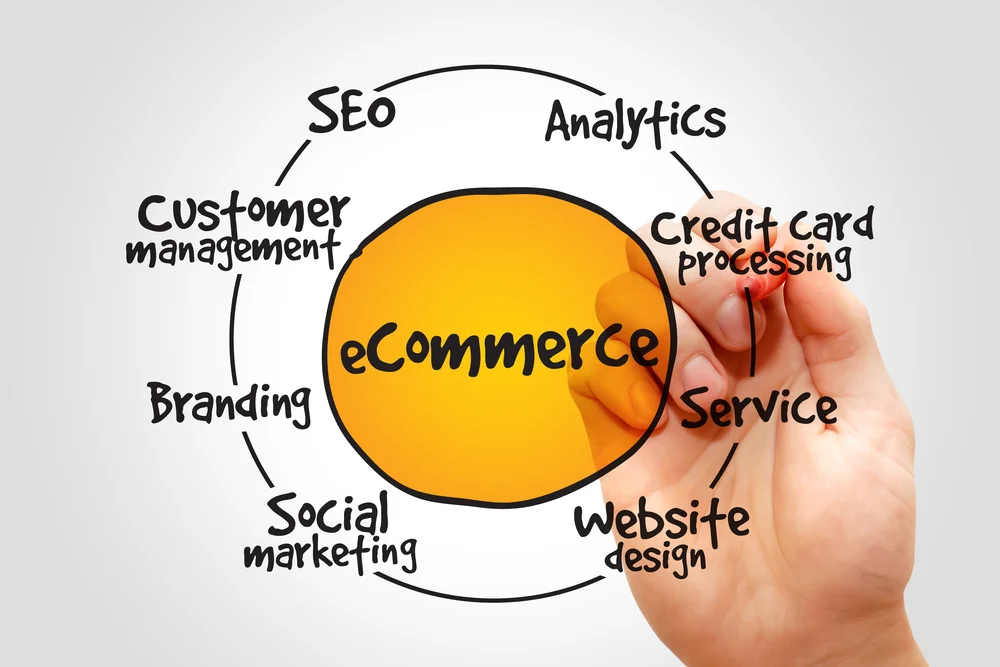
That usually includes improvements across several areas, including:
- website speed and technical performance,
- ecommerce SEO optimization,
- navigation and site structure,
- product page optimization,
- mobile shopping experiences,
- checkout improvements,
- conversion testing,
- and customer behavior analysis.
None of these improvements work in isolation.
The strongest ecommerce websites combine them into one seamless experience where every page supports the next step in the customer journey.
And honestly, that is often what separates online stores that consistently grow from those that struggle to improve their conversion rates.
Small Improvements Often Lead to Big Revenue Gains
One of the biggest misconceptions about ecommerce website optimization is that meaningful results only come from major redesigns.
In reality, that is rarely the case.
Most successful online stores improve gradually. They test small changes, learn from customer behavior, and continue refining the experience over time. While each update may seem relatively minor, the combined effect can have a significant impact on revenue.
Think about how customers actually shop online.
They rarely abandon a purchase because of one major problem. Instead, several small frustrations begin to add up. A page loads a little too slowly. Product information feels incomplete. The call-to-action isn’t immediately obvious. Shipping costs appear later than expected. None of those issues seem critical on their own, but together they create hesitation.
And hesitation is often where sales are lost.
That is why many ecommerce CRO strategies focus on identifying and removing friction little by little instead of making dramatic changes all at once.
Small improvements often create a smoother buying experience, and smoother experiences naturally lead to higher conversion rates.
Product Pages Should Build Confidence Before Customers Buy

Your product pages do much more than display products.
They answer questions, reduce uncertainty, and help customers feel confident enough to complete a purchase.
Imagine walking into a physical store where every product sits on a shelf without pricing, descriptions, or someone available to answer your questions. Most shoppers would probably leave without buying anything.
The same thing happens online.
Your product page often becomes the salesperson your customers never actually speak to.
That means every product page should answer the questions customers are already thinking about before they have to ask them.
The strongest product pages typically include:
- high-quality images from multiple angles,
- detailed product descriptions,
- sizing or specification information,
- customer reviews,
- shipping and delivery details,
- return policies,
- and answers to common questions.
Every piece of information helps reduce uncertainty.
And the less uncertainty customers feel, the easier it becomes for them to move forward with their purchase.
After all, people rarely buy simply because a product looks good.
They buy because they feel confident they are making the right decision.
Why Checkout Is Where Many Sales Are Lost

Getting someone to add a product to their cart is a big step.
But it is not the finish line.
In fact, one of the biggest opportunities for ecommerce optimization management often appears during checkout.
You have probably abandoned an online purchase yourself at some point.
Maybe the checkout process asked for too much information. Maybe you had to create an account before paying. Or perhaps unexpected shipping costs appeared at the very end.
Those moments create friction at exactly the wrong time.
By the time someone reaches checkout, they have already decided they want your product. The goal is no longer convincing them to buy.
It is simply making it easy to finish what they already started.
Simple checkout experiences usually outperform complicated ones.
Offering guest checkout, displaying shipping costs early, minimizing unnecessary form fields, supporting multiple payment methods, and clearly communicating each step all help customers complete their purchases with greater confidence.
Sometimes increasing sales is less about persuading customers.
And more about staying out of their way.
Mobile Shopping Has Changed the Way Customers Buy

A few years ago, many online purchases still happened on desktop computers.
Today, that is no longer the case.
For many ecommerce businesses, mobile devices generate most of their traffic—and an increasingly large share of their sales. That means your website needs to perform just as well on a phone as it does on a desktop.
You have probably experienced the opposite.
A website looks great on your laptop, but on your phone the buttons are difficult to tap, product images take forever to load, or the checkout form feels frustrating to complete.
Most customers won’t wait.
They’ll simply leave.
That is why mobile optimization has become an essential part of ecommerce website optimization. Responsive layouts, touch-friendly navigation, readable text, and fast-loading pages all contribute to a smoother shopping experience that encourages customers to continue browsing instead of abandoning the site.
Mobile optimization is no longer a nice feature.
It is simply what customers expect.
SEO and CRO Work Better Together Than Separately
Many businesses think about SEO and conversion optimization as two completely different disciplines.
In reality, they work best when they support one another.
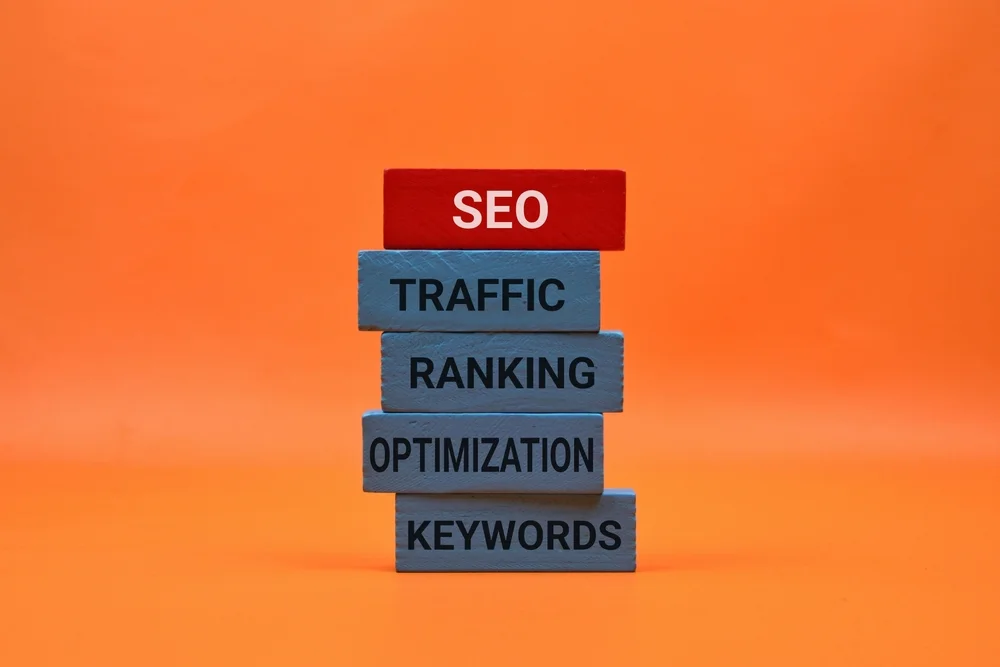
Search engine optimization helps bring qualified visitors to your website by making your products easier to discover online. Conversion Rate Optimization (CRO), on the other hand, focuses on helping more of those visitors become customers once they arrive.
One without the other creates limitations.
A website with excellent ecommerce SEO optimization but poor user experience may attract plenty of traffic while struggling to generate sales. At the same time, a beautifully optimized online store cannot increase revenue if potential customers never find it in the first place.
That is why the strongest ecommerce optimization services combine both approaches into one strategy.
Instead of thinking about SEO and CRO separately, successful ecommerce brands treat them as two parts of the same customer journey—from discovery to purchase.
When both work together, businesses not only attract more visitors, but also make better use of every visit they receive.
Website Optimization Is Never Really Finished

One of the biggest mistakes businesses make is treating optimization as a one-time project.
Launch the new website.
Fix a few issues.
Move on.
The reality is much different.
Customer expectations continue evolving. Search engines introduce new updates. Competitors improve their websites. New devices, browsers, and shopping behaviors appear every year.
Your website should evolve alongside them.
That is why successful ecommerce optimization management is an ongoing process rather than a final destination.
The best-performing ecommerce brands regularly analyze user behavior, review analytics, run A/B tests, evaluate customer feedback, and identify opportunities for continuous improvement.
Some experiments produce significant gains.
Others result in small improvements.
But over time, those improvements compound.
And honestly, that mindset is often what separates growing ecommerce businesses from those that eventually plateau.
Better Experiences Usually Lead to Better Sales

At the end of the day, customers rarely think about website optimization.
They simply notice whether buying feels easy.
When an online store loads quickly, answers their questions, builds confidence, and removes unnecessary friction, customers naturally spend more time exploring—and they are much more likely to complete a purchase.
That is why ecommerce website optimization is about much more than improving individual pages.
It is about creating an experience that helps customers move confidently from discovery to checkout without unnecessary obstacles along the way.
The businesses that consistently increase online sales are rarely the ones making the biggest changes overnight.
More often, they are the ones continuously improving the small details that make shopping feel effortless.
Because when the buying experience improves, conversions often follow.
Ready to Turn More Visitors Into Customers?

Driving traffic is only part of growing an ecommerce business.
The real opportunity comes from making sure every visitor has the best possible chance of becoming a customer.
At MRKT360, we help businesses improve every stage of the online shopping journey through ecommerce website optimization, ecommerce SEO optimization, conversion-focused strategies, and ongoing performance improvements. From technical optimization and user experience enhancements to conversion testing and long-term optimization management, our team builds strategies designed to increase both traffic and revenue.
If you’re ready to create a faster, more user-friendly online store that supports sustainable growth, contact MRKT360 today and discover how smarter optimization can help your ecommerce business sell more.
About MRKT360
MRKT360 is a results-driven digital marketing and solutions agency offering end-to-end services in performance marketing, AI strategy, SEO, GEO, paid media, and IT optimization.
With clients around the world, MRKT360 specializes in future-proofing brands through innovative solutions that align marketing and infrastructure.
FAQs
What is ecommerce website optimization?
Ecommerce website optimization is the process of improving an online store’s performance, user experience, technical health, and conversion rate to help increase sales and customer satisfaction.
How does ecommerce website optimization increase sales?
By reducing friction throughout the buying journey, improving navigation, increasing website speed, optimizing product pages, and simplifying checkout, businesses make it easier for customers to complete purchases.
What are the key elements of ecommerce optimization?
A successful strategy typically includes technical performance, ecommerce SEO optimization, UX improvements, mobile optimization, product page optimization, checkout improvements, and ongoing conversion testing.
How can UX design improve ecommerce conversions?
Good UX helps customers find products faster, understand important information more easily, and complete purchases with fewer obstacles, leading to higher conversion rates.
Why do customers abandon ecommerce carts?
Common reasons include unexpected shipping costs, complicated checkout processes, slow-loading pages, mandatory account creation, and insufficient product information.
Does mobile optimization impact ecommerce revenue?
Yes. Since a large percentage of ecommerce traffic comes from mobile devices, responsive design, fast loading speeds, and mobile-friendly navigation have a direct impact on conversions and revenue.
How does page loading time impact user behavior?
Slow-loading pages increase bounce rates and reduce conversions because customers are less likely to wait for pages that take too long to load.
What strategies help increase ecommerce sales quickly?
Some of the fastest improvements come from increasing website speed, simplifying checkout, optimizing product pages, improving mobile usability, strengthening ecommerce SEO optimization, and testing conversion-focused changes throughout the customer journey.