
How E-E-A-T Affects SEO
Understanding Its Impact on Search Visibility
E-E-A-T has become an important concept in modern SEO because search engines face a fundamental challenge: determining which information deserves to be trusted when thousands of pages may address the same question.
Experience, Expertise, Authoritativeness, and Trustworthiness help describe the qualities Google wants its search results to demonstrate. However, the relationship between E-E-A-T and rankings is often oversimplified. Google does not assign websites an E-E-A-T score, and E-E-A-T itself is not a single ranking factor that can be measured or improved to produce a predictable ranking increase.
Its impact is more nuanced.
E-E-A-T helps explain why credibility, reputation, original experience, and reliable information matter to search performance—particularly when multiple pages are competing to answer the same query. As search becomes increasingly crowded with similar and AI-generated content, these distinctions can become even more significant.
Understanding how E-E-A-T affects SEO therefore requires looking beyond individual ranking positions and examining its influence on content competitiveness, search visibility, authority, and the ability to earn user trust over time.
How Does E-E-A-T Affect SEO?
E-E-A-T affects SEO by representing qualities that Google’s search systems are designed to recognize when evaluating useful and reliable information.
Google introduced E-E-A-T within its Search Quality Rater Guidelines, which human quality raters use to evaluate the quality of search results. Those ratings do not directly determine the position of an individual webpage. Instead, they help Google assess whether its search systems are producing results that align with the quality standards the company wants to achieve.
This distinction matters because E-E-A-T should not be understood as another technical ranking signal alongside factors such as page speed or mobile usability.
Its SEO impact is broader.
A page demonstrating genuine subject knowledge, original experience, a strong reputation, and reliable information may provide users with greater confidence than a page that simply summarizes information available elsewhere. These differences become particularly important when search engines have many potentially relevant pages to choose from.
E-E-A-T can therefore affect the competitive strength of content by reinforcing the qualities that make one source more credible and useful than another.
E-E-A-T Can Influence SEO Without Being a Ranking Factor
One of the most common sources of confusion around E-E-A-T is the apparent contradiction between two statements: E-E-A-T matters for SEO, but E-E-A-T is not a direct Google ranking factor.
Both can be true.
Google does not appear to calculate an individual E-E-A-T score and then use that number to determine where a page should rank. Instead, its ranking systems use many different signals and systems to identify content that appears useful, relevant, and reliable.
E-E-A-T provides a framework for understanding some of the qualities those systems are intended to surface.
Consider authoritativeness. There is no simple “authority” field that a website can complete to improve its ranking. However, reputation, links, references, brand recognition, and other forms of external validation can help establish whether a source is recognized within its subject area.
Trust works similarly. Google does not provide websites with a universal trust score, but accuracy, reputation, transparency, and other signals can influence whether information appears dependable.
The distinction changes how businesses should interpret E-E-A-T. Its value is not that improving one element automatically produces a ranking increase. Its value is that it helps explain why credibility can influence a website’s ability to compete in search over the long term.
Where the SEO Impact of E-E-A-T Becomes Most Visible
The influence of E-E-A-T is not always visible through a single metric. Its impact can appear across several dimensions of organic performance, particularly in competitive search environments.
One of the clearest areas is content credibility. When several pages provide similar answers, information supported by recognizable expertise, firsthand knowledge, and reliable evidence can offer stronger reasons for both users and search systems to consider the source valuable.
Reputation also matters. Search visibility does not exist independently from the broader web. Businesses and publishers accumulate recognition through mentions, references, reviews, links, professional reputation, and other signals that help establish who they are and what subjects they are associated with.
E-E-A-T can also affect user confidence after a page earns visibility. A strong search position has limited business value if visitors arrive and immediately question whether the company or information can be trusted. Credible authorship, accurate claims, and a legitimate brand presence can influence whether visibility ultimately becomes engagement, leads, or sales.
This is why the SEO impact of E-E-A-T should not be reduced to a simple ranking equation. It contributes to a broader competitive environment in which relevance may help a page qualify for a search, but credibility can help distinguish it from alternatives.
Why E-E-A-T Has a Greater Impact on YMYL Topics
E-E-A-T becomes especially important when inaccurate or misleading information could significantly affect a person’s health, financial stability, safety, or well-being.
Google refers to many of these subjects as Your Money or Your Life (YMYL) topics. They can include areas such as medical information, financial guidance, legal matters, and other subjects where poor information may create meaningful real-world consequences.
The standard for credible information naturally becomes more important in these environments.
A casual article about decorating a living room does not carry the same potential consequences as guidance about managing a medical condition or making a major financial decision. Search systems therefore have stronger reasons to distinguish between unsupported claims and information backed by appropriate knowledge and reliable sources.
This does not mean every YMYL page must follow exactly the same model of expertise. The type of credibility required depends on the subject and the information being provided. Firsthand experience may be valuable for describing what it is like to use a product or navigate a particular situation, while professional expertise becomes far more important when content provides specialized medical, legal, or financial guidance.
For businesses operating in sensitive industries, E-E-A-T therefore has strategic importance beyond general content quality. Credibility becomes part of whether the information is suitable for the search environment in which the organization wants to compete.
E-E-A-T Changes the Competitive Value of Content
Two webpages can cover the same topic, target the same keyword, and provide technically accurate information while still offering very different levels of value.
One may summarize information already available across dozens of websites. The other may incorporate original research, firsthand experience, specialist knowledge, proprietary data, or insights that demonstrate a deeper relationship with the subject.
That difference matters increasingly as producing basic informational content becomes easier.
Generative AI can now create competent summaries of widely available information at enormous scale. As a result, simply publishing another accurate explanation may provide less differentiation than it once did. What becomes harder to reproduce is the knowledge surrounding the information: who discovered it, who tested it, what evidence supports it, and why that source has a reason to know.
E-E-A-T helps frame this distinction.
Experience can add observations that cannot be obtained from rewriting existing pages. Expertise can provide interpretation rather than repetition. Authority can show that others recognize the source’s knowledge. Trust can give readers confidence that the information has been presented accurately and responsibly.
In this sense, E-E-A-T affects SEO by changing what makes content competitive. As generic information becomes abundant, the qualities behind the information can become increasingly valuable differentiators.
How E-E-A-T Affects Brand Authority Beyond Individual Rankings
The impact of E-E-A-T extends beyond whether a single page ranks for a particular keyword. Over time, the credibility associated with a business, publisher, or expert can influence how competitive its entire digital presence becomes within a subject area.
A website that consistently publishes reliable information around closely related topics creates a stronger connection between its brand and that field. External mentions, citations, links, reviews, and recognition can reinforce that association beyond the website itself.
This creates a cumulative effect. One strong article may earn visibility for a specific query, but sustained credibility can support a much broader presence across related searches. As a brand becomes more established within its field, individual pieces of content benefit from being connected to a recognizable source rather than existing as isolated webpages.
Brand authority can also influence user behavior. Searchers who recognize a company, publication, or expert may be more likely to choose its result, return to its website, or search for the brand directly when they need additional information.
For SEO, this means E-E-A-T should not be evaluated only at the page level. The reputation surrounding the source can become part of its broader ability to compete for visibility across an entire topic.
What Happens When Trust Is Missing?
Trustworthiness sits at the center of E-E-A-T because experience, expertise, and authority provide limited value if users cannot rely on the information being presented.
A lack of trust does not automatically trigger a Google penalty, nor does Google assign websites a visible trust score. The consequences are more complex.
Content may struggle to distinguish itself when claims are difficult to verify, sources are unclear, authorship is ambiguous, or information contradicts established evidence without adequate support. These weaknesses become particularly significant for subjects where users need confidence before making a decision.
Trust can also affect what happens after a website earns organic visibility. A user may reach a page through Google but hesitate to take the next step if the business appears unfamiliar, important claims lack evidence, or the source provides little indication of who is responsible for the information.
This creates a relationship between search visibility and business performance. Ranking can introduce a user to a website, but credibility helps determine whether that visibility translates into meaningful engagement.
For competitive industries, weak trust signals can therefore become a disadvantage even without a specific algorithmic penalty. When users and search systems have access to numerous alternatives, sources that are easier to verify have a stronger foundation for earning confidence.
E-E-A-T and SEO in the Age of AI Search
AI-powered search adds another dimension to the relationship between E-E-A-T and SEO.
Traditional search primarily helps users choose among webpages. AI-generated search experiences can instead synthesize information from multiple sources and present an answer directly within the search experience. That makes source quality especially relevant because AI systems need reliable information from which to construct their responses.
Google AI Overviews are one example of this transition. Rather than relying exclusively on a traditional list of results, users may encounter generated summaries accompanied by links to supporting sources. Similar changes are occurring across other AI-driven discovery experiences.
In this environment, credibility can influence more than the ability to compete for a conventional ranking. Businesses must also consider whether their information is sufficiently clear, reliable, and authoritative to contribute to AI-generated answers.
This does not mean strong E-E-A-T guarantees inclusion in an AI Overview or any other AI response. There is no established E-E-A-T threshold that automatically earns a citation. However, the qualities represented by E-E-A-T align closely with the broader need for AI search systems to surface dependable information.
As search moves further toward synthesis and direct answers, the question is increasingly not only whether a page is relevant, but whether the source behind that information is credible enough to rely on.
Why E-E-A-T Should Be Viewed as an SEO Risk and Opportunity
E-E-A-T creates both a competitive risk and an opportunity because content quality is becoming easier to replicate while genuine credibility remains significantly harder to manufacture.
For businesses with limited authority, this can create challenges. Publishing large volumes of content may expand a website, but quantity alone does not establish why users or search systems should consider that business a reliable source.
For established organizations, the opposite can be true. Existing expertise, proprietary knowledge, customer experience, industry recognition, and brand reputation can become meaningful SEO assets when they are reflected throughout the digital presence.
This creates an important strategic distinction:
Weak credibility can become a competitive disadvantage. Strong credibility can become a durable search asset.
The effect is particularly relevant as businesses compete across both traditional and AI-powered search environments. Algorithms, interfaces, and search features will continue changing, but the underlying need to distinguish reliable sources from low-value information is unlikely to disappear.
E-E-A-T therefore matters because it addresses something more fundamental than an individual ranking tactic: why a search engine—or a user—should trust one source over another.
What is E-E-A-T and why is it important for SEO?
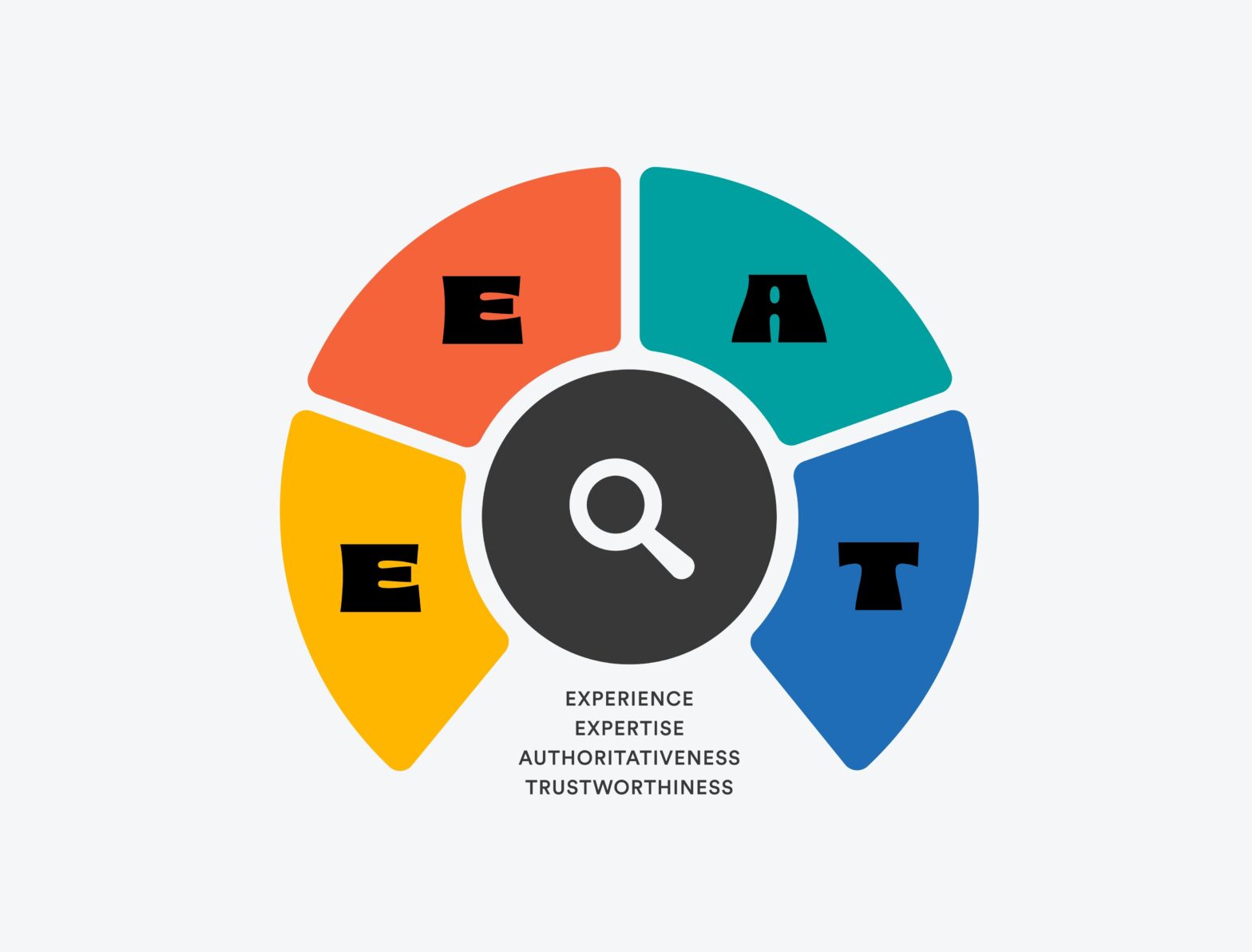
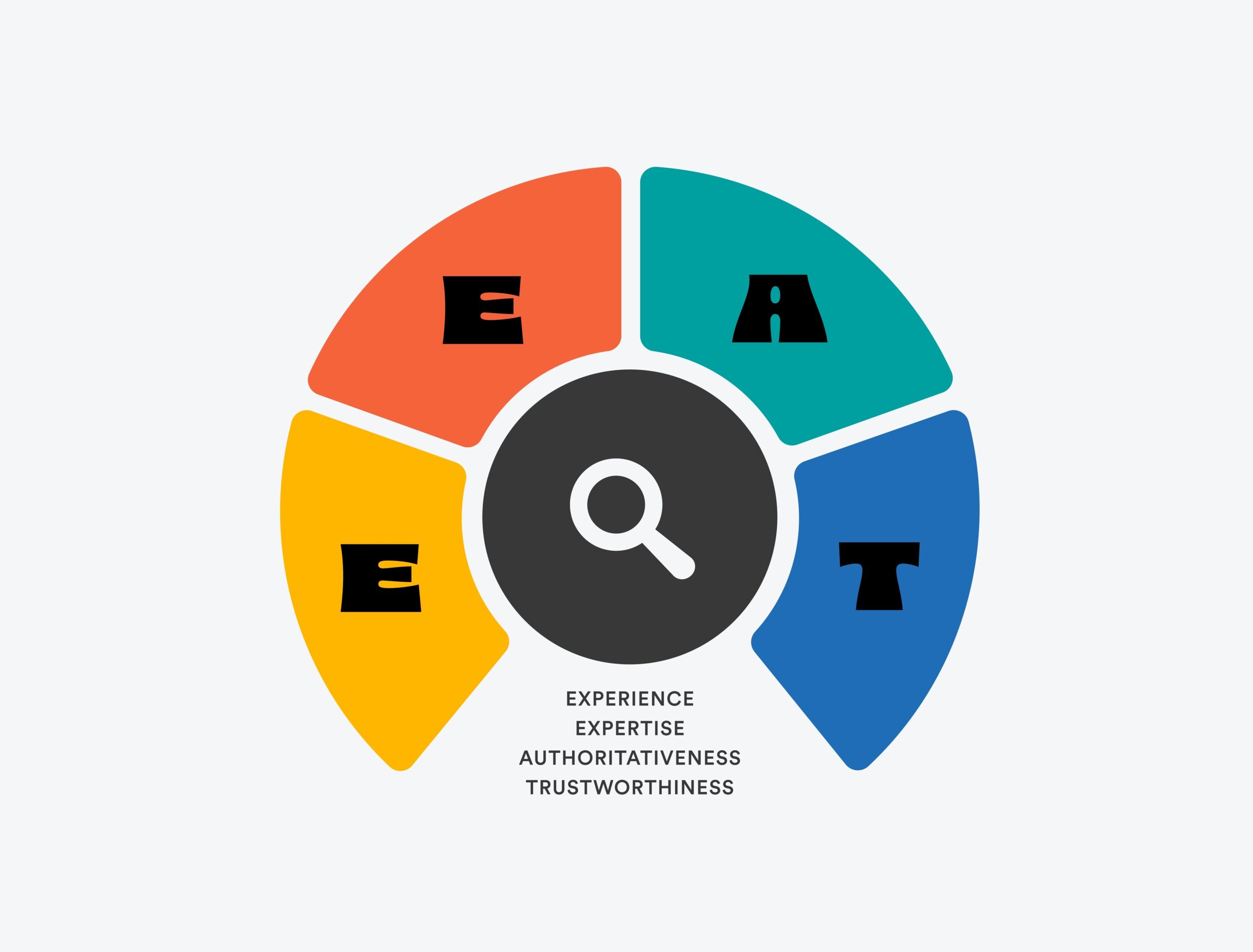
E-E-A-T stands for Experience, Expertise, Authoritativeness, and Trustworthiness. It is a framework described in Google’s Search Quality Rater Guidelines for assessing qualities associated with useful and reliable content.
For SEO, its importance comes from helping explain the characteristics that can make one source more credible and competitive than another. E-E-A-T does not provide a direct ranking score, but the qualities it represents are closely connected to Google’s broader objective of surfacing helpful and trustworthy information.
Does E-E-A-T directly affect Google rankings?
E-E-A-T should not be interpreted as a direct ranking input where improving a specific E-E-A-T metric automatically changes a page’s position.
Instead, Google’s ranking systems use numerous signals and systems to evaluate content. E-E-A-T provides a framework for understanding qualities such as credibility, expertise, reputation, and trust that Google’s systems aim to identify in high-quality results.
Its effect on rankings is therefore indirect and distributed across multiple aspects of search quality rather than controlled by one measurable factor.
Is E-E-A-T a Google ranking factor?
No. Google does not describe E-E-A-T as a single ranking factor, and websites do not receive an official E-E-A-T score.
The concept comes from Google’s Search Quality Rater Guidelines. It describes qualities human raters consider when evaluating search results and helps Google assess whether its ranking systems are producing useful, reliable results.
Does E-E-A-T matter for every website?
E-E-A-T can be relevant to websites across many industries, but its importance varies according to the topic and the potential consequences of inaccurate information.
Credibility matters for almost any business or publisher, but expectations become significantly higher when content can influence a person’s health, finances, safety, or other important decisions.
The appropriate type of experience or expertise also varies. A product review, financial guide, restaurant recommendation, and medical article do not require the same evidence or level of professional knowledge.
Why is E-E-A-T especially important for YMYL content?
YMYL content can influence important areas of a person’s life, including health, financial stability, safety, and legal decisions. Incorrect or misleading information in these areas can create significant real-world consequences.
For that reason, demonstrating appropriate expertise, reliable sourcing, and trustworthiness becomes particularly important when publishing YMYL information. The greater the potential harm associated with inaccurate advice, the more important source credibility becomes.
Does E-E-A-T affect AI search visibility?
E-E-A-T is not a guaranteed formula for appearing in AI-generated search results. However, AI search systems need reliable sources when synthesizing information, making qualities such as credibility, authority, accuracy, and trust increasingly relevant.
Strong E-E-A-T can therefore support the broader foundation required for AI visibility, particularly as platforms such as Google increasingly combine traditional search with AI-generated answers and source citations.
Why MRKT360 for Modern SEO Strategy
Modern SEO requires businesses to consider more than keywords and rankings. Search engines increasingly evaluate information within a broader environment shaped by content quality, authority, user intent, brand reputation, and AI-powered discovery.
At MRKT360, we develop SEO strategies that connect these elements rather than treating them as isolated tactics. Our approach considers how content, technical SEO, authority, and emerging search experiences work together to strengthen long-term organic visibility.
For businesses navigating these changes, understanding the impact of E-E-A-T is only one part of the strategy. Related areas such as E-E-A-T and SEO, E-E-A-T Optimization, SEO for AI Search, and Google AI Overviews can provide a broader foundation for competing as search continues to evolve.
Key Takeaway
E-E-A-T affects SEO without functioning as a standalone ranking factor. Its importance comes from the role that experience, expertise, authority, and trust play in distinguishing credible sources from generic or unreliable information.
That distinction can influence content competitiveness, user confidence, authority within a topic, performance in sensitive YMYL searches, and the broader ability of a brand to earn visibility across traditional and AI-powered search experiences.
As publishing becomes easier and search engines have more information to evaluate, relevance alone may not be enough to stand out. The credibility behind the content is increasingly part of what gives that information competitive value.
Strategy That Works
Why Businesses Trust Us

Partnership Mentality
We treat your business like our own, aligning strategy with your long-term vision and growth goals.

Accountability First
We stand behind our work. Clear reporting, clear expectations, and a commitment to continuous improvement.

Transparent Communication
You always know what we’re doing, why we’re doing it, and how it’s performing. No confusion. No hidden tactics. Just clarity.
GET STARTED