A few years ago, ranking first on Google almost guaranteed visibility.
Today, users can often find their answer before they ever click on a website.
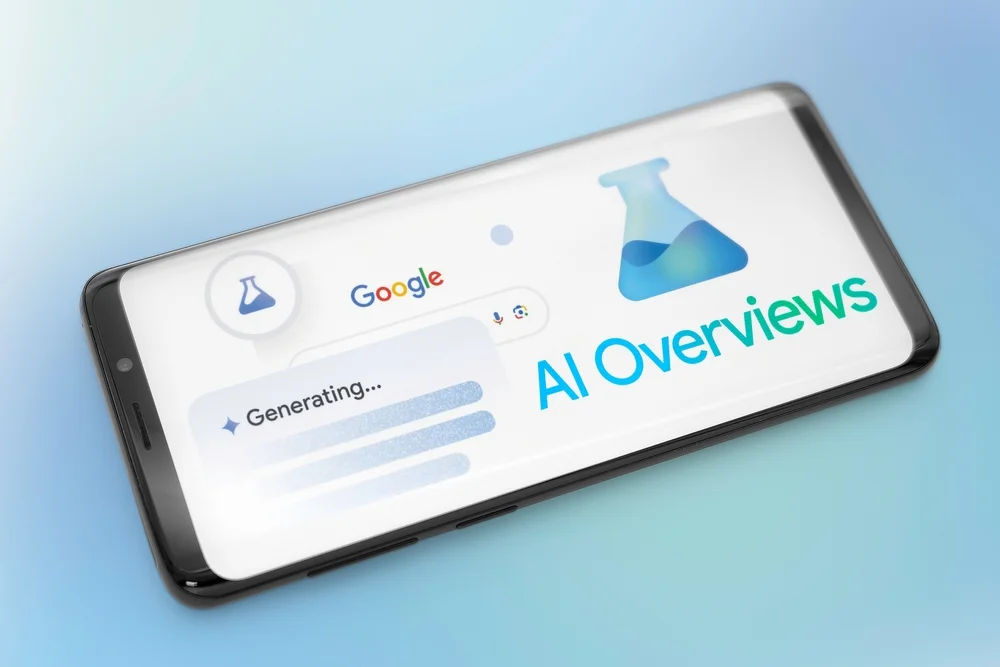
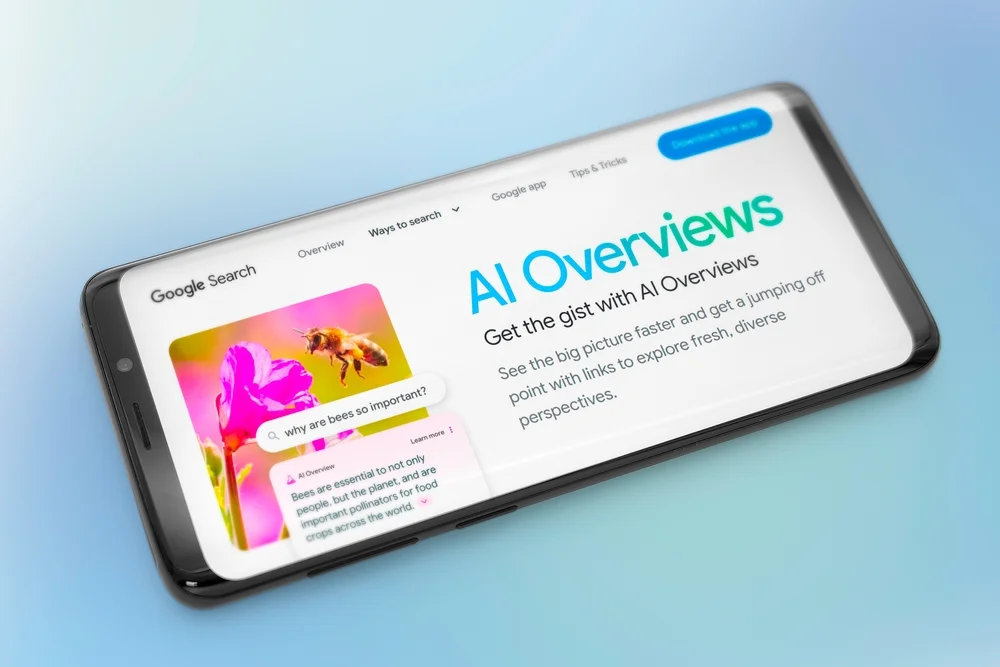
Google AI Overviews are changing how information is discovered by generating summaries directly within search results, and businesses are beginning to realize that traditional rankings are no longer the only measure of success.
That does not mean traditional search engine optimization is becoming less important.
Quite the opposite.
Many of the same principles that have supported SEO for years—high-quality content, authority, and user experience—are becoming increasingly important as Google decides which sources deserve to appear in AI-generated answers.
That is why understanding Google AI Overviews SEO has quickly become a priority for businesses investing in long-term visibility.
Because in many cases, the websites appearing in AI Overviews tomorrow are the same websites building trust today.
Google AI Overviews Are Changing What It Means to Rank
For years, SEO success was relatively straightforward. You identified keywords, optimized your content, improved your rankings, and earned more traffic.
Google AI Overviews introduce a new layer to that process.
Instead of simply displaying a list of links, Google can now generate responses using information gathered from multiple sources. As a result, businesses may appear inside AI-generated summaries without necessarily holding the top organic position.
That changes how visibility should be measured.
Businesses should still care about rankings, but they should also pay attention to how often their content is being surfaced across AI-powered search experiences.
In practical terms, successful Google AI Overviews optimization still relies on many of the same factors that have supported traditional SEO for years. Google continues evaluating content quality, topical authority, website trust signals, semantic relevance, and user experience when determining which sources deserve visibility.
The difference is that AI allows Google to assess those signals with greater context.
Rather than identifying the page that best matches a keyword, Google is increasingly focused on identifying the sources that provide the most complete, accurate, and trustworthy answers.
That shift does not make traditional SEO less important.
It simply changes what success looks like.
Google Is Looking for Answers, Not Just Pages
One of the biggest changes introduced by AI-powered search is Google’s ability to understand information more contextually.
Historically, search engines relied heavily on matching keywords to pages. Today, they are much better at understanding relationships between concepts, search intent, and the meaning behind a query.
That is why businesses should think beyond individual keywords.
Google’s AI systems are increasingly evaluating factors such as:
- how comprehensively a topic is covered,
- whether content aligns with search intent,
- relationships between related topics,
- entity recognition,
- and the overall authority of a website.
This is where AI search optimization becomes particularly important.
For example, if someone searches for “How do I improve my website’s visibility in AI search?”, Google is unlikely to prioritize a page that simply repeats that phrase multiple times. Instead, it will look for content that explains AI Overviews, discusses E-E-A-T, references semantic SEO, and provides actionable recommendations.
In other words, Google is no longer looking for pages that contain the right keywords.
It is looking for pages that provide the right answers.
E-E-A-T Matters More Than Ever

E-E-A-T—Experience, Expertise, Authoritativeness, and Trustworthiness—has been part of Google’s guidance for years, but it is becoming increasingly important for businesses hoping to appear in AI-generated search experiences.
Think about what Google is trying to accomplish.
If AI is responsible for summarizing information for millions of users, it needs to identify sources it can trust.
That means businesses should actively demonstrate:
- firsthand experience,
- subject matter expertise,
- author credibility,
- trustworthy sources and citations,
- and consistent authority within their industry.
These signals are particularly important for EEAT for AI Overviews because AI systems are designed to minimize misinformation and prioritize reliable content.
Businesses that consistently publish accurate, helpful, and trustworthy information are putting themselves in a much stronger position to appear in AI-generated summaries over time.
And honestly, this is good news.
Google is not introducing an entirely new set of rules.
It is reinforcing the importance of creating content that genuinely deserves visibility.
Structured Content Helps AI Understand Your Website

Content quality matters.
But content structure matters too.
Google’s AI systems process enormous amounts of information every day, and websites that organize their content effectively are often easier to understand.
That is why structured content remains one of the most important components of SEO for AI Overviews.
Businesses should pay particular attention to:
- clear heading structures (H1, H2, H3),
- FAQ sections,
- schema markup,
- internal linking,
- tables and lists,
- concise answers to common questions,
- and logical content organization.
Schema markup deserves special attention.
While schema alone will not guarantee visibility, it helps search engines better understand what your content is about and how different pieces of information relate to one another. FAQ, Article, Organization, and Breadcrumb schema can all contribute to stronger content signals.
The easier your website is to understand, the easier it becomes for Google to determine whether your content deserves to appear in AI Overviews.
SEO for AI Overviews Requires More Than Keywords

For years, SEO strategies were built around a relatively simple formula: identify the right keywords, optimize a page, and improve its rankings.
Those practices still matter.
But they are no longer enough.
Google’s AI-powered search experiences evaluate content much more holistically than traditional search results. Rather than focusing exclusively on keyword placement, Google increasingly considers factors such as topical authority, search intent, content depth, E-E-A-T, and the overall usefulness of a page when determining whether it should appear in AI-generated answers.
That is why SEO for AI Overviews requires a broader strategy than traditional keyword optimization alone.
Businesses hoping to improve their visibility should focus on creating content that answers questions comprehensively, demonstrates expertise, and connects naturally to related topics across the website. Strong internal linking, structured content, and effective AI search optimization practices all help Google better understand how information is organized and how individual pages support one another.
For example, a website discussing Google AI Overviews should also provide supporting content around topics like E-E-A-T, schema markup, search intent, and content optimization. Together, these signals help establish authority and make it easier for Google to recognize expertise across an entire subject area.
This is also where Google AI search optimization becomes increasingly important.
AI systems are not simply evaluating whether one page deserves visibility. They are evaluating whether a business consistently demonstrates knowledge, trust, and relevance across an entire topic ecosystem.
In many cases, the websites appearing in AI Overviews are not the ones producing the most content.
They are the ones producing the most useful content.
Update Your Existing Content Before Creating More

When businesses begin thinking about Google AI Overviews optimization, their first instinct is usually to create new content.
That can certainly help.
However, one of the biggest opportunities often exists within content that has already been published.
Many websites already have articles capable of appearing in AI Overviews—they simply are not optimized for today’s search environment.
Before creating something new, ask yourself:
- Is this content still accurate?
- Does it answer the user’s question clearly?
- Have we added recent examples or statistics?
- Does it demonstrate expertise?
- Is it connected to related topics across the website?
- Is it structured in a way that is easy to scan?
Updating existing content can improve visibility much faster than starting from scratch.
For example, adding FAQ sections, improving internal linking, expanding topic coverage, refreshing statistics, and strengthening E-E-A-T signals can all help make content more relevant for AI-powered search experiences.
This is one reason why experienced SEO services continue prioritizing content optimization as part of broader search engine optimization strategies.
Because sometimes, the content you need to rank already exists.
It just needs to evolve.
Common Mistakes That Keep Websites Out of AI Overviews

Businesses often ask:
“How do I appear in Google AI Overviews?”
The better question may be:
“What is preventing my content from appearing today?”
Fortunately, many of the issues are relatively easy to identify.
Some of the most common mistakes include:
- publishing thin or superficial content;
- relying too heavily on keyword repetition;
- ignoring search intent;
- failing to implement schema markup;
- demonstrating weak E-E-A-T signals;
- publishing isolated content with no topical authority;
- neglecting internal linking;
- and allowing important pages to become outdated.
Notice a pattern.
Very few of these problems are technical limitations.
Most are content and strategy issues.
That is why businesses asking how to get featured in Google AI Overviews should focus less on “gaming” AI systems and more on becoming the most helpful and trustworthy source available.
Because ultimately, that is exactly what Google is trying to identify.
AI Overviews vs Featured Snippets

At first glance, AI Overviews and Featured Snippets may appear to serve the same purpose.
Both help users find answers more quickly.
Both appear prominently within search results.
And both can significantly increase visibility.
However, there are several important differences.
| Featured Snippet | AI Overview |
| Pulls from a single source | Combines multiple sources |
| Displays a direct excerpt | Generates an AI summary |
| Traditional SERP feature | AI-powered search experience |
| Limited context | Broader contextual understanding |
| One answer | Multiple perspectives may be included |
This distinction matters because it changes how businesses should think about optimization.
For years, many SEO strategies focused on winning Featured Snippets through concise answers and structured content. Those practices still help, but AI Overviews introduce additional considerations related to topical authority, semantic relationships, and trust signals.
The goal is no longer to become the best answer on one page.
It is to become one of Google’s most trusted sources across an entire topic.
The Future of SEO Includes AI Overviews

Google AI Overviews are still evolving, but they are already influencing how businesses think about visibility, content strategy, and search performance.
As AI-generated experiences continue expanding, organizations will need to think beyond traditional rankings and consider how their content is being interpreted, summarized, and surfaced across Google’s ecosystem.
That means future SEO strategies will likely place greater emphasis on:
- topical authority,
- semantic SEO,
- E-E-A-T,
- structured data,
- search intent,
- and comprehensive content coverage.
Businesses that invest in these areas today will be better positioned as AI continues reshaping search.
It is also important to recognize that AI Overviews do not exist separately from traditional SEO. They are built on many of the same signals Google has relied on for years, including content quality, authority, technical performance, and user experience.
That is why Google AI Overviews SEO, AI search optimization, and Generative AI SEO are becoming increasingly important components of modern search strategies.
Ultimately, the businesses that succeed in AI-powered search will not necessarily be the ones producing the most content. They will be the ones consistently publishing accurate, helpful, and trustworthy information that demonstrates expertise across an entire subject area.
The future of SEO is not moving away from proven optimization principles.
It is expanding upon them.
Ready to Optimize for Google AI Overviews?
Google AI Overviews are still evolving, but one thing is already clear: businesses that invest in quality, authority, and long-term SEO strategies will be better positioned as AI continues reshaping search.
At MRKT360, we combine proven search engine optimization practices with modern Google AI Overviews optimization, AI search optimization, and Generative AI SEO strategies designed to help businesses remain visible as search continues evolving.
Whether you’re evaluating an SEO company, looking to strengthen your topical authority, or building an in-house strategy for the future, our team can help.
Contact MRKT360 today to learn how your business can prepare for the evolving world of AI-powered search.
About MRKT360
MRKT360 is a results-driven digital marketing and solutions agency offering end-to-end services in performance marketing, AI strategy, SEO, GEO, paid media, and IT optimization.
With clients around the world, MRKT360 specializes in future-proofing brands through innovative solutions that align marketing and infrastructure.
FAQs
What are Google AI Overviews, and how do they work?
Google AI Overviews are AI-generated summaries that appear directly within search results. They combine information from multiple trusted sources to provide users with quick, comprehensive answers.
How can I optimize my website for Google AI Overviews?
Focus on creating high-quality content, implementing schema markup, strengthening E-E-A-T signals, improving internal linking, and building topical authority across related subjects.
Does structured data (Schema Markup) help improve visibility in Google AI Overviews?
Yes. Structured data helps search engines better understand content and can improve how information is interpreted across both traditional and AI-powered search experiences.
How important is E-E-A-T for ranking in Google AI Overviews?
E-E-A-T is extremely important because Google’s AI systems prioritize trustworthy, authoritative sources when generating responses.
What is the difference between Google AI Overviews and featured snippets?
Featured Snippets typically pull content from a single source, while AI Overviews generate summaries using information from multiple sources and broader contextual understanding.
How do search intent and content quality impact AI Overview visibility?
Google prioritizes content that clearly addresses user intent while providing accurate, helpful, and well-structured information.
How is optimizing for Google AI Overviews different from traditional SEO?
Traditional SEO focuses heavily on rankings, while Google AI Overviews optimization places additional emphasis on semantic relevance, topical authority, trust signals, and contextual understanding.