A sudden decline in organic traffic can be alarming, especially when your pages were ranking and you were getting consistent traffic.
Then, seemingly overnight, impressions fall, important keywords move down the results, and some of your strongest pages stop performing the way they used to.
If that change coincides with a Google Core Update, the worst thing you can do is immediately start changing everything.
Core updates are broad changes to Google’s search systems designed to improve how the search engine evaluates and surfaces helpful, reliable content. A ranking decline does not necessarily mean your website has been penalized or that a single technical problem needs to be fixed.
Successful Google Core Update recovery starts with understanding what changed, identifying which parts of your website were actually affected, and making improvements based on evidence rather than assumptions.
The goal isn’t to reverse-engineer one Google algorithm update.
It’s to build a website that deserves stronger visibility across future updates too.
What Is a Google Core Update and Why Can Rankings Change?
Google makes changes to its search systems regularly, but Core Updates are broader adjustments designed to improve how content is evaluated across search results.
Unlike a manual action or a specific spam violation, a Google Core Update isn’t necessarily targeting something your website did wrong. Instead, Google may have changed how its systems assess relevance, quality, usefulness, or reliability across a particular set of search results.
That distinction is important for SEO recovery.
Imagine you published an article that ranked in the top three results for several years. During that time, competing pages may have become more comprehensive, new information may have emerged, or search intent may have evolved. When Google reassesses those results, another page may now be considered a stronger response to the query.
Your content didn’t necessarily become bad.
The competitive environment changed.
This is why fluctuations in Google search rankings following a Core Update should be analyzed in context. Instead of searching for one algorithmic factor to “fix,” businesses should evaluate whether their content, authority, technical foundation, and overall search experience remain competitive.
A strong search engine optimization strategy therefore needs to be resilient enough to perform beyond any single update.
Your Rankings Dropped. Don’t Start Changing Everything Yet
When a business notices that its Google ranking dropped, the natural reaction is to start fixing things immediately.
Rewrite the articles.
Change the titles.
Delete pages.
Add keywords.
Build links.
That approach can create more problems than it solves.
Core Updates typically roll out over a period of time, and rankings can fluctuate while Google’s systems reassess pages across the web. If you make major changes while that process is still happening, it becomes difficult to determine whether the original decline was caused by the update, normal ranking volatility, seasonality, technical problems, or something else entirely.
The first step should be confirming that the decline actually aligns with a known update.
Compare the date your website traffic dropped with Google’s official update timeline. Then look at whether impressions, clicks, and rankings changed during the same period. If traffic declined before the update began—or only one isolated section of the website was affected—you may be dealing with a different issue.
This is also the time to rule out technical problems such as tracking errors, accidental noindex directives, crawling problems, server issues, or significant website changes.
Not every traffic drop is an algorithm problem.
And identifying the wrong cause can send your entire recovery strategy in the wrong direction.
Diagnose the Drop Before You Plan Your SEO Recovery
Once you’ve confirmed that a Core Update may have affected your site, the next step is determining exactly where the impact occurred.
Looking only at total organic traffic won’t tell you enough.
A website may lose 20% of its Google traffic while most pages continue performing normally. The decline could be concentrated in one content cluster, one product category, a group of commercial pages, or even a handful of URLs that previously generated a disproportionate amount of traffic.
Start by comparing performance before and after the update in Google Search Console and your analytics platform. Look for changes in clicks, impressions, average positions, landing-page traffic, and the queries responsible for those changes.
Then segment the losses.
Did informational articles decline while service pages remained stable? Did one topic lose visibility across multiple URLs? Did rankings fall for a particular type of query? Did impressions decline, or are impressions stable while clicks decreased?
Those differences matter.
A decline in rankings may point toward competitiveness or content relevance, while stable rankings combined with lower clicks could indicate changes in the search results themselves. A sudden disappearance of pages from search, meanwhile, may warrant investigation into Google indexing issues rather than assuming the Core Update is responsible.
Effective Google Core Update recovery begins by narrowing the problem before trying to solve it.
The more precisely you understand what was lost, the more targeted your recovery strategy can become.
Compare the Pages That Lost Rankings with the Pages That Won
Once you’ve identified the pages most affected by the update, look at what replaced them.
This is one of the most useful parts of a Core Update analysis because search results provide direct evidence of what Google currently considers competitive for a particular query.
Start by reviewing the pages that moved above yours and compare them objectively. The goal isn’t to copy their headings, word count, or formatting. Instead, determine whether they are satisfying the search intent more effectively.
Look at factors such as content depth, originality, freshness, supporting evidence, firsthand experience, topic coverage, and how directly the page answers the user’s question.
You should also examine whether the search results themselves have changed.
For example, a query that previously favored long educational articles may now surface product pages, videos, forums, or comparison content. If the dominant intent has shifted, simply adding another 1,000 words to your existing article may do very little to improve Google rankings.
Competitor analysis after a Core Update should therefore answer two questions:
What are the winning pages doing better, and is Google now rewarding a different type of result?
Those answers provide much stronger direction for your SEO recovery than trying to guess which individual ranking factor changed.
Improve Content Quality, Not Just Keyword Optimization

If your analysis reveals that affected pages are no longer competitive, optimization should go deeper than adding keywords or rewriting a few headings.
Google’s Core Updates are designed around broad assessments of content quality and usefulness. That means meaningful recovery usually requires meaningful improvements.
Start by evaluating whether each affected page still provides the best possible response to its target search intent. Outdated statistics should be replaced, unsupported claims should be strengthened with credible sources, shallow sections should be expanded where necessary, and information that no longer adds value should be removed.
Originality matters too.
If your page simply summarizes the same information available across dozens of competing websites, there may be little reason for Google to prioritize it. Firsthand insights, original examples, expert commentary, proprietary data, or a clearer explanation can give the content additional value.
This is where website optimization and content strategy need to work together. Improving a page isn’t about making it longer for the sake of SEO; it’s about making every section more useful, accurate, relevant, and complete.
And simply changing the publication date isn’t enough.
If you want to increase organic traffic after a ranking decline, the content itself needs to become more valuable—not just look newer.
Strengthen E-E-A-T and Trust Signals
Content quality isn’t only about how thoroughly you cover a topic. Google also needs signals that help determine whether the information—and the people or organization behind it—can be trusted.
That’s where E-E-A-T becomes particularly relevant during Google Core Update recovery.
Experience, Expertise, Authoritativeness, and Trustworthiness can be demonstrated in different ways depending on your industry. An ecommerce website might benefit from detailed product expertise and transparent policies, while a financial or healthcare website may require stronger author credentials, sourcing, and editorial oversight.
Start by looking at the pages that lost visibility and asking whether visitors can easily understand who created the content and why they should trust it. Author biographies, professional credentials, reputable citations, original research, firsthand examples, accurate company information, and clear editorial practices can all strengthen those signals.
Authority also extends beyond individual pages. A website that consistently demonstrates expertise across related subjects sends a stronger signal than one publishing disconnected articles simply because particular keywords have search volume.
This doesn’t mean adding an author box will automatically restore your Google search rankings. E-E-A-T should be reflected throughout the website, from the quality of the information itself to the reputation and transparency of the business behind it.
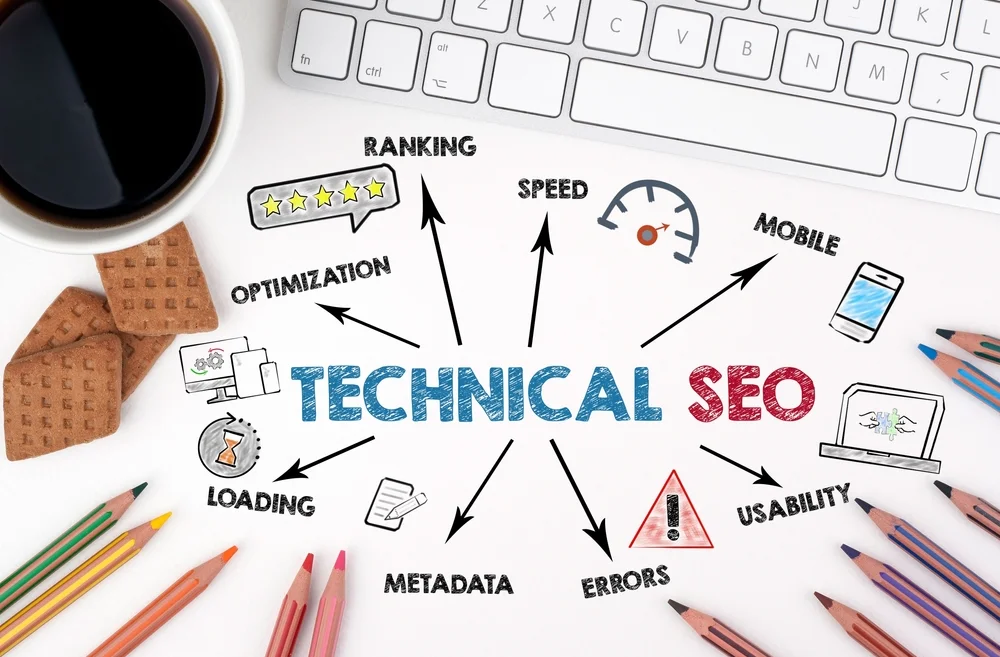
Technical SEO Still Matters During Core Update Recovery

A Core Update isn’t a technical penalty, so improving page speed or fixing a broken link won’t automatically restore lost rankings.
Technical SEO still matters.
Even excellent content can struggle when search engines have difficulty crawling, indexing, rendering, or understanding the pages where that content lives. That’s why a technical audit should be part of a broader SEO recovery process rather than treated as the recovery strategy itself.
Review whether affected pages are indexable and accessible to search engines. Check for accidental noindex tags, canonicalization problems, redirect errors, broken internal links, sitemap inconsistencies, robots.txt restrictions, and other Google indexing issues that could interfere with visibility.
Site performance deserves attention as well. Core Web Vitals, mobile usability, HTTPS, structured data, navigation, and page experience all contribute to a stronger technical foundation. If a major website migration, redesign, or development change occurred around the same time as the ranking decline, investigate those changes separately before attributing everything to the algorithm.
Good website optimization removes technical barriers that could prevent high-quality content from performing at its full potential.
That distinction is important.
Technical SEO may not explain why Google reassessed your content during a Google algorithm update, but unresolved technical problems can make it considerably harder to recover.
What About Backlinks and Off-Page Authority?

Backlinks remain part of the broader search engine optimization ecosystem, but they should be approached carefully after a Core Update.
If rankings fall, businesses sometimes assume they immediately need more links—or that existing links must somehow be responsible for the decline. Neither conclusion should be made without evidence.
Instead, evaluate your off-page authority in context.
Relevant links from reputable websites, industry mentions, citations, digital PR, and other external signals can help establish that your business is recognized within its field. If competitors consistently earning stronger positions also demonstrate significantly greater authority, that may reveal an area where your overall strategy needs improvement.
However, building a large number of low-quality links isn’t a shortcut to Google Core Update recovery. Likewise, removing backlinks indiscriminately can create additional problems if there is no evidence that those links are harmful.
The objective should be to build genuine authority over time.
Strong content gives other websites a reason to reference your business. Strong expertise gives journalists and industry publications a reason to mention it. And a strong reputation supports the trust signals that search engines use when evaluating your website as a whole.
Google AI Overviews Add Another Layer to Core Update Recovery
Organic search has become more complex because traditional rankings are no longer the only factor influencing how much traffic a page receives.
Google AI Overviews can answer questions directly within the search results and cite sources alongside those responses. As a result, a page may maintain relatively stable rankings while experiencing changes in click-through rate because the search experience surrounding that result has changed.
That distinction matters when investigating why your website traffic dropped.
If impressions and rankings remain relatively stable but clicks decline, look at the actual search results for the affected queries. AI Overviews, featured snippets, video results, shopping features, and other SERP elements may now occupy more prominent positions than they did previously.
This doesn’t mean AI Overviews should become the focus of every Core Update analysis. It means traffic losses should be evaluated within the complete search environment rather than attributed automatically to declining rankings.
Your recovery strategy should therefore consider both traditional organic visibility and how your content appears across newer search experiences. Clear answers, strong sourcing, original expertise, and comprehensive topic coverage can support visibility across both.
Recovery Takes Time—Measure the Right Signals
One of the most difficult parts of Google Core Update recovery is accepting that there isn’t a guaranteed recovery timeline.
You can make meaningful improvements without seeing rankings return immediately.
Google states that some changes may be reflected within days, while broader reassessments can take several months as its systems determine whether a website is consistently producing helpful and reliable content. In some cases, larger improvements may become more visible around subsequent updates.
That makes measurement especially important.
Don’t judge recovery based on one keyword or one week of traffic. Monitor affected query groups, impressions, clicks, average positions, indexed pages, organic conversions, and the performance of the specific sections that originally lost visibility.
Look for trends rather than isolated movements.
A page moving from position 18 to position 11 may not immediately generate a major traffic increase, but it can indicate that your improvements are moving in the right direction. Likewise, recovering impressions before clicks may signal that Google is beginning to surface your content more frequently.
Effective SEO services should help businesses understand these patterns rather than promise an immediate return to previous positions. Google doesn’t guarantee rankings, and neither should an SEO strategy.
Recovery is ultimately about rebuilding stronger search visibility—not recreating one historical ranking snapshot.
A Google Core Update Can Become an SEO Reset

A ranking decline is frustrating, but it can also reveal weaknesses that were already limiting your website.
Outdated content, weak differentiation, technical issues, unclear search intent, limited authority, and disconnected pages may remain unnoticed while rankings are stable. A Core Update can make those weaknesses much more visible.
That makes recovery an opportunity to evaluate your search engine optimization strategy more broadly.
Instead of asking how to return every affected page to its previous position, determine which pages still deserve investment, which need substantial improvement, and which no longer serve a meaningful purpose. Strengthen the content that supports your expertise, resolve technical barriers, improve internal connections, and continue building authority around the topics most relevant to your business.
These improvements can help improve Google rankings and increase organic traffic, but their value extends beyond a single update. They create a stronger website that is better prepared for future changes to Google’s search systems.
The objective of SEO recovery shouldn’t be to chase the algorithm that just changed.
It should be to become harder for the next one to disrupt.
Recover Your Organic Visibility with MRKT360

Recovering from a Core Update requires more than changing a few keywords or waiting for rankings to return.
At MRKT360, our SEO services combine content analysis, technical audits, competitive research, and ongoing website optimization to identify what changed and build a strategy around the areas that can meaningfully improve performance.
Whether your Google ranking dropped after a recent update or organic visibility has been declining over time, we can help you identify the underlying issues and develop a sustainable Google Core Update recovery strategy.
Contact MRKT360 today to strengthen your search engine optimization strategy and build organic visibility that can adapt as Google continues to evolve.
About MRKT360
MRKT360 is a results-driven digital marketing and solutions agency offering end-to-end services in performance marketing, AI strategy, SEO, GEO, paid media, and IT optimization.
With clients around the world, MRKT360 specializes in future-proofing brands through innovative solutions that align marketing and infrastructure.
FAQs
What is a Google Core Update?
A Google Core Update is a broad change to Google’s search algorithms and systems designed to improve the quality and relevance of search results. Unlike a manual penalty, a Core Update does not necessarily mean that a website has violated Google’s guidelines.
Why did my website traffic drop after a Google Core Update?
Traffic may decline because rankings changed, competitors gained visibility, search intent shifted, or the appearance of the search results changed. Compare rankings, impressions, clicks, affected pages, and SERP features before determining the cause.
How can I tell if my website was affected by a Google Core Update?
Compare the timing of your traffic and ranking changes with Google’s confirmed update dates. Then analyze Google Search Console and analytics data to determine which pages and queries experienced meaningful changes.
How long does it take to recover from a Google Core Update?
There is no fixed recovery period. Some improvements may be recognized relatively quickly, while broader reassessments can take several months. Google also notes that more significant changes may sometimes become apparent after subsequent updates.
What are the first steps to recover from a Google Core Update?
First, confirm that the decline coincides with the update and rule out technical or tracking problems. Then identify the pages and queries that lost visibility, compare them with current winning results, and prioritize meaningful content and technical improvements.
How important is E-E-A-T for recovering from a Google Core Update?
E-E-A-T can help demonstrate that your content and business are credible sources of information. Experience, expertise, authoritative references, transparent authorship, and strong trust signals should be incorporated naturally throughout your website.
How do Google AI Overviews relate to Google Core Updates?
AI Overviews can change how users interact with search results, so traffic may fluctuate even when traditional rankings remain relatively stable. When diagnosing a decline, businesses should consider changes to the entire SERP rather than rankings alone.
What SEO mistakes should be avoided after a Google Core Update?
Avoid making large changes without diagnosing the problem, stuffing pages with additional keywords, changing publication dates without meaningful updates, deleting valuable content impulsively, or assuming backlinks or technical fixes alone will restore rankings.
Google’s current Core Update guidance specifically notes that improvements can take anywhere from days to several months to be reflected and that recovery isn’t guaranteed, which is why I kept the timing language cautious rather than promising a specific recovery window.