If you are new to SEO, the terminology alone can feel overwhelming. Keywords, crawling, indexing, backlinks, structured data, search intent, Core Web Vitals, and AI-powered search are just some concepts you will encounter.
The good news is that SEO becomes much easier to understand once you know how the different pieces fit together. At its core, search engine optimization (SEO) is about helping search engines understand your website while creating useful, accessible content for the people you want to reach.
For businesses, effective SEO can increase organic visibility, attract relevant visitors, strengthen credibility, and support long-term growth without relying exclusively on paid advertising.
SEO Starts With Understanding Search
Search engines are designed to provide users with the most useful answers to their queries. To determine which pages deserve visibility, search systems consider many signals related to relevance, content quality, technical accessibility, authority, and user experience.
Search engine optimization involves improving a website so that search engines can discover, understand, and appropriately rank its pages.
That means SEO is much more than inserting keywords into an article. Modern SEO requires an understanding of what people are searching for, why they are searching for it, and what information or solution they expect to find.
Search has also evolved beyond the traditional list of blue links. AI-generated search experiences, conversational queries, visual search, and other emerging interfaces are changing how people discover information. The fundamentals of SEO remain important, but businesses increasingly need content that is clear, trustworthy, useful, and easy for both people and search systems to understand.
The Core Pillars of SEO
SEO covers a wide range of activities, but beginners can start by focusing on several fundamental areas.
Keywords and Search Intent
Keywords remain useful because they help you understand the language people use when looking for information, products, or services.
However, successful SEO is no longer about repeating an exact keyword as many times as possible. Search engines have become considerably better at understanding context, meaning, entities, and search intent.
Before creating a page, consider:
- What question is the user trying to answer?
- What problem are they trying to solve?
- Are they looking for information, a product, a service, or a specific website?
- What would make the page genuinely useful to them?
Keyword research can help identify valuable topics and opportunities, but search intent should guide the content itself.
Use important terms naturally in relevant locations such as titles, headings, body copy, image descriptions, and other appropriate page elements. Avoid keyword stuffing, which can make content difficult to read and undermine its usefulness.
Helpful, Original Content
Content is one of the most visible parts of an SEO strategy, but publishing large quantities of articles does not automatically improve organic performance.
Strong content should provide useful information, demonstrate expertise, answer real questions, and offer something valuable to the reader.
That can include:
- Detailed guides
- Original research
- Expert commentary
- Product or service information
- Tutorials and how-to content
- Case studies
- Videos and other visual resources
- Frequently asked questions
AI tools can assist with research, brainstorming, editing, and content workflows, but they do not eliminate the need for human expertise. Content that simply reproduces information already available elsewhere is unlikely to provide much additional value.
Repurposing existing material can still be highly effective. A useful article can become a video, infographic, podcast discussion, social post, or another format, allowing you to reach people across different channels.
Technical SEO
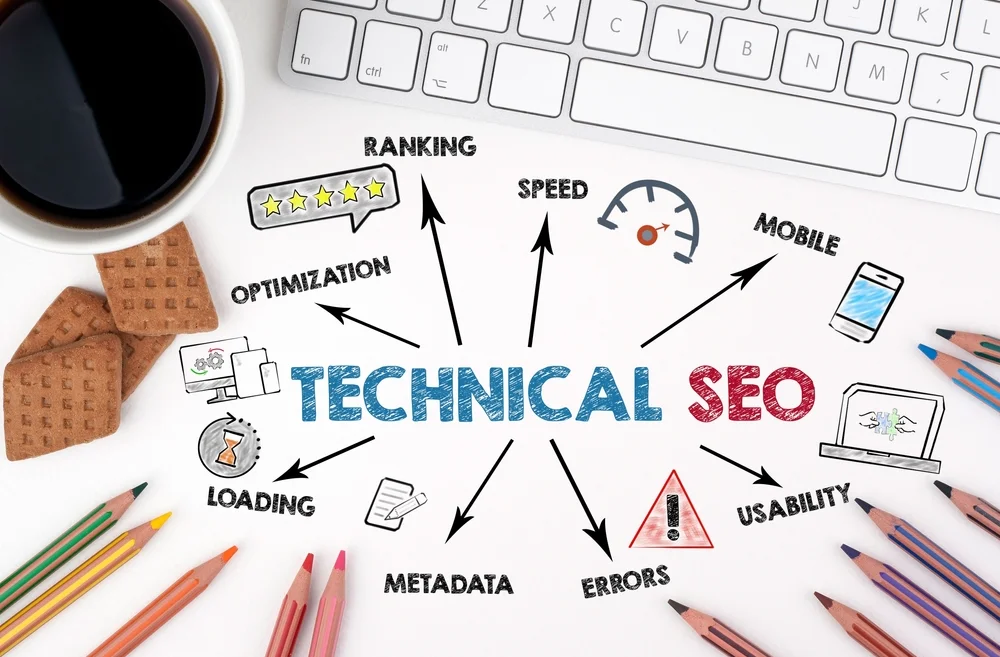
Technical SEO focuses on the underlying structure and accessibility of your website.
Search engines need to be able to crawl your pages, understand their content, and determine which URLs should appear in search results.
Important technical considerations include:
- A logical website structure
- Crawlable internal links
- Clean and accurate XML sitemaps
- Proper indexing controls
- Canonical URLs
- Fast page performance
- Mobile usability
- HTTPS security
- Appropriate redirects
- Properly configured structured data
Website performance also matters for users. Google’s Core Web Vitals evaluate aspects of loading performance, responsiveness, and visual stability, making technical optimization an important part of providing a strong page experience.
Technical SEO is not about making a website complicated. In many cases, the goal is the opposite: make the website easier for both users and search engines to navigate and understand.
Internal Links and Website Structure Matter
SEO does not happen page by page in isolation.
Internal links help visitors move between related areas of your website, while also helping search engines discover and understand the relationship between pages.
A sensible structure should make it clear:
- What your business offers
- Which pages are most important
- Which topics are closely related
- How visitors can move from general information to specific services or products
Use descriptive anchor text where appropriate, and avoid creating unnecessary layers of navigation.
A well-organized website can improve usability while giving search engines a clearer picture of your content.
Authority and Trust Still Matter
Search engines need to determine whether a source is trustworthy and appropriate for a particular query.
Links from other reputable websites can contribute to a site’s authority, but acquiring backlinks should not become a numbers game. Relevant, credible references are generally more valuable than large quantities of low-quality links.
Businesses can build authority by creating genuinely useful resources, publishing original insights, earning coverage from relevant publications, participating in their industry, and establishing a recognizable presence around their areas of expertise.
Your own website should also clearly communicate who is behind the content, what the business does, and why visitors should trust it.
SEO and AI Search Are Becoming More Connected
The rise of AI-powered search has added another dimension to organic visibility.
Users can increasingly receive synthesized answers instead of simply browsing a traditional results page. This makes it even more important for businesses to publish clear facts, authoritative information, well-structured answers, and content that directly addresses user needs.
SEO therefore increasingly overlaps with Generative Engine Optimization (GEO). While the technologies and interfaces continue to evolve, the underlying principle remains familiar: provide information that systems can understand, and users can trust.
Businesses should not abandon traditional SEO because of AI search. Instead, they should build strong SEO foundations while making their content easier for modern search experiences to interpret.
Measure What Actually Matters
Ranking for a keyword can be useful, but rankings alone do not tell you whether SEO is contributing to business growth.
A stronger measurement framework can include:
- Organic traffic
- Qualified leads
- Sales and revenue
- Conversion rates
- Search impressions
- Click-through rates
- Engagement with important landing pages
- Visibility for commercially relevant searches
The most valuable SEO traffic is not necessarily the traffic with the highest volume. Relevance and intent matter.
A page attracting fewer visitors but generating qualified leads may be considerably more valuable than a page receiving thousands of visits from people who will never become customers.
SEO Is a Long-Term Process
SEO is not a one-time task that you complete and forget.
Search engines change, competitors publish new content, websites evolve, customer behaviour shifts, and new search technologies emerge. A successful SEO strategy therefore requires ongoing monitoring, testing, technical maintenance, and content improvement.
Start with the fundamentals:
- Make sure search engines can crawl your website.
- Check which pages are indexed and whether important pages are visible in search.
- Research relevant topics and search intent.
- Create genuinely useful content.
- Build a logical internal linking structure.
- Improve page speed and mobile usability.
- Strengthen your site’s credibility and authority.
- Monitor organic performance and conversions.
- Update content when information becomes outdated.
- Adapt your strategy as search behaviour continues to evolve.
SEO Is About Being the Best Answer
For beginners, the most important thing to remember is that SEO is not simply a collection of tricks for manipulating rankings.
Good SEO helps the right people find the right information at the right moment.
When your website is technically accessible, your content answers genuine questions, your pages are easy to navigate, and your business demonstrates expertise and credibility, you create a stronger foundation for organic visibility.
If you want professional help developing that foundation, MRKT360 provides SEO services designed to improve organic visibility and support measurable business growth.