


The Role of AI in Modern SEO: How Machine Learning Is Changing Search Rankings
SEO has changed a lot faster than most businesses expected, and if you are still relying on older optimization tactics, you are probably already seeing the difference.
A few years ago, ranking on Google was mostly about finding the right keywords, publishing optimized pages, and building backlinks consistently. While those things still matter, search engines no longer evaluate content the same way they used to.
Today, AI in SEO is changing how search engines understand websites, analyze intent, and decide which pages deserve visibility. Instead of relying only on exact keyword matches, Google now looks at context, behavior, relevance, and user experience to understand whether content is actually helpful.
That shift is forcing businesses to rethink what modern search engine optimization actually looks like and how you should approach SEO moving forward.
For companies in Toronto, Vaughan, Richmond Hill, and across Canada, adapting to AI-driven search is no longer something to think about “eventually.” It is already shaping rankings, visibility, and how customers discover brands online.
SEO Used to Be Simpler. AI Changed That Fast.

There was a time when SEO felt much more mechanical.
You could optimize a page around a specific keyword, repeat it enough times, build links to it, and have a decent chance of ranking well. Some websites even created dozens of nearly identical pages targeting slight keyword variations.
That approach does not work the same way anymore.
Machine Learning in SEO has made search engines much better at understanding meaning instead of simply scanning pages for keywords.
Today, Google evaluates user intent, engagement signals, page quality, contextual relevance, and overall user experience. In other words, search engines are becoming better at understanding people, not just pages.
This is one of the biggest reasons AI impact on search rankings is reshaping SEO strategies across almost every industry.
Search Engines Are Learning How People Actually Search

Search behavior looks very different today than it did a few years ago.
People are no longer searching in perfectly structured keyword phrases. Searches have become more conversational, more specific, and often much longer than before. Someone might type “best SEO agency for startups” or ask a full question like “why did my rankings suddenly drop overnight?”
Search engines are adapting to that behavior. Instead of only matching keywords, Google now tries to understand intent, context, and the type of answer users are actually looking for.
That is a major part of how is AI changing SEO.
Machine learning helps search engines analyze huge amounts of behavioral data over time. If users consistently engage with certain types of content or spend more time on particular pages, search engines learn from those signals and adjust rankings accordingly.
This also explains why low-quality content tends to struggle much faster today than it did years ago. Search engines are no longer just organizing information. They are interpreting relevance.
The Shift From Keywords to Context Is Already Happening
Keywords still matter. They always will. But if you are still building content strategies around exact-match repetition alone, you are probably thinking about SEO the same way search engines used to.
But search engines are no longer focused only on exact-match phrases. They now understand synonyms, topic relationships, semantic meaning, and search intent much more effectively than before.
That means a page does not need to repeat the same keyword endlessly to rank well.
Instead, successful content now focuses more on answering questions clearly, covering topics comprehensively, and creating a strong user experience.
This is why many SEO trends with artificial intelligence are moving toward:
- topical authority,
- semantic SEO,
- entity optimization,
- and conversational content structures.
The reality is that Google has become much better at identifying whether content feels genuinely useful or simply optimized for algorithms.
For businesses investing in SEO services, this changes how content strategies need to be planned moving forward.
AI Is Also Changing the Technical Side of SEO
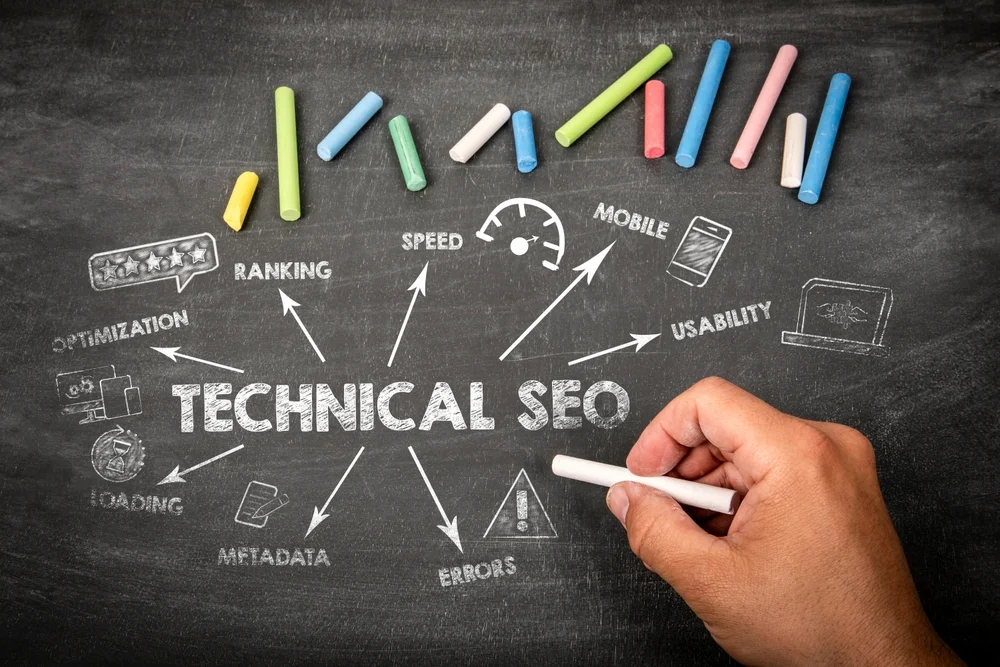
If you think AI only affects content, you are not alone. But search engines are also using AI to evaluate technical performance much more intelligently than before.
Search engines are becoming smarter at evaluating site structure, mobile usability, crawlability, page speed, and overall user experience. AI systems can now identify technical issues more efficiently and better understand how those issues affect real users.
For example, if a website loads slowly, feels difficult to navigate on mobile devices, or creates a frustrating experience, search engines may interpret those signals as indicators of lower quality.
This is why modern search engine optimization is becoming much more interconnected. Technical SEO, content quality, and user experience no longer function as separate areas.
A modern SEO company needs to think about all of them together.
AI Tools Can Speed Things Up, but They Do Not Replace Strategy

If you work in marketing or content, you have probably already noticed how quickly AI tools became part of everyday SEO workflows. . Businesses now use platforms like Semrush, Ahrefs, Surfer SEO, Clearscope, MarketMuse, and ChatGPT to speed up research, analyze competitors, and optimize content more efficiently.
But there is an important distinction here: AI can improve efficiency, but it does not automatically create good strategy.
An experienced SEO expert still needs to understand audience behavior, business goals, brand positioning, and content quality. That human side of SEO matters even more now because search engines are getting better at identifying shallow or overly generic content.
The companies seeing the best results today are usually the ones combining AI efficiency with strong strategic thinking.
Personalization Is Quietly Reshaping Search Results

One of the less obvious ways AI is influencing SEO is through personalization.
Search results are becoming more dynamic based on location, interests, previous behavior, device usage, and search history. Two people searching for the exact same phrase may not always see identical results anymore.
This matters because businesses can no longer rely only on broad optimization tactics. Content increasingly needs to feel relevant to specific audiences and search intent contexts.
For example, a business searching for a search engine optimization agency in Vaughan may see different results than someone searching from another city or country.
Search engines are adapting results based on what they believe users are most likely to find valuable. That personalization layer is becoming a major part of AI impact on search rankings.
AI Is Changing Content Optimization More Than Content Creation

A lot of conversations around AI focus heavily on content generation.
But honestly, one of the biggest opportunities right now is content optimization.
AI helps businesses better understand content gaps, related search intent, semantic relationships, and audience behavior. That allows companies to create stronger, more relevant content strategies instead of simply producing higher volumes of content.
This is especially important because search engines are getting much better at identifying thin pages, repetitive articles, and low-value AI-generated content.
The future of SEO is probably not about replacing writers with AI.
It is more about using AI to build smarter, more data-informed content strategies. That is a major difference.
Businesses That Ignore AI Search Trends Will Fall Behind

Some businesses still treat AI as something experimental in SEO.
The reality is that it is already deeply integrated into how search works.
Features like AI-generated search summaries, conversational search, voice search, and predictive recommendations are changing how users discover information online.
That is why so many businesses are now asking:
“Is AI important for SEO in 2026?”
Honestly, yes.
Businesses that continue relying on outdated SEO tactics may struggle to maintain visibility as search engines continue evolving.
At the same time, companies willing to adapt early have a major opportunity to strengthen their digital presence before competitors fully catch up.
For brands looking for affordable SEO services, it is becoming increasingly important to work with teams that understand how AI-driven search behavior is changing optimization strategies.
Modern SEO Requires More Than Rankings

SEO today is not only about appearing on page one anymore.
It is about understanding user intent, creating valuable experiences, building topical authority, and adapting to increasingly intelligent search systems.
That is why many businesses across Toronto, Vaughan, Richmond Hill, and Canada are rethinking how they approach digital visibility.
A modern SEO agency does much more than optimize keywords. It helps businesses adapt to evolving search behavior, improve technical performance, create stronger content ecosystems, and build long-term authority online.
Whether a company is looking for a long-term SEO company or affordable SEO services, understanding how AI is changing search is becoming essential for sustainable growth.
The Way People Search Is Already Different

Search engines are becoming smarter, more contextual, and far more focused on user behavior than they were just a few years ago.
AI and machine learning are changing how rankings work, how content is evaluated, and how users discover information online. That shift is pushing businesses to move beyond outdated SEO tactics and focus more on relevance, quality, user experience, and strategic content development.
While AI tools can absolutely improve workflows and efficiency, strong SEO still depends on human expertise, creativity, and long-term strategy.
The businesses that adapt early to AI-driven search trends will likely be in a much stronger position over the next few years, especially as search continues becoming more personalized and conversational.
Ready to Build a Smarter SEO Strategy?

MRKT360 helps businesses across Toronto, Vaughan, Richmond Hill, and Canada adapt to modern search behavior with data-driven SEO services designed for long-term growth.
From technical optimization to content strategy and AI-driven insights, our team helps brands improve visibility, traffic, and online performance in increasingly competitive search environments.
Contact our team today to learn how our search engine optimization agency can help your business stay competitive in the AI era.
FAQs
How is machine learning changing search engine rankings?
Machine learning helps search engines better understand user intent, behavioral patterns, and content relevance, allowing them to deliver more accurate and personalized search results.
Does Google use AI for ranking websites?
Yes. Google uses AI and machine learning systems to analyze search intent, content quality, engagement signals, and user experience when ranking websites.
How does AI impact keyword research and selection?
AI helps businesses identify semantic relationships, related topics, and search intent patterns instead of relying only on exact-match keywords.
Can AI tools improve website SEO performance?
Yes. AI tools can help improve keyword research, technical SEO analysis, content optimization, and workflow efficiency.
What are the best AI tools for SEO in 2026?
Some of the most popular AI tools for SEO optimization include Semrush, Ahrefs, Surfer SEO, Clearscope, MarketMuse, and ChatGPT.
How does AI help in content optimization?
AI helps businesses identify content gaps, optimize semantic relevance, improve internal linking, and strengthen topical authority.
Is AI-generated content good for SEO?
AI-generated content can perform well if it is useful, original, accurate, and aligned with user intent.
Can AI replace human SEO experts?
No. AI can automate workflows and improve efficiency, but human expertise is still essential for strategy, creativity, and understanding audience behavior.
How does AI affect on-page and technical SEO?
AI helps search engines better evaluate technical performance, mobile usability, page experience, and content quality.
What role does AI play in voice search optimization?
AI helps search engines better understand conversational language and natural speech patterns, improving voice search experiences.
How does machine learning influence Google algorithms?
Machine learning helps Google analyze patterns, understand intent, detect spam, and continuously improve the relevance of search results over time.