
Search engine optimization has changed dramatically. What once centered largely on keywords, backlinks, mobile optimization, and algorithm updates has evolved into a much broader discipline focused on useful content, technical performance, user intent, artificial intelligence, and measurable business results.
Google’s search environment now includes traditional organic listings alongside AI-generated experiences, visual results, video, local information, shopping features, and other search formats. For businesses, this means SEO can no longer be treated as a narrow exercise in ranking individual keywords. The real objective is to make a website discoverable, useful, technically accessible, trustworthy, and capable of turning visibility into meaningful action.
Here are five SEO trends that are particularly important for businesses focused on measurable results.
1. AI Search Is Reshaping Organic Visibility
The most significant development in modern SEO is the growing role of generative AI in search. Google now provides AI-powered experiences such as AI Overviews and AI Mode, which can answer increasingly complex questions and present links to supporting websites.
This does not mean traditional SEO has become obsolete. Google explicitly states that its established SEO fundamentals remain relevant for AI search. Websites still need to be crawlable, indexable, technically sound, and built around helpful, reliable, people-first content.
However, the way businesses think about visibility must expand.
Content should provide clear answers, original information, useful context, demonstrable expertise, and genuine value rather than simply targeting a keyword repeatedly. Pages that merely reproduce information already available elsewhere have less opportunity to distinguish themselves.
AI search also makes entity recognition, topical authority, structured information, and factual clarity increasingly important. Businesses should make it easy for search systems to understand who they are, what they offer, where they operate, and why their information deserves attention.
The objective is no longer simply to rank. It is to become a credible source that search systems can identify and reference.
2. People-First Content Beats Search-Engine Filler
Content remains fundamental to SEO, but the standard has become considerably higher.
Modern search rewards content designed primarily for people, not pages produced simply to capture search traffic. Businesses need to demonstrate genuine expertise and provide information that actually helps visitors accomplish something.
That means moving beyond generic articles and mass-produced pages.
Effective SEO content should:
- Answer the questions customers genuinely ask.
- Demonstrate first-hand knowledge and expertise.
- Provide original insights rather than recycled information.
- Address the user’s underlying search intent.
- Be accurate, useful, and easy to understand.
- Give visitors a reason to choose the business behind the content.
This is particularly important as AI makes it easier to generate enormous quantities of generic text. More content is not automatically better SEO. Better content is.
Businesses should therefore concentrate on creating authoritative resources, detailed service information, useful comparisons, original research, expert commentary, and content that genuinely differentiates the brand.
3. Technical SEO and User Experience Still Matter
A great article cannot compensate for a website that is painfully slow, difficult to navigate, unstable, or inaccessible to search engines.
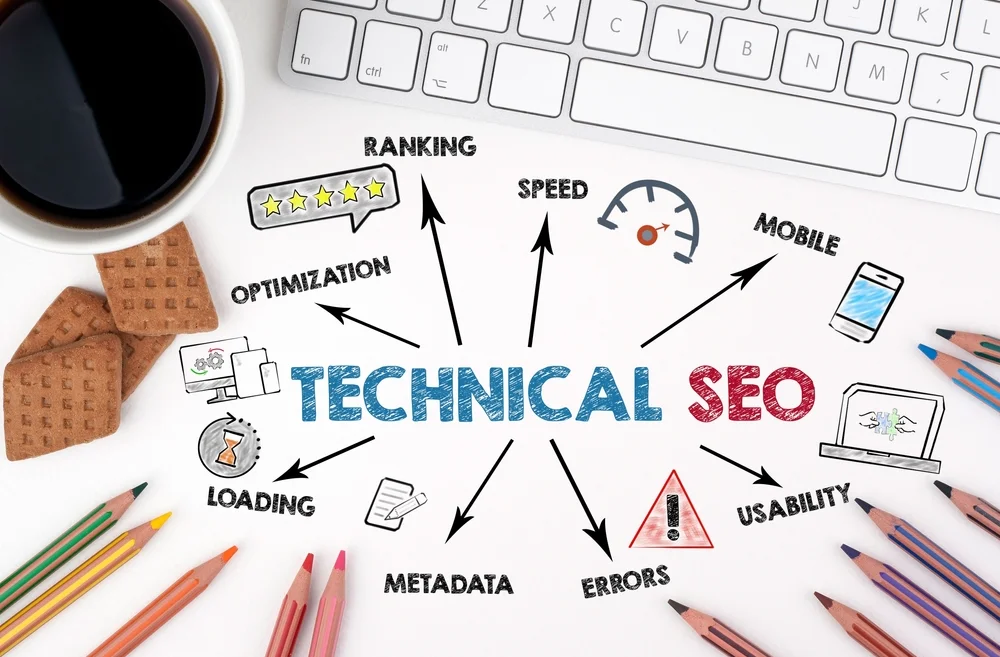
Technical SEO remains a critical foundation for organic performance. Google’s Core Web Vitals focus on three measurable aspects of the user experience:
- LCP: loading performance, with a recommended target of 2.5 seconds or less.
- INP: responsiveness, with a recommended target of under 200 milliseconds.
- CLS: visual stability, with a recommended score of less than 0.1.
These measurements are not the entire SEO strategy, but they illustrate the direction of modern search: websites are expected to deliver both useful information and a strong experience.
Businesses should therefore regularly examine page speed, mobile usability, navigation, internal linking, technical accessibility, indexing, broken links, JavaScript implementation, and overall page experience.
A technically healthy website gives search engines a better opportunity to discover, understand, and serve its content while giving visitors fewer reasons to leave.
4. Video, Images and Multimodal Search Are Expanding SEO
Search is no longer dominated by text.
Google can surface videos, images, visual results, Discover content, local information, and other formats depending on what best satisfies the searcher’s needs. This creates additional opportunities for businesses that invest in high-quality multimedia content.
Video SEO deserves particular attention. Google can surface videos in the main search results, Video mode, Google Images, and Discover. Businesses can improve discoverability by making videos technically accessible, providing appropriate metadata, using structured data where applicable, and creating dedicated video pages when appropriate.
Images are equally essential for businesses operating in visually driven markets.
The broader trend is multimodal search: users can increasingly combine text, images and other forms of information when looking for answers. A strong SEO strategy therefore considers how a brand can be discovered through multiple formats rather than relying exclusively on written webpages.
5. SEO Is Becoming a Business Performance Discipline
The final shift may be the most necessary for companies investing money in SEO: rankings alone are not the result that matters.
A first-page position has limited business value if it produces visitors who never contact the company, purchase anything, register, subscribe, or take another meaningful action.
Modern SEO should therefore be connected to measurable business objectives such as:
- Qualified organic traffic
- Leads and inquiries
- Sales and revenue
- Conversion rates
- Customer acquisition
- Engagement
- Brand visibility
- Local discovery
- Repeat customers
This becomes even more important as AI search changes how users interact with search results. Google has noted that visitors arriving through AI search experiences can be more engaged, making it increasingly important to evaluate the quality and value of organic visits, rather than simply counting clicks.
Search Console is also evolving to provide greater insight into visibility within generative AI experiences, giving businesses additional ways to understand how their content performs across changing search environments.
SEO Requires a Broader Strategy Than Ever
The modern SEO landscape is no longer defined by one algorithm, one ranking factor, or one type of search result.
Successful businesses need a coordinated strategy that combines AI-search readiness, people-first content, technical excellence, multimedia visibility, structured information, and conversion-focused measurement.
The fundamentals remain remarkably consistent: create valuable information, make it accessible to search engines, provide an excellent experience, and give users a compelling reason to engage with the business.
What has changed is the scale of the opportunity—and the number of ways customers can now discover a brand through search.