You may already have strong organic rankings, useful content, and a technically sound website.
But is your website actually ready for AI search?
As Google AI Overviews, AI Mode, and other generative search experiences become part of how people discover and evaluate information, businesses need to consider more than traditional rankings. AI systems also need to understand who your company is, what you offer, which information on your website is authoritative, and whether the facts they find are consistent and trustworthy.
That’s where a Website GEO Audit becomes valuable.
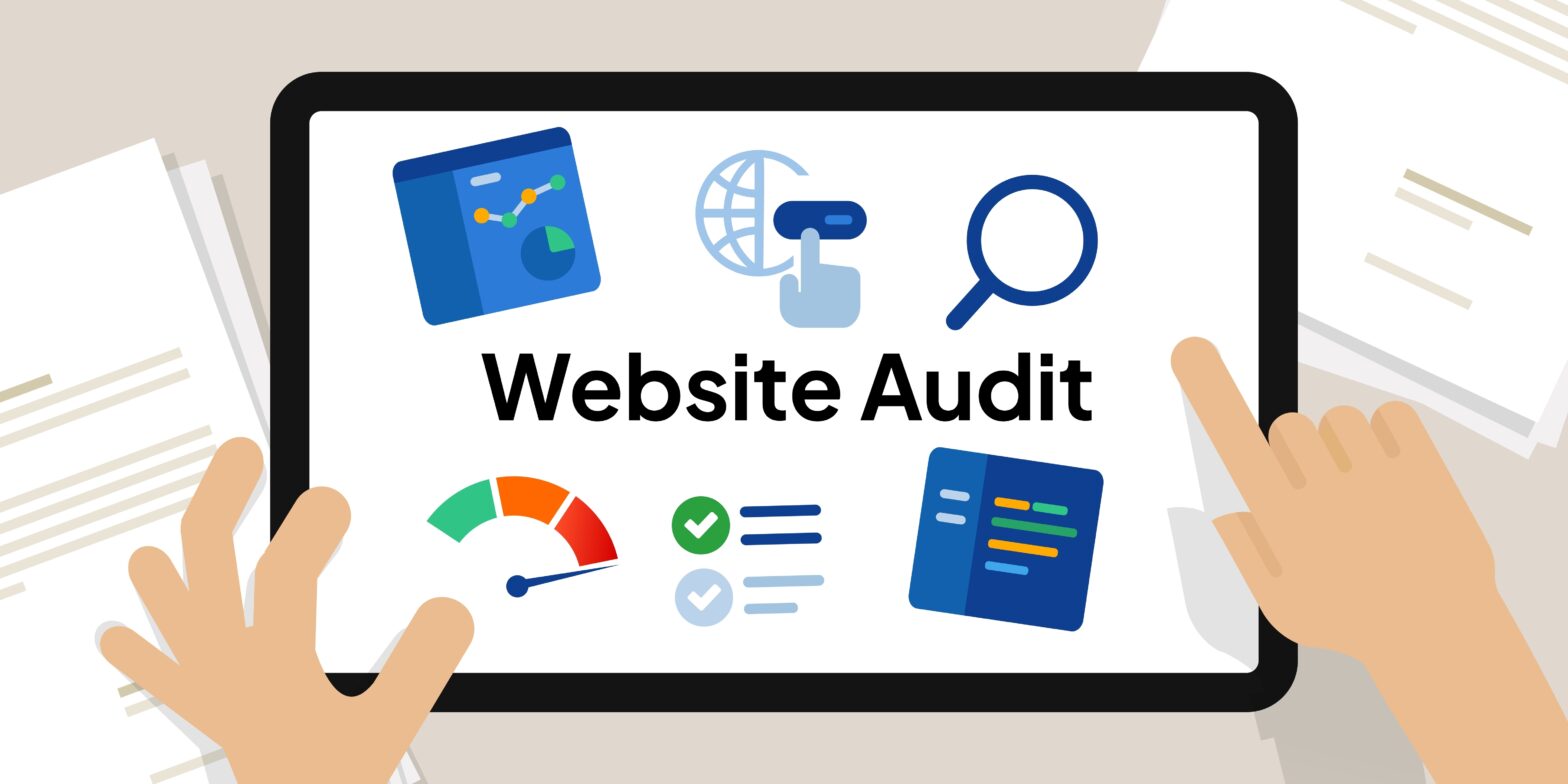
Before investing heavily in Google AI Search Optimization, creating dozens of new articles, or developing a broader GEO strategy, an audit helps identify whether the foundation is already in place. It examines technical accessibility, site structure, content quality, business information, authority signals, structured data, and current Google AI Visibility to determine what should be improved first.
The goal isn’t simply to produce another list of SEO issues.
A useful GEO Audit should show where AI search readiness is strong, where information is unclear or incomplete, and which improvements deserve priority before promotion begins.
What Is a Website GEO Audit?

A Website GEO Audit evaluates how prepared a website is to be discovered, understood, and represented within AI-powered search experiences.
It builds on many elements of a traditional SEO audit but examines them through a broader lens. Crawlability and indexability still matter, but so do questions such as whether important business facts are easy to locate, whether claims have supporting evidence, whether content provides clear answers, and whether different pages describe the company consistently.
The audit should also examine how information connects across the website.
A service page may explain what a company offers, for example, while a case study provides evidence of its experience and an FAQ clarifies common questions or limitations. If those resources are clearly connected, they provide a more complete picture of the business than isolated pages with little relationship to one another.
This is why a Website GEO audit checklist should evaluate technical SEO, content, authority, business information, structured data, internal relationships, and existing AI search visibility together.
The final result should help answer a practical question:
Is my website ready for AI search, and if not, what should we fix first?
A GEO Audit Is Not the Same as a Traditional SEO Audit

Traditional SEO audits remain essential.
They evaluate whether search engines can crawl and index a website, identify technical problems, analyze metadata and internal links, assess organic performance, and uncover issues that may limit rankings.
A GEO Audit doesn’t replace that process.
Instead, it adds another layer.
An SEO audit before AI search optimization should determine whether the website has a healthy search foundation. The GEO portion then examines whether the information available through that foundation is sufficiently clear, consistent, authoritative, and well connected for emerging AI-powered search experiences.
For example, a traditional audit may confirm that a service page is indexed, internally linked, and technically accessible. A GEO Audit goes further by asking whether that page clearly explains what the service is, who it serves, what differentiates it, what evidence supports the company’s expertise, and where users or search systems can find additional authoritative information.
This distinction matters because technical accessibility alone doesn’t make a website a strong information source.
Likewise, publishing highly detailed content won’t solve fundamental crawling or indexing problems.
The strongest GEO Strategy therefore starts with both: a technically accessible website and information that can be understood without requiring search engines or AI systems to fill in unnecessary gaps.
Start with Crawlability and Indexability

Before evaluating content for AI search, confirm that search engines can reliably access the pages that matter.
This sounds basic, but it is one of the most important parts of website readiness for AI search.
Review robots.txt rules, XML sitemaps, noindex directives, canonical tags, redirects, broken pages, rendering issues, and other technical elements that influence how search engines discover and process content. Important commercial and informational pages should be accessible, indexable, and connected through internal links rather than existing as isolated URLs.
Canonicalization deserves particular attention on larger websites. If several URLs contain similar information but send inconsistent canonical signals, search engines may have difficulty identifying which version should represent that content.
The same applies to outdated redirects, accidental noindex tags, or important pages missing from the site’s internal architecture.
A technical review should also consider whether important resources are being blocked unintentionally. Crawl controls have legitimate uses, but businesses should understand which systems can access their public content and whether those settings align with their search visibility objectives.
This is why Google AI Search Optimization still begins with traditional technical fundamentals.
AI search may change how information is presented, but inaccessible content remains inaccessible content.
Check Whether Search Engines Understand Your Site Structure.

Being able to crawl a website is only the first step.
Search engines also need to understand how its pages relate to one another.
A clear site hierarchy should make important business areas easy to identify. Primary services, products, locations, resources, case studies, and supporting content should have logical relationships rather than existing as disconnected sections of the website.
Internal linking is especially important during a GEO Audit because it provides context around those relationships.
For example, an article explaining a business problem can link to the relevant service page, while that service page can connect to supporting case studies, FAQs, or other resources that demonstrate expertise. Those connections help create a clearer information architecture around the subject.
The audit should also identify orphan pages, unnecessarily deep content, duplicate pathways, and important commercial pages that receive very few internal links.
The objective isn’t to connect everything to everything.
It’s to make the hierarchy intentional.
When important information has a clear place within the website, both traditional search engines and AI-powered systems have stronger contextual signals for understanding what the business offers and which pages are most authoritative.
Make Important Business Information Clear and Consistent

One of the most valuable questions in a Website GEO Audit is surprisingly simple:
Does your website tell the same story everywhere?
A company may use one service name on its main navigation, another variation on a landing page, and a third description inside its blog. Pricing may appear on one page but be outdated elsewhere. Product capabilities, locations, company information, or service limitations may also become inconsistent as a website grows.
For a visitor, those discrepancies create confusion.
For AI-powered systems trying to synthesize information about the business, they create ambiguity.
A GEO Audit should therefore identify the primary pages responsible for communicating important business facts. Products, services, locations, company information, and other core offerings should each have a clear authoritative source on the website rather than relying on scattered references across unrelated pages.
Those primary pages should also contain enough information to answer the questions that matter. What is being offered? Who is it for? What does it include? Are there relevant limitations or conditions? What evidence supports the claims being made?
Pricing can also be valuable when it is appropriate and publicly available, but the objective isn’t to force every company to publish prices. It is to make sure information that is intentionally public is accurate, current, and consistent wherever it appears.
This consistency creates a stronger foundation for Google AI Visibility because search systems have clearer information to interpret rather than having to reconcile conflicting versions of the same fact.
Audit Your Content for AI Search Readiness

Once the technical and informational foundation is clear, the next step is evaluating the content itself.
An AI search optimization checklist shouldn’t simply ask whether a page contains the right keywords. It should examine whether the page provides enough useful information for someone—or an AI-powered search system—to understand the topic without unnecessary ambiguity.
Start with search intent.
Does the page actually answer the question or need that brought someone there? Are important answers easy to identify? Does the content provide sufficient context, or does it assume knowledge that isn’t explained anywhere on the website?
Content quality also needs to be evaluated beyond length.
A 2,000-word article can still provide very little original value if it repeats generic information available everywhere else. Stronger pages may include firsthand expertise, examples, proprietary information, credible sources, clear definitions, comparisons, or evidence that makes the content more useful and distinctive.
A Checklist GEO Optimization should also identify outdated content, conflicting statements, thin FAQs, duplicate search intent, unsupported claims, and pages that exist primarily to target keywords without providing meaningful information.
The question isn’t whether every page looks “optimized for AI.”
It’s whether every important page gives search systems enough accurate, useful, and trustworthy information to understand what it is about and why it deserves consideration.
Audit Trust, Evidence, and Business Proof

Clear business information tells search systems what your company does. Evidence helps establish why that information should be trusted.
During a GEO Audit, review whether important claims are supported by information visitors can actually verify. Case studies, customer examples, original research, professional credentials, certifications, author information, reputable citations, and detailed company pages can all provide additional context around the expertise behind your content.
The type of proof will depend on the business. A professional services company may rely heavily on case studies and subject-matter expertise, while an ecommerce brand may demonstrate credibility through detailed product information, reviews, policies, and transparent company information.
This is also where E-E-A-T becomes relevant. Experience, Expertise, Authoritativeness, and Trustworthiness should be visible through the substance of the website rather than added as superficial signals. If an article makes specialized claims, readers should be able to identify who created it and what supports those claims. If a service page promises particular capabilities, supporting examples or related resources can help substantiate them.
A strong Website GEO Audit should therefore ask more than whether content exists.
It should ask whether the website provides enough evidence to support what the business says about itself.
Review Structured Data and Entity Signals

Structured data can provide search engines with additional machine-readable context about the information already available on your website.
As part of a Website GEO audit checklist, review whether relevant pages use appropriate structured data and whether the markup accurately reflects their visible content. Depending on the website, this may include Organization, LocalBusiness, Person, Article, Product, Breadcrumb, or other applicable Schema.org types.
Consistency matters here too.
Organization details in structured data should align with the information displayed across the website. Authors should be connected to the content they actually create, products should be described accurately, and markup should not introduce claims or information users cannot see on the page.
Structured data can help search engines understand entities and page relationships, but it shouldn’t be treated as a shortcut to Google AI Visibility. Adding schema does not guarantee that a website will appear in Google AI Overviews or other AI-generated results.
Instead, think of structured data as another layer of clarity.
The page provides the information. The site architecture establishes relationships. Structured data gives search systems additional context for interpreting both.
Audit What AI Search Already Says About Your Brand

Before trying to increase AI visibility, establish what that visibility looks like today.
A useful GEO Audit should include a controlled set of queries related to your brand, products, services, industry, and priority customer questions. Review how your business appears across the AI-powered search experiences that matter to your audience and document the results as a baseline.
But don’t stop at asking whether your brand appears.
Check whether the information is accurate.
Does the answer describe your services correctly? Does it understand who your business serves? Are locations, products, capabilities, or other important facts represented accurately? Are competitors being mentioned where your company is absent? When sources are displayed, which websites are being referenced?
These observations can reveal problems that traditional rankings alone won’t show.
For Google AI Search Optimization and Google AI Mode Optimization, this baseline also provides a way to evaluate changes over time. After improving content, structured data, internal relationships, or business information, you can revisit the same priority topics and look for meaningful changes in how your brand is represented.
AI-generated responses can vary, so a single prompt or one isolated result should never be treated as definitive proof of performance.
The objective is to identify patterns.
That makes AI monitoring a useful component of Google AI Visibility analysis rather than a one-time test performed at the end of an audit.
Identify Content Gaps Before Creating More Content
A GEO audit shouldn’t automatically result in a recommendation to publish more articles.
Sometimes the stronger opportunity is improving what already exists.
Review whether your website adequately covers the questions and decisions surrounding your most important products, services, and areas of expertise. Missing comparisons, incomplete service information, outdated explanations, weak FAQs, or unanswered customer questions can leave important gaps in the information available to search systems.
The audit should also identify overlapping pages.
If several articles address essentially the same intent, creating another one may add more duplication rather than strengthen your authority. Consolidating or repositioning existing content can sometimes create a clearer information environment than continually expanding the website.
Supporting content should also connect back to the pages responsible for explaining your products or services. An educational article can answer a broader question, while relevant internal links help users and search engines continue toward the primary commercial information.
This is one of the most important Best GEO audit practices: diagnose the information gap before prescribing more content.
The goal is not to build the largest content library.
It’s to build the clearest and most useful one.
Review Brand and Authority Signals Beyond Your Website

Your website is the primary environment you control, but it isn’t the only place search systems can encounter information about your business.
A comprehensive GEO Audit should also consider whether important brand information is represented consistently across reputable external sources. Business profiles, industry publications, reviews, professional directories, media coverage, citations, and relevant backlinks can all contribute to the wider context surrounding a company.
This doesn’t mean chasing mentions simply to influence AI systems.
The focus should remain on legitimate authority and consistency.
If your website describes the company one way while established external sources repeatedly use outdated information, that discrepancy may be worth addressing. Likewise, strong third-party references can provide additional evidence around expertise, products, services, or reputation.
Traditional search engine optimization already recognizes the importance of off-site authority. GEO extends the analysis by asking whether the wider information environment supports a clear and accurate understanding of the brand.
Your website should remain the strongest source for information you control, while external authority helps reinforce that picture.
Turn GEO Audit Findings Into Priorities

An audit becomes useful when it tells you what to do next.
A long spreadsheet containing every possible issue may look comprehensive, but it doesn’t necessarily provide a workable GEO Strategy. Findings should be organized according to their potential impact, urgency, and the resources required to address them.
A practical prioritization framework might look like this:
| Priority | What to Address | Why It Matters |
| Critical | Crawlability, indexability, or accessibility problems | Important information needs to be discoverable before broader optimization can help |
| High | Conflicting or incomplete core business information | Creates ambiguity around products, services, and brand facts |
| High | Weak content or insufficient supporting evidence | Limits the usefulness and credibility of important pages |
| Medium | Structured data and contextual improvements | Can provide clearer machine-readable information about pages and entities |
| Medium | Internal linking and information architecture gaps | Weakens relationships between important pages |
| Ongoing | AI search visibility monitoring | Helps identify changes, inaccuracies, and emerging opportunities |
Prioritization should also account for business importance.
A problem affecting a high-value service page deserves different attention from a minor issue on an old blog post with little strategic relevance. Likewise, fixing fundamental indexing problems should generally happen before investing heavily in new AI-focused content.
The outcome of a Website GEO Audit should therefore be an actionable roadmap rather than a generic defect list.
Fix the foundation first, strengthen the information second, and then expand your optimization efforts.
Your AI Search Optimization Checklist

Once the full audit is complete, a concise checklist can help confirm that the major areas have been addressed before moving into broader AI search promotion.
- Confirm priority pages are crawlable and indexable.
- Review robots.txt, XML sitemaps, canonicals, redirects, and noindex directives.
- Ensure important services, products, locations, and business information have clear primary pages.
- Check that core business facts remain consistent across the website.
- Review content for accuracy, clarity, search intent, and sufficient context.
- Identify unsupported claims and strengthen them with appropriate evidence.
- Review authorship, expertise, company information, and other trust signals.
- Validate relevant structured data against visible page content.
- Strengthen internal links between commercial, informational, FAQ, and proof content.
- Identify outdated, overlapping, thin, or missing content.
- Establish a baseline for current Google AI Visibility and priority AI search queries.
- Review how accurately AI-generated answers describe your brand.
- Prioritize findings according to technical urgency and business impact.
- Establish a review process as products, services, content, and AI search experiences change.
This Checklist GEO Optimization isn’t designed to guarantee inclusion in AI-generated answers. It provides a practical foundation for deciding whether the website is ready for a broader Google AI Search Optimization strategy.
A GEO Audit Should Come Before AI Search Promotion

AI search promotion becomes much harder when the underlying website contains information gaps, technical barriers, conflicting business facts, or weak evidence.
That’s why the audit should come first.
Before investing heavily in Google AI Mode Optimization, new content production, or broader GEO campaigns, businesses should understand what search systems can currently access and what information they are likely to find.
The findings can then guide the strategy.
Some websites may need technical corrections before anything else. Others may already have a strong SEO foundation but need clearer commercial pages, better supporting evidence, stronger internal relationships, or more consistent information across the site.
A GEO Audit makes those differences visible.
Instead of optimizing blindly for AI search, businesses can focus their resources on the areas most likely to strengthen their overall search foundation and improve how accurately their brand is represented.
Prepare Your Website for AI Search with MRKT360

Preparing for AI search starts with understanding where your website stands today.
MRKT360’s GEO Audit Services evaluate the technical, content, authority, and information signals that influence website readiness for evolving search experiences. From crawlability and structured data to content quality, business consistency, and Google AI Visibility, our team identifies the gaps that should be addressed before broader promotion begins.
We can then connect those findings to a wider GEO Strategy, combining established SEO practices with Google AI Search Optimization and Google AI Mode Optimization according to your business objectives.
Ready to find out whether your website is prepared for AI search? Contact MRKT360 to identify what should be fixed, strengthened, or expanded before your next stage of GEO optimization.
About MRKT360
MRKT360 is a results-driven digital marketing and solutions agency offering end-to-end services in performance marketing, AI strategy, SEO, GEO, paid media, and IT optimization.
With clients around the world, MRKT360 specializes in future-proofing brands through innovative solutions that align marketing and infrastructure.
FAQs
Why is a GEO audit important before AI search promotion?
A GEO audit helps identify technical, content, authority, and information gaps before a business invests in broader AI search optimization. It provides a clearer picture of what search systems can access, understand, and verify about the website.
When should a website perform a GEO audit?
A GEO audit can be useful before launching an AI search strategy, after significant website or positioning changes, or when a business wants to understand its current visibility across emerging AI-powered search experiences.
How does Google AI Overviews impact website visibility?
Google AI Overviews can synthesize information and surface supporting sources directly within search results. This creates additional visibility opportunities while also changing how users interact with traditional organic listings.
Can a GEO audit improve visibility in AI-generated search results?
A GEO audit can identify improvements that strengthen a website’s technical accessibility, clarity, authority, and content quality. Addressing those issues can create a stronger foundation for AI search visibility, but no audit can guarantee inclusion in generative results.
What role does structured data play in a GEO audit?
Structured data provides search engines with machine-readable context about pages and entities. A GEO audit should verify that relevant markup is accurate, appropriate, and consistent with the information users can see on the page.
What technical SEO issues should be checked during a GEO audit?
Important areas include robots.txt, XML sitemaps, noindex directives, canonical tags, redirects, broken links, rendering, internal linking, page accessibility, and other issues that may affect crawling or indexing.
Why are crawlability and indexability important for AI search?
If important content cannot be reliably accessed or indexed by search systems, its ability to participate in search visibility is limited. Technical accessibility therefore remains a fundamental part of AI search readiness.
Can a GEO audit improve Google AI Overview visibility?
A GEO audit can uncover issues that may limit a website’s overall search readiness and identify opportunities to improve content, technical accessibility, structured data, authority, and clarity. These improvements may support Google AI Overviews SEO, but they do not guarantee that Google will select a particular page as a source.