



What Are The Best AI Marketing Tools?
Tools marketers actually use to write faster, design smarter, automate campaigns, and track performance.
AI marketing tools are software solutions that use artificial intelligence to support how marketing strategies are planned, executed, and optimized. You’ll find them across content creation, design, email marketing, social media, analytics, and performance optimization—helping teams work faster, reduce guesswork, and maintain consistency as campaigns scale.
Their rapid adoption reflects a structural shift in how marketing works. As audiences fragment across more channels and data volumes explode, manual workflows struggle to keep pace. AI marketing tools help close that gap by automating repetitive tasks, surfacing patterns inside large datasets, and turning raw signals into clearer recommendations. For modern teams, understanding how these tools are categorized, applied, and governed is no longer optional—it’s part of building a reliable, measurable marketing system.
What Are the AI Tools Used in Marketing?
AI tools used in marketing apply machine learning, natural language processing, and predictive analytics to improve insight, execution, and performance. While automation is part of the picture, the bigger value is intelligence: tools that help marketers interpret behavior, anticipate outcomes, and personalize experiences with more precision.
In practice, AI marketing tools plug into existing workflows rather than replacing them. They can help draft and optimize content, generate visuals, segment audiences, score leads, adjust budgets, test creative variations, and summarize performance across channels. The most effective tools aren’t “one-size-fits-all.” They’re the ones that match your goals, fit your stack, and strengthen strategy—so AI supports decision-making instead of becoming another disconnected tool to manage.
What AI Marketing Tools Are Available in the Market?
The AI marketing tools available today typically fall into a few clear categories, from creative support to automation and measurement. Some are standalone tools you plug into a workflow. Others are platforms that connect multiple functions (CRM, email, segmentation, reporting) into one system.
The key isn’t tool volume, but selective adoption. Teams get the best outcomes when tools match real workflows, connect to reliable data, and support decisions instead of creating more noise.
Common types of AI marketing tools (using examples from our Top 10):
- Generative AI for copy, ideation, and planning: ChatGPT, Jasper
Helps with drafts, messaging angles, outlines, and campaign structure—best when used with human review. - Quality and brand consistency layers: Grammarly
Improves clarity, tone, and readability across emails, landing pages, and blogs. - AI-assisted design and creative production: Canva, Adobe Firefly, Midjourney
Speeds up visual creation, variation testing, and concept development—from quick social creatives to professional design workflows. - Marketing automation and CRM intelligence: HubSpot
Applies AI to segmentation, nurturing, personalization, and pipeline visibility. - Email and SMS personalization for retention: Klaviyo
Strong for behavioral targeting, lifecycle messaging, and send-time optimization. - AI video creation and scalable localization: Synthesia
Useful for product explainers, onboarding, and multi-language video without a full production team. - Measurement and insight tools: Google Analytics 4 + Looker Studio
Turns user behavior into actionable reporting and decision support across channels.
Can GPT Help With Marketing? Top 10 Best AI Marketing Tools That You Need
Yes, when applied correctly. AI marketing tools deliver the most value when they are aligned to specific workflows. The tools below are organized by function, with each playing a distinct role in how marketers plan, execute, and optimize campaigns.
1. ChatGPT — AI for Copywriting, Ideation, and Planning
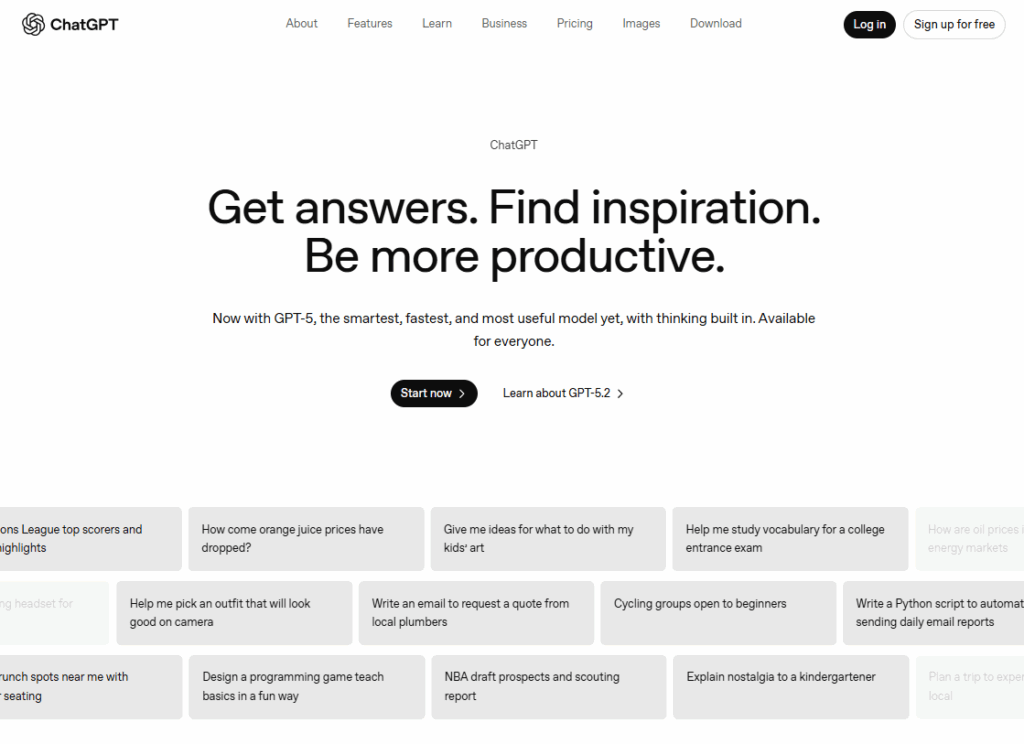
Price: Plus ($20/month), Team ($25-30/user/month), Pro ($200/month)
ChatGPT is widely used in marketing to support content ideation, copy drafting, research synthesis, and campaign planning. Marketers rely on it to accelerate early-stage work, generate alternative messaging angles, and translate complex briefs into structured outlines that speed up production without locking teams into a single direction.
ChatGPT is particularly effective for exploratory and preparatory tasks such as brainstorming campaign ideas, drafting first versions of content, summarizing research, and generating variations for testing. Its strength lies in reducing friction at the beginning of the creative process.
However, ChatGPT does not replace marketing strategy. It lacks context around brand positioning, audience nuance, and business objectives. Outputs require human review to ensure accuracy, originality, and alignment with broader goals. Used as a support layer rather than a decision-maker, ChatGPT helps marketing teams move faster while preserving strategic control and quality standards.
2. Jasper — Brand-Aligned Marketing Copy at Scale
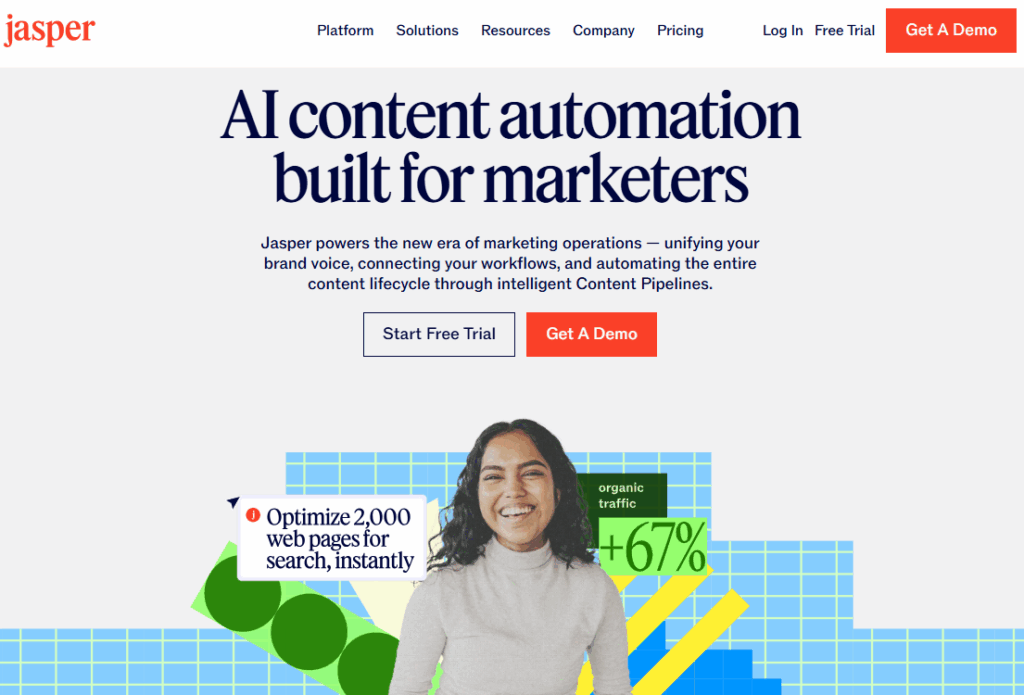
Price: Pro $59 month/seat
Jasper is designed for marketing teams that need to produce consistent copy across multiple channels and campaigns. It supports long-form and short-form content creation while maintaining closer alignment with predefined brand tone and messaging frameworks.
Teams use Jasper to scale content production without sacrificing coherence. This is especially useful for campaigns that require multiple variations, such as landing pages, ads, or email sequences, where consistency and speed must be balanced carefully.
3. Grammarly — Content Quality, Clarity, and Tone Control
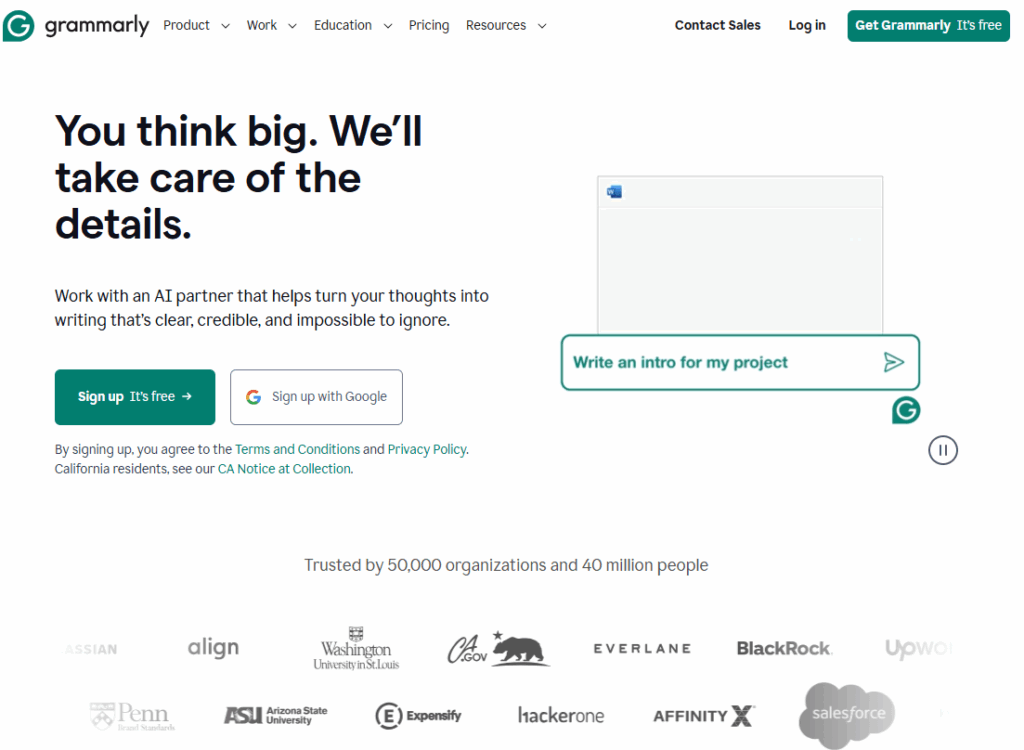
Price: Free, Pro (12/month)
Grammarly helps marketing teams improve clarity, grammar, and tone across written content. Rather than generating copy from scratch, it functions as an editorial layer that strengthens readability and consistency in assets such as emails, landing pages, social posts, and long-form articles.
Its value increases in collaborative environments where multiple people contribute to the same brand voice. By catching errors, tightening phrasing, and flagging tone issues early, Grammarly can reduce revision cycles and help teams ship content faster while maintaining quality standards and message coherence.
4. Canva — AI-Assisted Design and Creative Production
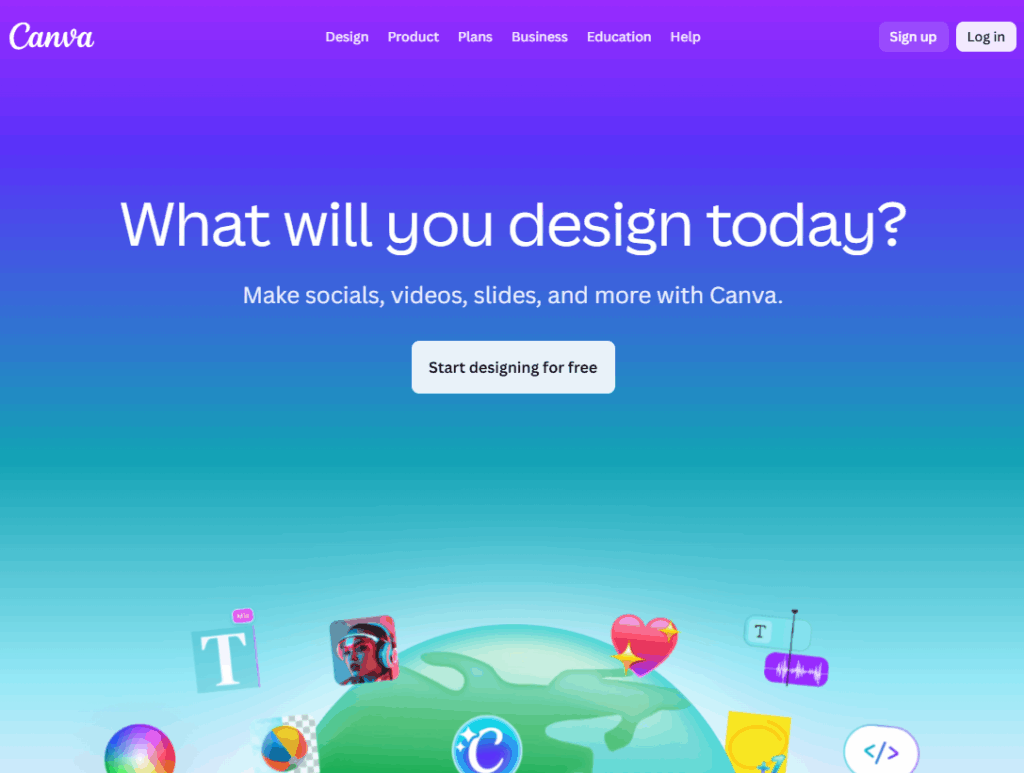
Price: Free, Pro ($15/month)
Canva enables marketers to create visual assets quickly using AI-powered design tools. It is commonly used for social media creatives, presentations, and performance ads, allowing teams to produce on-brand visuals without relying on specialized design resources for every asset.
For marketing teams, Canva supports faster iteration and experimentation. Visual concepts can be tested, adjusted, and deployed quickly, helping campaigns move from idea to execution with less dependency on extended design cycles.
5. Adobe Firefly — Generative Design Within Professional Workflows
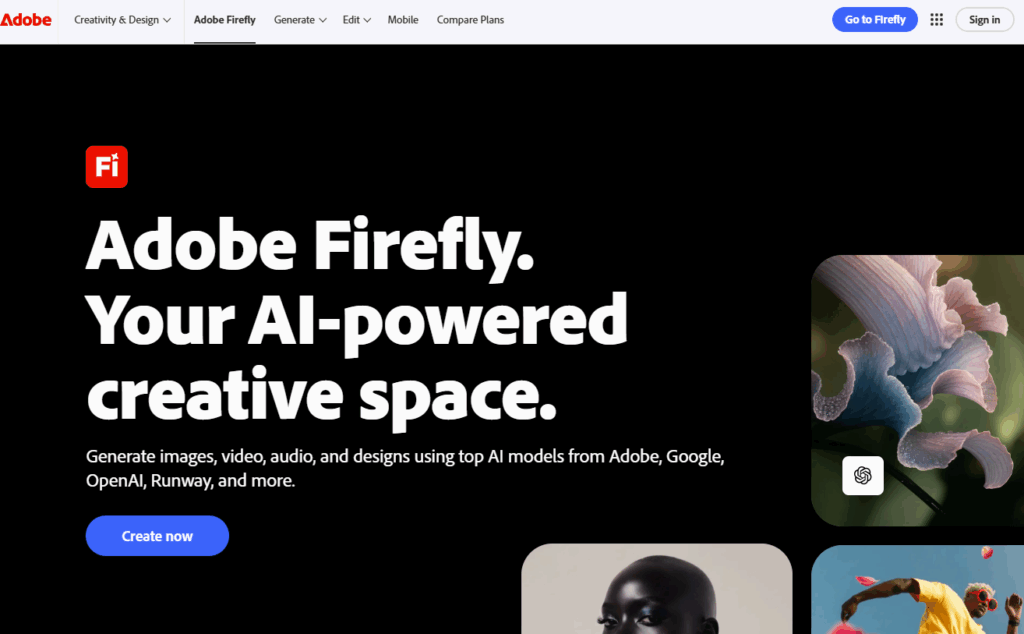
Price: Standard ($9.99/month), Pro ($19.99/month), Premium ($199.99/month)
Adobe Firefly integrates generative AI into Adobe’s creative ecosystem, supporting image generation and creative exploration within familiar design tools. It is often used to generate visual variations, explore creative directions, and support early-stage design ideation.
Its value lies in combining speed with control. Marketing and design teams can experiment with visuals while maintaining brand standards, licensing considerations, and creative oversight, making it suitable for organizations with established design workflows.
6. HubSpot— AI-Powered Marketing Automation and CRM
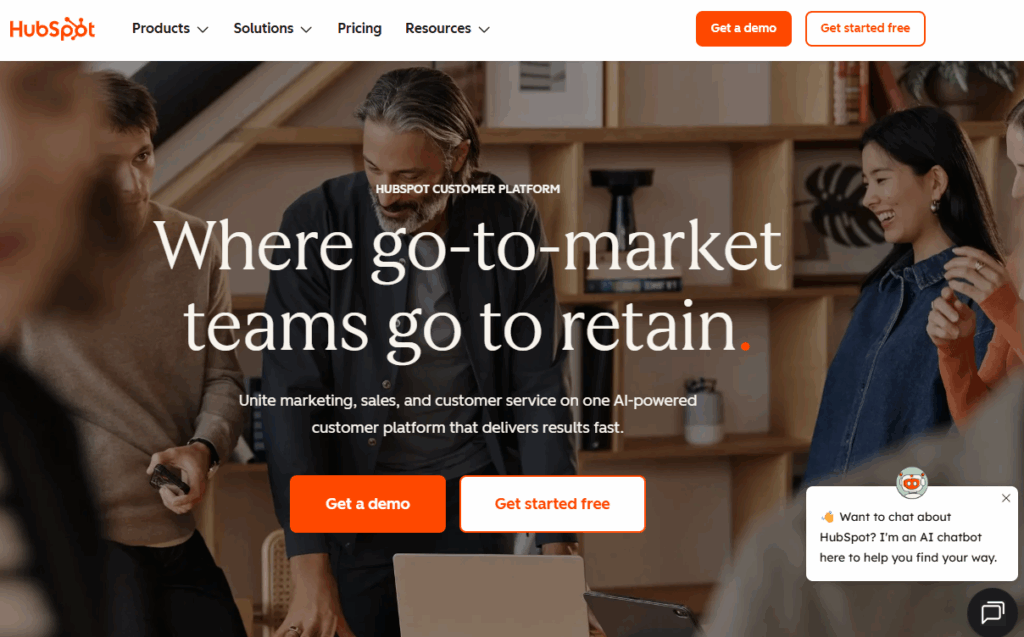
Pricing: Free, Starter ($9/month), Professional ($800/month), Enterprise ($3,600/month)
HubSpot applies AI across marketing automation, CRM, and content-related workflows. Marketers use it to improve audience segmentation, automate lead nurturing, and personalize communication based on behavioral and engagement signals.
By integrating AI into CRM and automation, HubSpot helps connect marketing activity more directly to pipeline performance. This allows teams to measure impact more clearly and optimize campaigns based on outcomes rather than isolated metrics.
7. Klaviyo — AI-Driven Email and SMS Personalization
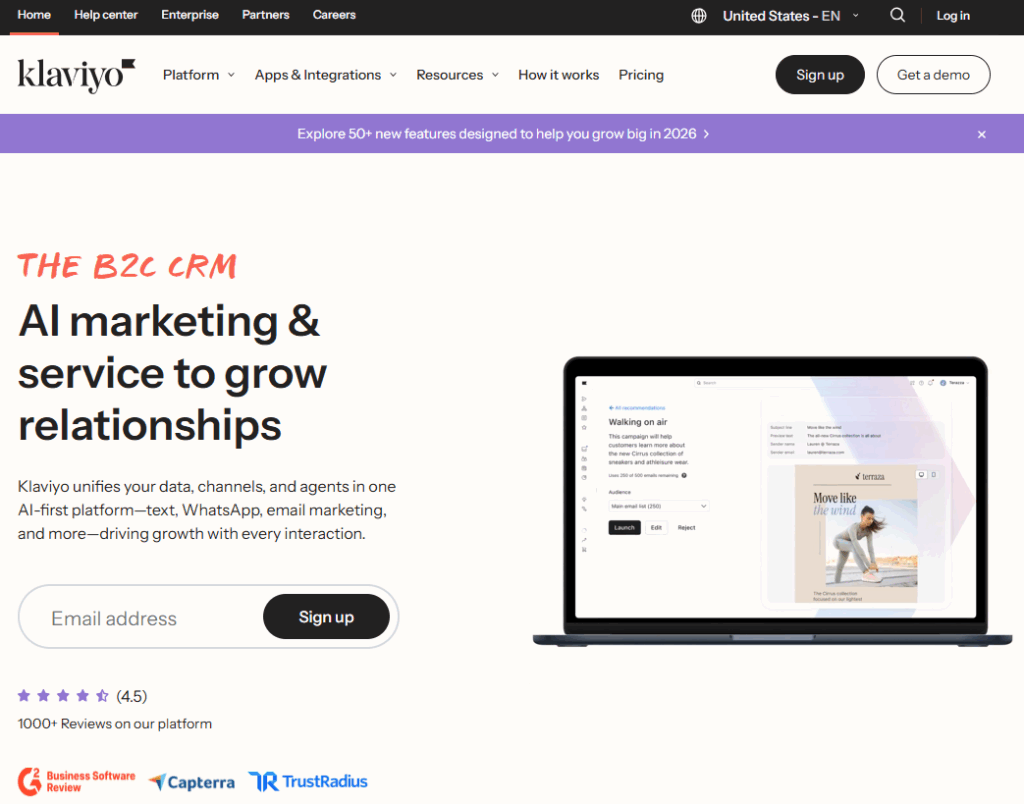
Price: Free, Email ($45/month), Email+mobile messages ($60/month)
Klaviyo is commonly used for email and SMS marketing, particularly in e-commerce and retention-focused strategies. Its AI capabilities support behavioral segmentation, send-time optimization, and message personalization across customer lifecycles.
For marketing teams, Klaviyo helps increase relevance without significantly increasing manual effort. Campaigns can adapt dynamically based on user behavior, improving engagement, retention, and lifetime value over time.
8. Synthesia — AI Video Generation for Marketing Content
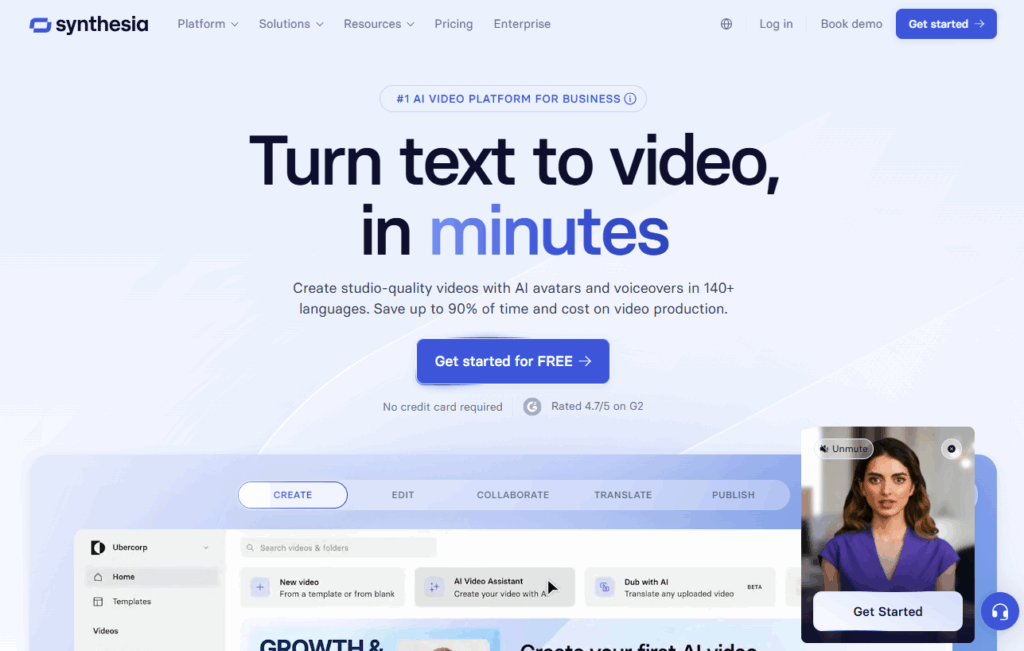
Price: Basic (Free), Starter ($18/month), Creator ($64/month)
Synthesia enables marketers to create video content using AI-generated presenters and scripts. It is commonly used for product explainers, onboarding videos, internal communications, and localized content where speed and scalability matter more than high-production filming. By removing the need for cameras, studios, and actors, Synthesia helps teams produce video assets faster and adapt them to different audiences or languages.
For marketing teams, its value lies in efficiency and consistency. Video can be tested, updated, and localized with minimal effort, making it easier to incorporate video into content strategies without significantly increasing production costs.
9. Google Analytics 4 and Looker Studio — Measurement, Insight, and Decision Support
Price: Free
Google Analytics 4 captures behavioral signals across touchpoints, while Looker Studio transforms that data into decision-ready reporting. Together, they help marketers identify patterns, diagnose performance shifts, and connect marketing activity with strategic decisions.
Their value lies in turning complex datasets into actionable insight, supporting optimization across channels and helping teams understand what is driving results over time.
10. Midjourney — Generative Visual Creation and Concept Development
Price: Basic ($10/month), Standard ($30/month), Pro ($60/month), Mega ($120/month)
Midjourney is used to generate visual concepts and creative assets through text prompts. Marketing teams rely on it to explore visual styles, create mood boards, and test creative directions before committing to full production.
Its strength lies in rapid experimentation. By enabling quick visual ideation, Midjourney supports collaboration between marketing and design teams and helps align creative vision earlier in the campaign development process.
What Are Some AI Marketing Examples?
AI marketing examples vary by industry, but the real value is always the same: using artificial intelligence to solve a specific business problem. The best use cases focus on relevance, efficiency, and better decision-making—not “adding AI” everywhere with no clear goal.
AI Marketing in B2B Environments
In B2B marketing, AI is often used to improve pipeline efficiency and forecasting. Common examples include:
- Lead scoring and qualification: AI evaluates engagement signals and firmographic data to identify higher-intent leads.
- Account prioritization (ABM): AI helps teams focus on accounts most likely to convert or progress through the funnel.
- Predictive analytics: AI forecasts outcomes based on historical performance and current behavior.
AI can also strengthen content strategy in long buying cycles by identifying which topics, pages, and touchpoints influence conversion—helping teams align messaging across demand generation and sales enablement.
AI Marketing in Retail and E-commerce
In retail and e-commerce, AI is most visible in personalization and lifecycle marketing. Common examples include:
- Product recommendations: Suggestions adjust based on browsing behavior, purchase history, and predicted intent.
- Personalized campaigns: Email and on-site messaging adapt to user actions in near real time.
- Timing and promotion optimization: AI helps align offers with customer behavior and operational constraints like inventory.
These applications increase conversion rates and customer lifetime value by keeping messaging more relevant across the full customer journey.
AI Marketing in Performance and Paid Media
In performance marketing, AI helps campaigns adapt faster than manual optimization. Examples include:
- Budget and bidding optimization: AI adjusts spend based on real-time performance signals.
- Creative testing at scale: Systems test variations and learn which combinations perform best.
- Audience refinement: Targeting evolves based on observed behavior and conversion patterns.
Across all industries, the strongest AI marketing examples share one trait: AI is tied to a defined objective (better efficiency, better relevance, better outcomes)—not treated as a generic upgrade.
Key Takeaway
AI marketing tools help teams improve efficiency, insight, and performance—when applied with clear strategy and consistent oversight. They support content creation, personalization, automation, and analytics, enabling marketers to respond faster to audience behavior and connect activity to measurable outcomes.
The value isn’t in how many tools you use. It’s in choosing the right tools for the right objectives, integrating them into real workflows, and keeping human judgment at the center.
FAQ: AI Marketing Tools
Yes—if they’re tied to a specific workflow. AI tools deliver the most value when they reduce time on repetitive work (drafting, reporting, asset variations) or improve outcomes (personalization, segmentation, optimization). If you can’t point to a clear use case, the tool usually becomes “nice to have” instead of ROI-driven.
Marketing automation executes rules-based workflows (e.g., send this email after a signup). AI marketing tools add intelligence—learning from behavior and performance data to improve targeting, personalization, timing, and recommendations over time.
No. They replace inefficiencies, not strategy. Tools can accelerate ideation, production, testing, and analysis, but humans still own positioning, creative direction, brand standards, and final decision-making.
Start with one or two tools that match your biggest bottleneck (content, creative, retention, analytics). Prioritize tools that integrate with your stack (CRM, analytics, email) and set simple governance—who reviews outputs, what quality standards apply, and how success will be measured.
Yes. Many AI tools are affordable and simple to run without a technical team. The best approach is to start small: pick 1–2 tools that solve your biggest bottleneck (content/SEO, email, socials, reporting), then expand only when you can measure impact.
You don’t need to build AI models, but you do need strong fundamentals: tracking and measurement basics, the ability to interpret insights, and judgment to spot inaccuracies or off-brand outputs. Clear governance matters too—define who reviews AI work and what standards apply.
Begin with a clear objective (more leads, better conversion rate, lower CAC, higher retention). Choose tools that fit that workflow, connect data where possible, and use feedback loops to improve results. Keep humans in control with quality checks, brand guidelines, and ethical oversight.
Get Your Business AI-Ready with Mrkt360

Boost your marketing with AI. Get a FREE consultation today!
Ready to Improve your SEO?
Get a free SEO audit and digital marketing strategy session today!