
Phone calls are still one of the most valuable lead sources for service businesses. A customer who calls is often more qualified, more urgent, and closer to making a decision than someone casually browsing a website. But without the right tracking system in place, many businesses cannot clearly see which ads, keywords, landing pages, campaigns, or sales processes are actually producing those calls.
That is where call tracking becomes important.
At MRKT360, we help businesses set up both CallTrackingMetrics and GoHighLevel, commonly known as GHL. Both platforms can help track calls and improve marketing visibility. However, after working with many clients across different industries, we have found that GHL is almost always the better recommendation for businesses that need more than basic call attribution.
We used to rely more heavily on CallTrackingMetrics for client call tracking. Over time, we noticed that while it was useful for tracking call sources, it often did not meet the broader needs of our clients. Most businesses did not only need to know where a call came from. They needed a system that could organize leads, automate follow-ups, manage conversations, book appointments, support pipelines, improve response times, and connect marketing activity to real sales outcomes.
That is why we now typically recommend GHL.
What Is Call Tracking?
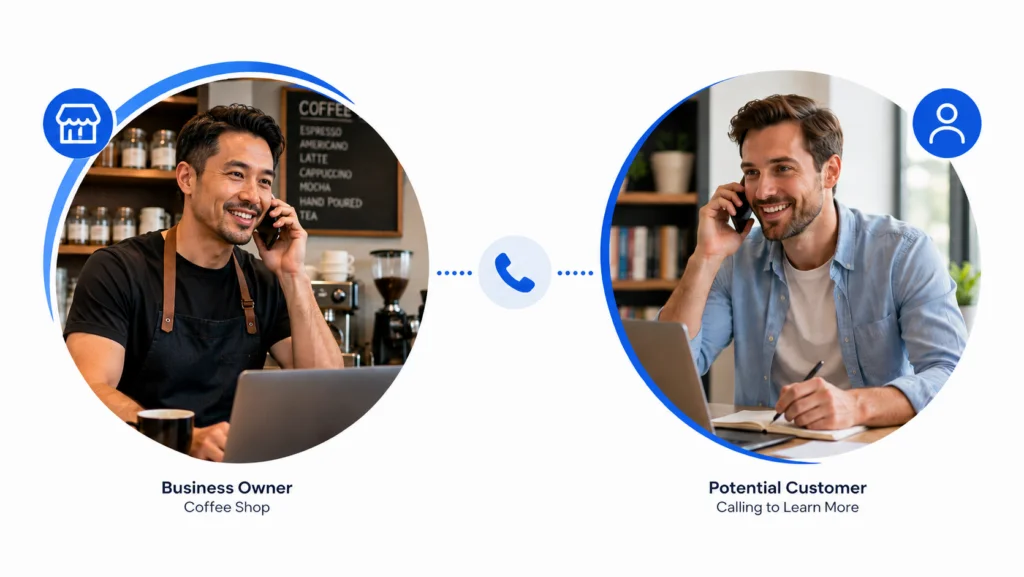
Call tracking is the process of assigning unique phone numbers to different marketing campaigns, channels, ads, landing pages, or traffic sources. When someone calls one of those numbers, the business can see where the call came from.
For example, a business may use different tracking numbers for:
- Google Ads
- Meta Ads
- Organic search
- Google Business Profile
- Landing pages
- Email campaigns
- Print materials
- Billboards
- Local SEO campaigns
- Referral campaigns
This allows the business to understand which marketing efforts are generating phone calls and which campaigns may need to be improved.
Without call tracking, a business may know that the phone is ringing, but not why. With call tracking, the business can connect calls to specific marketing activity and make better decisions with its advertising budget.

What Is CallTrackingMetrics?
CallTrackingMetrics is a platform designed primarily around call tracking, call attribution, call recording, reporting, and conversation analytics. It helps businesses connect phone calls, texts, forms, and chats to marketing sources so they can understand which campaigns are producing leads.
For businesses that only need detailed call attribution, CallTrackingMetrics can be a strong tool. It can show where calls came from, help measure campaign performance, and provide useful information for marketing analysis.
The challenge is that many businesses need more than call tracking alone.
A lead does not become valuable simply because it was tracked. The real value comes from what happens after the call. Was the call answered? Was the lead followed up with? Was the contact added to a pipeline? Was an appointment booked? Did the sales team receive a reminder? Did the lead get a text or email after the call? Did the business have a system for nurturing missed calls?
For many of our clients, this is where CallTrackingMetrics started to feel limited. It helped answer the question, “Where did the call come from?” but it did not always solve the bigger operational question: “How do we turn this lead into revenue?”
What Is GHL?
GHL, or GoHighLevel, is a broader marketing, CRM, automation, and communication platform. It can support call tracking, but it also goes much further.
GHL can help businesses manage leads, pipelines, conversations, forms, calendars, appointment booking, SMS, email follow-ups, automation workflows, review requests, missed call text-backs, sales processes, landing pages, funnels, reporting, and client communication.
Instead of using one tool for call tracking, another tool for CRM, another tool for email marketing, another tool for SMS, another tool for booking, and another tool for sales follow-up, GHL brings many of these functions into one place.
That is the biggest reason we recommend it more often.
For many businesses, the problem is not simply a lack of call tracking. The problem is disconnected systems. Leads come in from multiple places, staff members miss follow-ups, conversations are spread across different platforms, and business owners do not have a clear view of the full customer journey.
GHL helps solve that by centralizing the lead process.
CallTrackingMetrics vs GoHighLevel: The Main Difference
The main difference is focus.
CallTrackingMetrics is mainly a call tracking and conversation analytics platform. GHL is a broader growth platform that includes call tracking as part of a larger sales and marketing system.
CallTrackingMetrics helps businesses understand marketing attribution. GHL helps businesses manage attribution, lead capture, follow-up, automation, pipeline movement, appointment booking, and client communication.
In simple terms:
CallTrackingMetrics is useful for knowing where calls came from.
GHL is useful for knowing where leads came from and helping convert them into customers.
That distinction matters.
For a business spending money on Google Ads, Meta Ads, SEO, local campaigns, and landing pages, tracking the source of a call is important. But the next steps are just as important. A missed call can become a lost customer. A slow follow-up can reduce conversion rates. A lead without a pipeline can disappear. A customer without automated reminders may not book. A satisfied customer who is never asked for a review may never leave one.
GHL gives businesses more tools to manage those moments.
Why MRKT360 Usually Recommends GHL
At MRKT360, we still understand how to set up both platforms. There are cases where CallTrackingMetrics may still be the right fit, especially for businesses with very specific call analytics requirements or existing systems that already handle CRM and automation well.
However, for most small and mid-sized businesses, GHL tends to offer more value because it supports more of the customer journey.
We usually recommend GHL because it is more versatile, more cost-effective for many businesses, and better aligned with the way modern marketing campaigns actually work.
A business does not just need data. It needs action.
GHL allows us to build systems where leads are captured, organized, followed up with, assigned, nurtured, reminded, and tracked. Instead of simply reporting that a lead called from a campaign, GHL can help create the workflow that moves that lead forward.
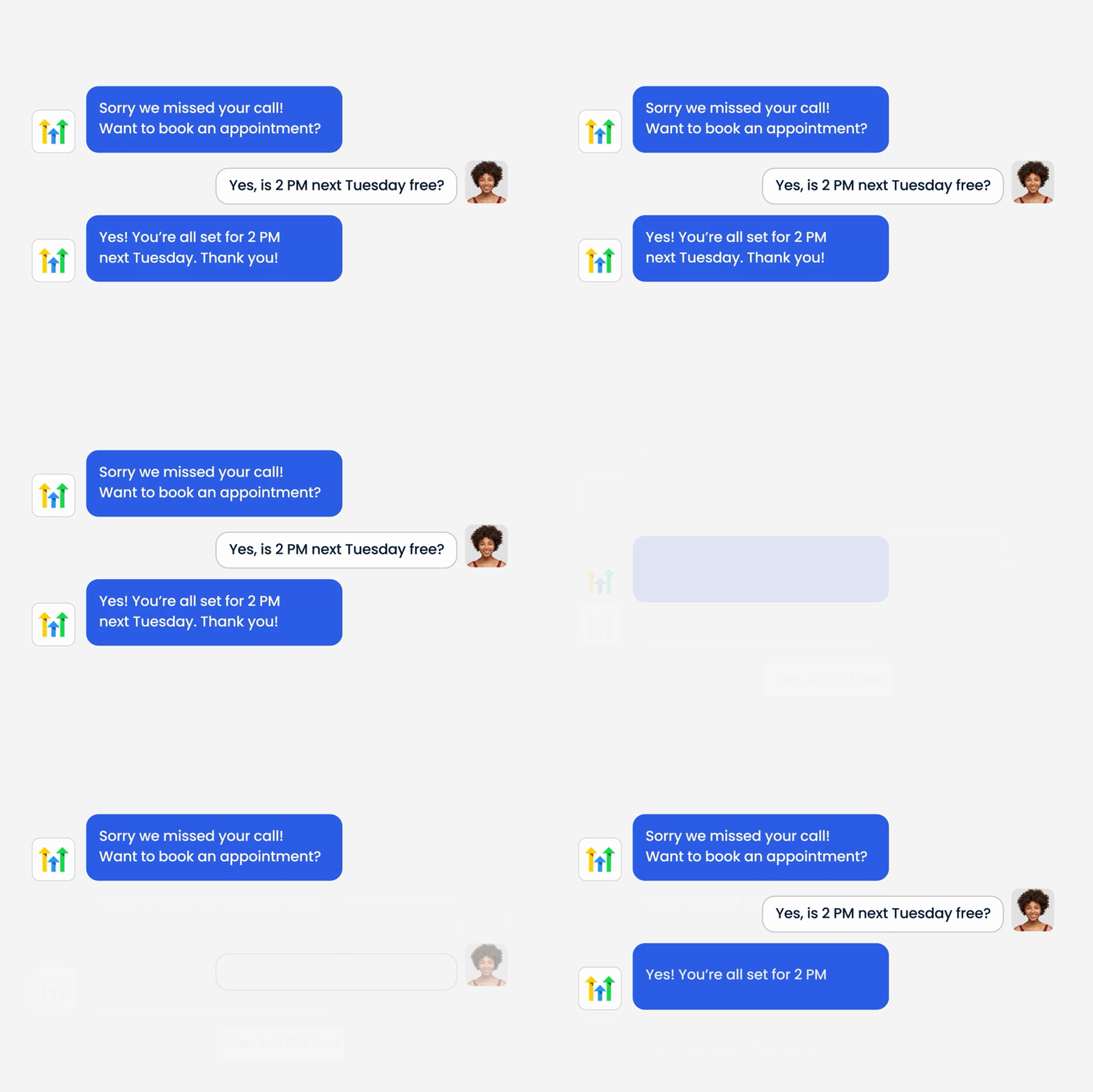
That can include:
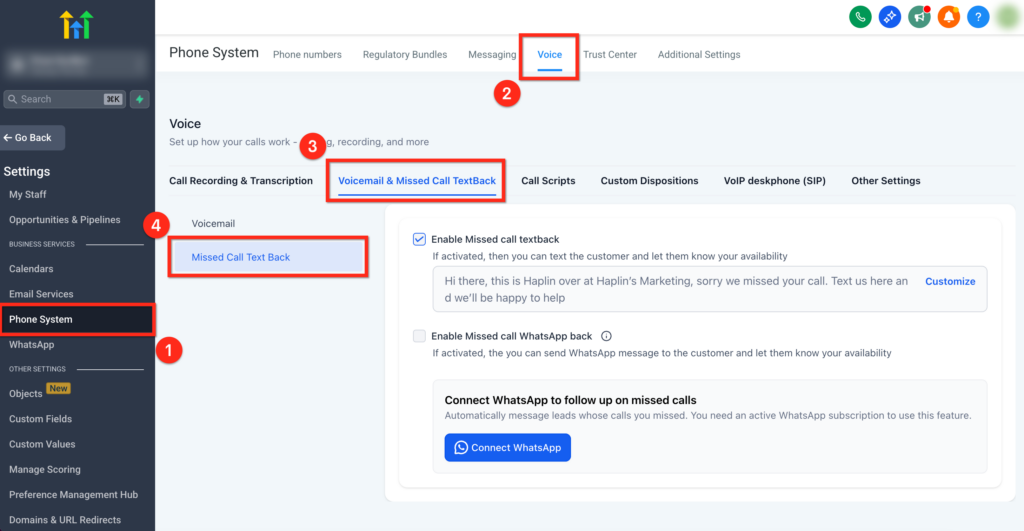
- Missed call text-back automation
- Lead notifications for the sales team
- Pipeline stages for new opportunities
- Automated SMS and email follow-ups
- Appointment booking calendars
- Form and landing page connections
- Review request workflows
- Contact records and conversation history
- Campaign reporting and lead source tracking
- CRM organization for sales teams
This makes GHL more practical for many of our clients because it supports the full lead management process, not just the call tracking piece.
Why We Moved Away From Relying on CallTrackingMetrics
We used to use CallTrackingMetrics more often. It gave us useful call tracking data, and for certain campaigns, it did the job it was built to do.
But as our clients’ needs evolved, we started seeing a pattern.
Clients wanted better visibility, but they also wanted better systems. They wanted to know where leads came from, but they also wanted to make sure those leads were contacted quickly. They wanted call recordings, but they also wanted automated follow-up. They wanted campaign reporting, but they also wanted sales pipeline clarity. They wanted tracking, but they also needed better lead management.
In many cases, CallTrackingMetrics did not fully meet those needs on its own.
The result was often a fragmented setup. A business would use CallTrackingMetrics for calls, another CRM for contacts, another platform for email, another tool for texting, another calendar system for appointments, and another reporting tool for performance. This created more complexity, more software costs, more training requirements, and more room for leads to fall through the cracks.
GHL helped simplify that structure.
Instead of stacking too many separate tools, we could create a more connected system. For many clients, that meant better organization, stronger follow-up, and a clearer view of what was happening after each lead came in.
Cost and Value: Why GHL Often Wins
Cost is not only about the monthly subscription price. It is about what the business gets for the money.
A platform may appear affordable at first, but if it only solves one part of the problem, the business may still need to pay for several other tools. Those extra costs can add up quickly.
With CallTrackingMetrics, businesses may still need a CRM, automation platform, calendar system, email marketing platform, SMS tool, funnel builder, reporting dashboard, or review management tool, depending on their needs.
With GHL, many of those features can live inside one platform.
That is why we often consider GHL more cost-effective. It can reduce the need for multiple subscriptions while giving the business a more complete marketing and sales infrastructure.
For clients, this usually means fewer tools to manage, fewer logins, fewer disconnected systems, and more practical value from one setup.
When CallTrackingMetrics May Still Make Sense
CallTrackingMetrics is not a bad platform. It can still make sense for certain businesses.
It may be a good fit when a company needs advanced call attribution, has a larger internal marketing team, already uses a mature CRM, or has a very specific reporting environment where a dedicated call tracking platform is required.
It may also work well for businesses that only want to track calls and do not need a more complete CRM or automation setup.
However, most of our clients are not simply looking for another analytics tool. They are looking for a better way to capture, manage, follow up with, and convert leads. For those clients, GHL is usually the stronger choice.
How MRKT360 Sets Up Call Tracking and GHL
Our process starts by understanding your business goals, lead sources, sales process, and current software setup.
We look at where your leads are coming from, how calls are being handled, what happens after someone contacts your business, and where opportunities may be getting lost.
From there, we can help set up the right system for your needs.
For call tracking, this may include tracking numbers, source attribution, campaign-level reporting, call recording, call routing, and conversion tracking.
For GHL, this may include CRM setup, pipeline creation, forms, calendars, automations, missed call text-back, SMS and email workflows, lead notifications, reporting dashboards, landing page connections, and review request automation.
The goal is not just to install software. The goal is to build a system that helps your business respond faster, track better, and convert more leads.
Call Tracking Is Only the Beginning
Call tracking can show you which campaigns are producing phone calls, but that is only one part of the picture.
The bigger opportunity is building a connected marketing and sales system where every lead is captured properly, followed up with quickly, and managed through a clear process.
That is why MRKT360 almost always recommends GHL for businesses that want more than basic call attribution. It gives you the ability to track calls while also managing contacts, automations, conversations, appointments, pipelines, and follow-up in one place.
We still set up CallTrackingMetrics when it is the right solution. But for most clients, GHL provides more flexibility, better long-term value, and a stronger foundation for growth.
If your business is investing in digital marketing, your call tracking system should not only tell you where calls came from. It should help you turn more of those calls into real customers.
Get in touch with MRKT360 to learn whether CallTrackingMetrics or GHL is the better fit for your business.
About MRKT360
MRKT360 is a results-driven digital marketing and solutions agency offering end-to-end services in performance marketing, AI strategy, SEO, GEO, paid media, and IT optimization.
With clients around the world, MRKT360 specializes in future-proofing brands through innovative solutions that align marketing and infrastructure.
FAQs
What are the benefits of working with a Google Premier Partner agency?
Working with a Google Premier Partner agency provides access to certified expertise, stronger optimization processes, better reporting, and ongoing support designed to improve campaign performance and ROI.
What is the difference between CallTrackingMetrics and GHL?
CallTrackingMetrics is mainly focused on call tracking, call attribution, call recording, and campaign reporting. GHL is a broader CRM and marketing automation platform that can support call tracking while also helping businesses manage leads, pipelines, SMS, email follow-ups, calendars, forms, landing pages, and automation workflows.
Does MRKT360 set up both CallTrackingMetrics and GHL?
Yes. MRKT360 can set up both CallTrackingMetrics and GHL depending on your business needs, campaign structure, and existing systems. However, we usually recommend GHL because it gives most businesses a more complete and versatile solution for lead management, automation, follow-up, and reporting.
Why does MRKT360 usually recommend GHL over CallTrackingMetrics?
We usually recommend GHL because most clients need more than basic call tracking. They need a system that captures leads, organizes contacts, sends follow-ups, manages appointments, tracks pipeline progress, and helps convert inquiries into customers. GHL offers more functionality in one platform, which often makes it more practical and cost-effective.
Is CallTrackingMetrics still a good platform?
CallTrackingMetrics can still be a good option for businesses that need dedicated call tracking, detailed attribution, call recording, and campaign-level reporting. It may be useful for companies with existing CRM systems or more complex call analytics needs. For many small and mid-sized businesses, however, GHL is often a better fit because it supports more of the customer journey.
Can GHL track phone calls from Google Ads and other campaigns?
Yes. GHL can be configured to help track leads and phone calls from marketing campaigns, including Google Ads, landing pages, forms, and other digital channels. When properly set up, it can help businesses understand where leads are coming from and connect those leads to follow-up workflows, pipelines, and customer communication.
Which platform is better for my business?
The best platform depends on what your business needs. If you only need advanced call attribution, CallTrackingMetrics may be enough. If you want call tracking plus CRM, automation, lead follow-up, appointment booking, pipeline management, SMS, email, and reporting, GHL is usually the stronger choice. MRKT360 can review your current setup and recommend the option that makes the most sense for your goals.